
Social Enterprise Meets AI: Building Revenue-Generating Programs with Intelligent Automation
The line between nonprofit programming and earned revenue is blurring. Organizations across sectors are discovering that AI-powered automation can transform mission-driven activities into self-sustaining social enterprises, generating income while deepening impact. This is not about becoming a business. It is about building programs that pay for themselves.
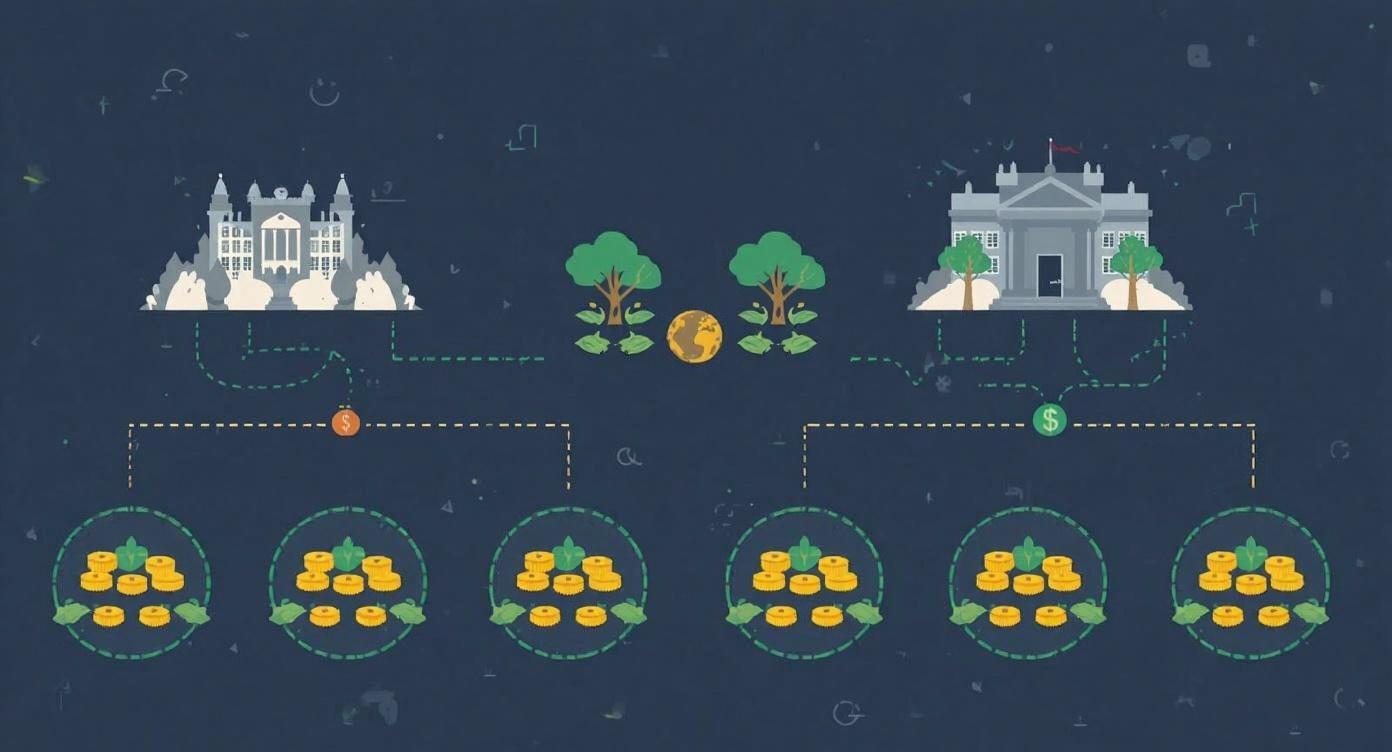
Social enterprise has long been held up as the answer to nonprofit sustainability. The idea is appealing: create a business activity that generates revenue while advancing your mission. But for most nonprofits, the reality has been more complicated than the promise. Running a social enterprise requires business management skills, operational capacity, and startup capital that many organizations simply do not have. A thrift store needs inventory management, retail staffing, and real estate. A catering social enterprise needs commercial kitchen space, food safety compliance, and marketing. The operational overhead often consumes the margins that were supposed to fund the mission.
AI changes this equation fundamentally. Intelligent automation reduces the operational burden that has traditionally made social enterprises impractical for resource-constrained nonprofits. AI can handle demand forecasting, inventory optimization, customer service, marketing, financial tracking, and dozens of other business functions that previously required dedicated staff or expensive consultants. This does not eliminate the need for human leadership and decision-making, but it dramatically lowers the minimum viable scale for a social enterprise to be worth launching.
The organizations finding success with AI-powered social enterprise are not the ones trying to compete with private sector companies on commercial terms. They are the ones that recognize where their mission-driven activities naturally create value that people will pay for, and then use AI to capture and deliver that value efficiently. A job training program that helps participants build marketable skills can also offer those same training modules to corporate clients. A community health organization with nutrition expertise can sell meal planning services. The social enterprise is not separate from the mission; it is the mission, delivered to a paying audience alongside the subsidized audience.
This article explores how nonprofits are designing, launching, and scaling AI-enhanced social enterprises. We cover the types of social enterprise models best suited to AI support, the specific automation tools that make them viable, and the organizational decisions that determine whether a social enterprise strengthens or strains your mission. If you are exploring ways to diversify your nonprofit's revenue, social enterprise deserves serious consideration, especially now that AI has lowered the barriers to entry.
Why AI Makes Social Enterprise Viable for More Nonprofits
The economics of social enterprise have always been challenging for nonprofits. Margins in most industries are thin, competition is intense, and the dual mandate of generating revenue while creating social impact adds complexity that purely commercial enterprises do not face. Many nonprofit social enterprises have folded not because the idea was bad, but because the operational costs exceeded the revenue before the venture could reach scale.
AI addresses the three biggest barriers that have historically prevented nonprofits from succeeding with social enterprise. First, it reduces fixed labor costs by automating administrative, analytical, and operational tasks that would otherwise require hiring additional staff. A small nonprofit can now manage an e-commerce operation, a subscription service, or a consulting practice with existing staff because AI handles the back-office work. Second, AI improves decision-making by providing real-time data analysis on pricing, demand, customer behavior, and operational efficiency. This gives nonprofit leaders the same business intelligence that large companies have, without the cost of dedicated analysts. Third, AI enables faster iteration by automating the testing and refinement of products, services, and marketing approaches.
Consider the practical difference. A decade ago, launching a social enterprise required a detailed business plan, six to twelve months of planning, significant startup funding, and dedicated staff. Today, an organization can validate a social enterprise concept in weeks using AI to analyze market demand, generate marketing materials, build a basic e-commerce presence, and handle initial customer interactions. This does not guarantee success, but it dramatically reduces the cost of failure, which is what makes experimentation possible for organizations that cannot afford to bet large amounts on unproven ventures.
Operations
AI automates inventory management, order processing, scheduling, and quality control. Tasks that required full-time staff can now run with periodic human oversight, cutting operational costs significantly and freeing your team to focus on mission delivery and customer relationships.
Intelligence
Real-time analytics on pricing, demand patterns, customer segments, and competitive positioning give nonprofit social enterprises the same market intelligence capabilities as established businesses. AI turns your sales and operational data into actionable insights without requiring a dedicated data team.
Growth
AI-powered marketing, customer acquisition, and retention tools allow social enterprises to grow without proportionally increasing headcount. Automated email sequences, personalized outreach, and content generation expand your reach while keeping marketing costs manageable.
Social Enterprise Models That AI Amplifies
Not every social enterprise model benefits equally from AI. The models with the highest potential are those where automation can replace repetitive manual processes, where data analysis improves product-market fit, and where digital delivery channels reduce physical infrastructure requirements. Here are the models that nonprofits are implementing most successfully with AI support.
E-Commerce and Digital Products
Selling digital and physical goods aligned with your mission
Digital products represent the most scalable social enterprise model because marginal delivery costs are near zero. A workforce development nonprofit might sell resume templates, interview preparation guides, and career planning workbooks. An arts organization could sell digital art prints, educational kits, or cultural content subscriptions. AI handles product creation (generating and updating content), marketing (writing product descriptions, managing ads, personalizing recommendations), and customer service (answering questions, processing returns, managing reviews).
Physical product social enterprises also benefit from AI, though with higher operational complexity. Thrift stores, food production enterprises, and manufacturing-based social enterprises use AI for demand forecasting, pricing optimization, and inventory management. A thrift store social enterprise can use computer vision AI to categorize donations, suggest pricing based on comparable items sold online, and identify high-value pieces that should be sold through separate channels. These tools help thin-margin operations capture more value from every transaction.
Platform and Marketplace Models
Connecting supply and demand within your community
Some nonprofits sit at the intersection of supply and demand in ways that create natural marketplace opportunities. A nonprofit that connects local farmers with food-insecure communities can also operate a marketplace for surplus produce, using AI to match supply with demand, optimize logistics, and minimize waste. An immigrant services organization that connects job seekers with employers can monetize that matching capability by offering recruitment services to businesses, with AI handling candidate screening, skills matching, and placement tracking.
The platform model is powerful because it creates network effects: the more participants on both sides of the marketplace, the more valuable the platform becomes. AI makes these platforms viable for nonprofits by automating the matching algorithms, communication flows, transaction processing, and quality monitoring that would otherwise require significant engineering and operations staff. The nonprofit's unique value is its trusted position within the community and its deep understanding of both sides of the marketplace, advantages that commercial competitors often struggle to replicate.
Employment and Training Enterprises
Creating jobs and revenue through mission-aligned services
Employment social enterprises hire individuals from the populations they serve, providing jobs and job training while producing goods or services for paying customers. These models include catering companies, cleaning services, landscaping businesses, construction crews, and manufacturing operations. AI enhances these enterprises by optimizing scheduling and routing, managing quality control through computer vision and sensor data, automating customer relationship management, and handling the complex payroll and compliance requirements that come with employing individuals who may face barriers to traditional employment.
The training component of these enterprises benefits enormously from AI. Personalized learning paths, skill assessments, and progress tracking can all be automated, allowing each employee to develop at their own pace while the enterprise maintains productivity standards. AI can also match employee skills and interests with specific client projects, improving both job satisfaction and service quality. For organizations focused on building AI champions within their teams, these training enterprises offer a natural laboratory for developing technology skills alongside vocational ones.
Knowledge and Content Enterprises
Monetizing expertise through digital channels
This model overlaps with fee-for-service approaches but operates at a more productized scale. Rather than custom consulting engagements, knowledge enterprises sell standardized information products: online courses, certification programs, assessment tools, research subscriptions, and digital toolkits. AI enables production at scale by generating course content, grading assessments, issuing certifications, and personalizing the learning experience for each user.
The most successful knowledge enterprises build ongoing relationships rather than one-time transactions. A membership model where subscribers receive regular content updates, community access, and ongoing tools creates predictable recurring revenue. AI can manage the entire membership lifecycle, from onboarding and engagement nurturing to renewal reminders and churn prevention. Organizations with strong subject matter expertise and existing content libraries are well-positioned for this model, as AI can transform years of accumulated knowledge into organized, sellable products relatively quickly.
Designing for Dual Impact: Revenue and Mission Together
The most sustainable nonprofit social enterprises are those where revenue generation and mission advancement are not separate goals but intertwined outcomes of the same activity. When your social enterprise naturally creates social impact through its operations, you avoid the fundamental tension that undermines many earned revenue efforts: the feeling that commercial activity competes with mission work for time, attention, and organizational identity.
Designing for dual impact starts with mapping the value chain of your proposed enterprise. At each stage, ask: where does social impact happen, and where does revenue happen? In a well-designed social enterprise, the answer at most stages is "both." A catering enterprise employing formerly incarcerated individuals creates impact through employment (production), client satisfaction through quality food service (revenue), and community connection through events that bring diverse groups together (both). AI can help you model these dual outcomes by tracking both financial and social metrics simultaneously, giving you a real-time dashboard of how well your enterprise is delivering on both fronts.
One practical framework for ensuring dual impact is the "mission multiplier" test. For every dollar of revenue your social enterprise generates, how much additional mission impact does it create beyond what the revenue itself funds? A social enterprise that generates $100,000 in revenue but also provides job training to 20 individuals, connects 500 families to resources, and builds community awareness around an issue has a much higher mission multiplier than one that simply generates $100,000 to fund other programs. AI can help quantify these multiplier effects by tracking the ripple effects of your enterprise's activities across multiple impact dimensions.
Impact-First Design Principles
- Start with the mission outcome you want to achieve, then identify revenue opportunities within that activity
- Use AI to track social impact metrics alongside financial performance in a unified dashboard
- Set minimum impact thresholds that the enterprise must meet regardless of financial performance
- Build feedback loops where beneficiary outcomes directly inform product and service improvements
Avoiding Mission Drift
- Establish a governance committee that includes mission stakeholders alongside business advisors
- Cap the percentage of organizational resources dedicated to the enterprise to protect core programming
- Define clear exit criteria: under what conditions would you scale down or shut down the enterprise?
- Use AI to monitor the ratio of mission-aligned versus purely commercial activities and flag drift early
The AI Automation Toolkit for Social Enterprise
Running a social enterprise requires managing business functions that most nonprofits have never dealt with: product development, pricing, customer acquisition, inventory, fulfillment, and customer retention. AI tools can handle much of this work, but knowing which tools to use for which functions is critical. The goal is not to automate everything but to automate the right things so your team can focus on the activities where human judgment, creativity, and relationships matter most.
Product and Service Development
AI tools can accelerate every phase of product development. Use market research tools to identify gaps and validate demand before investing in production. Language models can generate product descriptions, marketing copy, and documentation. For digital products, AI can create course content, assessment questions, and interactive materials. For physical products, AI-assisted design tools can generate prototypes and packaging concepts. The key is using AI for speed and iteration while preserving human oversight on quality, mission alignment, and brand consistency.
Marketing and Customer Acquisition
Most nonprofit social enterprises underinvest in marketing because it feels uncomfortable or because they lack the skills. AI eliminates many of these barriers. Tools can generate social media content, write email campaigns, create ad copy, and manage search engine optimization, all tailored to your brand voice and mission messaging. AI can also segment your audience, personalize outreach, and optimize ad spending across channels. For organizations that have been repurposing content with AI, extending those skills to social enterprise marketing is a natural step.
The "impact story" is your social enterprise's most powerful marketing tool, and AI can help you tell it at scale. Automated impact reporting, customer testimonial collection, and story generation allow you to consistently communicate the social value of purchasing from your enterprise. Many consumers and business clients actively seek mission-driven suppliers, and AI helps you reach them with the right message at the right time.
Operations and Financial Management
AI-powered operations tools handle the day-to-day business functions that consume disproportionate staff time. Inventory management systems use demand forecasting to optimize stock levels and reduce waste. Automated bookkeeping categorizes transactions, generates financial reports, and flags anomalies. Scheduling tools optimize staff and resource allocation across multiple service lines. Customer relationship management platforms with AI capabilities track interactions, predict churn, and suggest retention strategies.
For nonprofits that need to track both financial and social outcomes, AI can maintain parallel measurement systems. Your financial reporting shows revenue, margins, and cash flow. Your impact reporting shows beneficiary outcomes, community effects, and mission metrics. AI connects these systems so you can see, for example, how pricing changes affect both profitability and access for low-income customers, or how operational efficiency improvements affect both margins and employee development outcomes. This integrated view is essential for making decisions that optimize for dual impact.
Funding the Launch Without Draining the Mission
Starting a social enterprise requires startup capital, and the source of that capital matters. Using unrestricted operating funds to launch a commercial venture puts mission programs at risk if the enterprise takes longer than expected to become self-sustaining. Most successful nonprofit social enterprises are funded through a combination of dedicated grants, program-related investments, and phased launches that minimize upfront costs.
Several foundation and government programs specifically support nonprofit social enterprise development. Community Development Financial Institutions (CDFIs) offer loans designed for mission-driven businesses. Some foundations make program-related investments (PRIs) that provide patient capital at below-market rates. Impact investors may offer funding in exchange for financial returns tied to social outcomes. AI can help you identify and apply for these funding sources by scanning grant databases, analyzing your eligibility for various programs, and drafting application materials. Organizations already experienced with AI-assisted grant processes can apply those same skills to social enterprise funding applications.
The AI advantage for launch economics is significant. Traditional social enterprise startup costs include market research, business plan development, technology infrastructure, and marketing materials, all of which can be produced faster and cheaper with AI assistance. A nonprofit that might have needed $50,000 to $100,000 to launch a traditional social enterprise may be able to test the concept and build initial infrastructure for $10,000 to $25,000 using AI tools. This lower entry cost makes it possible to run a lean pilot, prove the concept, and then seek larger funding for scale, rather than needing everything upfront.
Lean Launch Strategy
- Use AI to validate market demand before committing resources through surveys, competitive analysis, and landing page tests
- Start with a minimum viable product that serves your existing community before expanding to external markets
- Set clear financial milestones: break-even timeline, monthly revenue targets, and maximum acceptable loss before pivoting
- Leverage existing infrastructure, partnerships, and distribution channels rather than building everything from scratch
Funding Sources to Explore
- Foundation capacity-building grants designated for earned revenue development
- Program-related investments (PRIs) from mission-aligned foundations
- CDFI loans and SBA microloans designed for social enterprises
- Corporate sponsorships where businesses fund the social enterprise in exchange for impact alignment
Scaling Your Social Enterprise with Intelligent Automation
The most exciting aspect of AI-powered social enterprise is scalability. Traditional social enterprises scale linearly: doubling revenue typically requires roughly doubling operational capacity. AI-enhanced models can scale more efficiently because many of the growth-limiting functions, from customer service to content production to data analysis, can be automated. This means your social enterprise can grow revenue faster than it grows costs, creating improving margins over time.
Scaling responsibly requires monitoring both financial and impact metrics as you grow. AI dashboards should track customer acquisition cost, lifetime value, unit economics, and cash flow alongside impact metrics like beneficiaries served, outcomes achieved, and community effects. Set triggers that alert leadership when financial growth outpaces impact growth or when rapid scaling begins to stress operational quality. The goal is sustainable growth that maintains the dual-impact model, not growth for its own sake.
Geographic expansion is one area where AI particularly shines. A social enterprise that works in one community can use AI to adapt its products, services, and marketing for new markets without needing to build local infrastructure from scratch. An online training platform can serve learners nationwide. A consulting methodology developed in one region can be adapted for different contexts using AI-powered localization. A marketplace model can expand to new cities by replicating the matching algorithms and operational processes that work in the first market. For organizations thinking about regional collaboration, explore how regional AI hubs can support shared infrastructure across multiple communities.
Key Scaling Metrics to Track with AI
Monitor these metrics to ensure healthy growth
Financial Health
- Revenue growth rate vs. cost growth rate (should be widening)
- Customer acquisition cost and trend over time
- Contribution margin per product or service line
- Cash flow projections and runway at current growth rate
Impact Health
- Beneficiary outcomes per dollar of enterprise revenue
- Access equity: are subsidized and full-price customers getting equal quality?
- Staff satisfaction and mission alignment scores
- Community perception and stakeholder feedback trends
Common Pitfalls and How to Avoid Them
Nonprofit social enterprises fail for predictable reasons, and awareness of these patterns can help you avoid them. The most common failure mode is not a bad idea but a bad execution, specifically underestimating the operational demands and overestimating the speed to profitability. AI can mitigate many operational challenges, but it cannot substitute for realistic planning and disciplined execution.
The first pitfall is treating the social enterprise as a side project. When fee-for-service or product sales are managed by program staff who view it as secondary to their "real" work, quality suffers and growth stalls. Even with AI handling much of the operational work, someone needs to own the enterprise as their primary responsibility. This person does not need to be a businessperson from the private sector, but they do need dedicated time and clear authority to make decisions about the enterprise's direction.
The second common mistake is underpricing. Nonprofits habitually undervalue their work, and this tendency is amplified in social enterprise. If you price your products or services below what the market will bear, you leave revenue on the table that could fund your mission. AI can help by continuously analyzing market pricing, competitor offerings, and customer willingness to pay. Use this data to set prices that reflect your value, not your discomfort with charging. Remember that customers who pay full price are not exploited; they are investors in your mission who receive genuine value in return.
The third pitfall is ignoring the legal structure. As discussed in our article on fee-for-service models, UBIT implications, liability exposure, and regulatory requirements need to be addressed from the start. Creating a separate LLC or subsidiary for the social enterprise is often the cleanest approach, particularly if the enterprise's activities are not directly related to your exempt purpose. AI can help you track the financial boundaries between your enterprise and your nonprofit operations, but the structural decisions require professional legal guidance.
Finally, many nonprofits fail to invest enough in marketing. Building a great product or service is only half the challenge. If potential customers do not know you exist, revenue will not follow. AI-powered marketing tools have dramatically lowered the cost and skill barrier for effective marketing, but someone still needs to allocate budget and attention to customer acquisition. Plan to spend 10 to 20 percent of projected first-year revenue on marketing, and use AI to maximize the return on every dollar spent.
Conclusion
Social enterprise is no longer a luxury reserved for large nonprofits with business-savvy boards and startup capital to spare. AI has democratized the operational capabilities that used to be the domain of well-funded organizations, making it possible for any nonprofit with genuine expertise and community trust to build a revenue-generating program. The technology handles the business mechanics so your team can focus on what it does best: creating impact.
The organizations that will succeed are those that approach social enterprise not as a desperate response to funding pressures but as a strategic expansion of their mission reach. When your earned revenue activities serve the same populations, address the same problems, and leverage the same expertise as your grant-funded programs, you create a resilient organizational model that is less vulnerable to the whims of any single funding source. AI makes this alignment practical by reducing the operational overhead that used to force nonprofits to choose between mission and revenue.
Start by asking a simple question: what do we do well that others would pay for? Then use AI to test that hypothesis quickly and cheaply. The worst outcome is that you learn something valuable about your market and your capabilities. The best outcome is a new revenue stream that funds your mission for years to come.
Ready to Build a Social Enterprise?
We help nonprofits design and launch AI-powered social enterprises that generate sustainable revenue while deepening mission impact. From concept validation to operational setup, we guide you through every step.