
How to Use AI to Summarize Long Documents and Reports for Your Team
Nonprofit teams are drowning in documentation—from lengthy grant reports and policy documents to board meeting materials and research papers. AI-powered summarization tools offer a transformative solution, helping your organization extract key insights from mountains of text in minutes rather than hours. This comprehensive guide explores how to leverage leading AI tools like ChatGPT, Claude, and Gemini to efficiently summarize documents, create executive summaries, streamline knowledge management, and save your team countless hours while ensuring critical information reaches the right people at the right time.
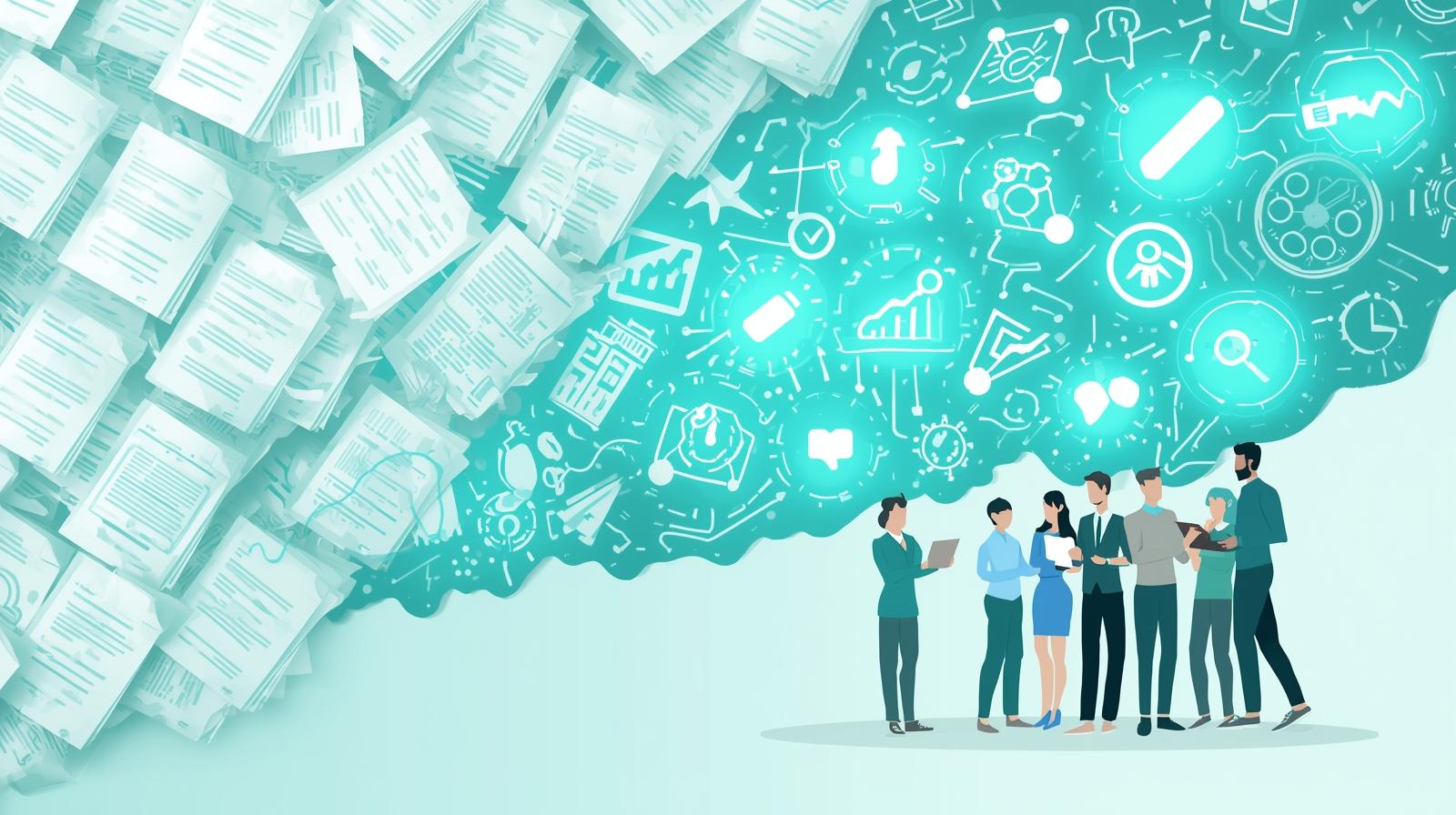
In the nonprofit sector, information overload is more than just an inconvenience—it's a barrier to effective decision-making and mission execution. Staff members spend hours reading through lengthy documents, trying to distill the essential information needed for their work. Board members receive thick packets of materials before meetings, often struggling to identify the most critical issues that require their attention. Grant writers wade through extensive research reports to find relevant data for proposals.
The emergence of sophisticated AI language models has fundamentally changed how we can approach document processing and summarization. Tools like ChatGPT, Claude, and Gemini can now read, comprehend, and synthesize lengthy documents with remarkable accuracy, producing clear summaries that capture the most important information while maintaining context and nuance. These capabilities represent a significant opportunity for nonprofit organizations to work more efficiently and ensure that critical information is accessible to everyone who needs it.
Document summarization with AI isn't about replacing human judgment or skipping the reading process entirely. Rather, it's about augmenting your team's capacity to process information, helping people quickly understand what's in a document so they can decide where to focus their detailed attention. It's about making information more democratic within your organization, allowing everyone—from program staff to executives—to quickly grasp the content of important documents regardless of their length or complexity.
This article will guide you through the practical application of AI summarization tools in a nonprofit context. You'll learn which tools are best suited for different types of documents, how to craft effective prompts that generate useful summaries, strategies for integrating summarization into your organizational workflows, and best practices for ensuring accuracy and maintaining appropriate context. Whether you're looking to streamline board communications, improve knowledge management practices, or simply save your team time, this guide will provide the frameworks and techniques you need to succeed.
Understanding AI Document Summarization: How It Works and What It Can Do
Before diving into practical applications, it's important to understand what AI summarization tools are actually doing when they process your documents. Modern AI language models like ChatGPT, Claude, and Gemini are trained on vast amounts of text data, allowing them to understand language patterns, identify key concepts, and recognize relationships between ideas. When you provide a document for summarization, these models analyze the entire text, identify the most important information based on patterns they've learned, and generate a condensed version that captures the essential meaning.
The sophistication of these tools lies in their ability to understand context and nuance. Unlike simple keyword extraction or sentence selection algorithms, AI models can grasp the overall narrative of a document, understand which points are central to the main argument versus supporting details, and even recognize implied information that isn't explicitly stated. This contextual understanding is what makes AI-generated summaries feel coherent and useful rather than just a collection of excerpted sentences.
One of the most powerful features of modern AI summarization is the concept of "context windows"—the amount of text the AI can process at one time. ChatGPT's latest models support up to 400,000 tokens (roughly 300,000 words or about 800 pages), Claude offers a 100,000 token context window on its Pro tier that can process entire documents without breaking them into chunks, and Gemini comes with a massive 1 million token context window right out of the gate, capable of handling 1,500 pages of text or 30,000 lines of code in a single conversation. These large context windows mean you can upload entire grant reports, policy manuals, or research papers and receive comprehensive summaries that maintain coherence across the full document.
Types of Summarization AI Can Perform
Understanding different summarization approaches helps you choose the right technique for your needs
- Extractive Summaries: Pull key sentences directly from the original document, maintaining the exact wording and creating a condensed version that uses the author's own words—useful for preserving specific language or quotes
- Abstractive Summaries: Generate new text that captures the meaning of the original document in different words, similar to how a human might explain content in their own language—produces more natural-sounding summaries that can be tailored to specific audiences
- Topic-Based Summaries: Organize information around key themes or topics rather than following the document's original structure—particularly useful for research synthesis or when documents cover multiple distinct subjects
- Action-Oriented Summaries: Focus specifically on decisions, action items, and next steps rather than background information—ideal for meeting notes and project documents where the goal is to clarify what needs to happen next
- Executive Summaries: Provide high-level overviews tailored for leadership, emphasizing strategic implications, key decisions, and critical metrics—designed for busy executives who need to understand the "so what" quickly
- Multi-Document Synthesis: Combine information from multiple related documents to create a unified summary that identifies patterns, contradictions, and connections across sources—valuable for literature reviews or comparing different perspectives
It's also crucial to understand the limitations of AI summarization. While these tools are remarkably capable, they can occasionally miss subtle nuances, may struggle with highly technical or specialized content outside their training data, and can sometimes generate summaries that are technically accurate but miss the most critical insight from a specific organizational perspective. This is why human review remains important—AI summarization is a powerful assistant that dramatically accelerates the process, but the final judgment about what's most important for your organization should still involve human expertise.
Another important consideration is that AI models are trained on data up to a certain point in time and may not have knowledge of very recent events or developments. They also don't have access to your organization's internal context, history, or priorities unless you provide that information. The most effective use of AI summarization involves treating it as a collaborative tool—you bring the organizational context and judgment, while the AI brings the ability to rapidly process and synthesize large amounts of text. Together, this combination can transform how your organization handles documentation and knowledge sharing.
Choosing the Right AI Tool for Your Summarization Needs
The landscape of AI summarization tools has expanded significantly, with each major platform offering distinct capabilities and strengths. Understanding the differences between ChatGPT, Claude, and Gemini—along with specialized tools for specific use cases—will help you select the right tool for each summarization task your organization faces. While all three major platforms can summarize text effectively, their unique features make them better suited for different types of documents and organizational needs.
When evaluating which tool to use, consider several key factors: the length and complexity of your documents, whether they contain multimodal content like images or charts, your budget constraints, privacy and security requirements, and the specific type of summary you need to generate. Most nonprofit organizations benefit from having access to multiple tools, using each for the tasks where it excels rather than trying to force a single solution to handle all summarization needs.
ChatGPT: Versatile Summarization with Custom Instructions
Best for organizations needing flexible, customizable summarization across various document types
ChatGPT, powered by OpenAI's GPT models, offers exceptional versatility for document summarization tasks. The latest GPT-5 model supports up to 400,000 tokens—roughly 300,000 words or about 800 pages—making it capable of handling everything from lengthy research papers to comprehensive grant reports. ChatGPT excels at generating insightful, cohesive summaries that simplify complex data into digestible insights, and it's particularly strong at transforming dense information into clear, actionable narratives that nonprofit teams can easily understand and act upon.
One of ChatGPT's standout features is its customization capabilities. You can provide custom instructions that persist across conversations, allowing you to set organizational preferences for summary format, length, and style. This is particularly valuable for nonprofits that need consistent formatting across multiple documents—for example, you might instruct ChatGPT to always include action items, financial highlights, and strategic implications in your summaries, and it will apply these preferences automatically to every document you process.
- Strong at generating creative, accessible summaries that can be tailored for different audience levels, from technical staff to board members
- Excellent for iterative refinement—you can ask follow-up questions to drill deeper into specific sections or request different summary formats
- Free tier available for basic summarization needs, with paid tiers offering faster processing and priority access during peak times
- Integrates with various third-party tools and can be accessed via API for custom workflow automation
Claude: Deep Analysis with Extensive Context
Ideal for lengthy, complex documents requiring detailed analysis and accuracy
Claude, developed by Anthropic, has earned a reputation for accuracy and thoroughness in document summarization. With a 100,000 token context window on the Pro tier ($20/month), Claude can process entire documents without breaking them into chunks—a significant advantage when summarizing reports where understanding the full context is critical for accuracy. While ChatGPT may need to process very long documents in windows, Claude "eats entire documents" in one sitting, maintaining coherence and connections throughout the summary.
What particularly distinguishes Claude is its depth and attention to detail. In comparative tests, Claude consistently surfaces more key takeaways than other AI models and often supports these insights with relevant quotes and statistics from the source document, adding substance and context that makes summaries more credible and useful. This makes Claude especially valuable for summarizing grant reports, research papers, and policy documents where accuracy and completeness are paramount—situations where missing a critical detail could have significant consequences.
- Excels at processing and maintaining context across very long documents, reducing errors that can occur when text is chunked
- Produces detailed summaries that often include supporting quotes and specific references to source material, making it easier to verify accuracy
- Strong constitutional AI training makes it particularly good at recognizing nuanced ethical considerations relevant to nonprofit work
- Free tier available with generous usage limits, making it accessible for organizations testing AI summarization
Gemini: Multimodal Summarization at Scale
Perfect for documents containing images, charts, and visual content alongside text
Google's Gemini brings a unique capability to document summarization: true multimodal understanding. While ChatGPT and Claude primarily focus on text, Gemini can "see" and "hear" the contents of images, charts, diagrams, audio recordings, and video clips before summarizing or answering questions about them. This makes Gemini exceptionally valuable for summarizing documents that integrate visual information—annual reports with infographics, research papers with data visualizations, or board presentations with slides and charts.
Gemini's other standout feature is its massive context window—1 million tokens right out of the gate, with 2 million tokens on the horizon. This means you could feed it 1,500 pages of text or 30,000 lines of code in a single conversation, making it ideal for summarizing truly comprehensive documents like multi-year strategic plans, complete program evaluations, or extensive policy manuals. The ability to process such large volumes of information while maintaining coherence across the entire document is particularly valuable for complex nonprofit documents that integrate multiple perspectives and data sources.
- Excels at integrating visual content into summaries, effectively interpreting charts, graphs, and diagrams that are essential to understanding documents
- Largest context window available, capable of processing extremely lengthy documents without loss of coherence or context
- Integrates seamlessly with Google Workspace, making it convenient for organizations already using Google Docs, Sheets, and Drive
- Free tier provides substantial capabilities for most nonprofit summarization needs
Specialized Tools for Specific Summarization Tasks
Purpose-built tools can complement general AI platforms for specialized needs
While ChatGPT, Claude, and Gemini handle the majority of document summarization needs, several specialized tools offer features specifically designed for common nonprofit use cases. These tools often integrate AI summarization with additional workflows like transcription, collaboration features, or specific output formats.
- Meeting Note Tools (Otter, Fireflies, Read.ai): These platforms combine transcription with AI summarization, automatically capturing meeting conversations and generating summaries with action items, key decisions, and topic breakdowns—ideal for board meetings, staff meetings, and stakeholder conversations
- Grant-Specific Tools (FreeWill's Grant Assistant): Trained on thousands of winning grant proposals, these tools can analyze RFPs and generate preliminary responses and summaries specifically optimized for grant writing contexts
- Document Management Systems with AI: Platforms that integrate summarization directly into your document management workflow, automatically generating summaries when documents are uploaded
For most nonprofit organizations, the optimal approach involves using free tiers of multiple platforms strategically. The free tiers of ChatGPT, Claude, and Gemini can handle 90% of typical summarization needs. Consider investing in paid tiers only when you're summarizing 20+ documents weekly, need citations or highly structured output, or when accuracy is absolutely mission-critical (such as for legal or compliance documents). This multi-tool approach gives you flexibility to match each summarization task with the platform best suited for it, while keeping costs manageable.
Crafting Effective Prompts for Document Summarization
The quality of AI-generated summaries depends significantly on how you ask for them. A well-crafted prompt provides the AI with clear instructions about what type of summary you need, what information to prioritize, and how to structure the output. While AI tools can generate decent summaries from simple requests like "summarize this document," thoughtful prompt engineering dramatically improves the usefulness and relevance of the results—transforming good summaries into excellent ones that truly serve your organization's needs.
Effective prompts for document summarization typically include several key elements: identification of the document type and purpose, specification of the target audience, desired summary length or format, key elements or themes to prioritize, and any organizational context that helps the AI understand what's most important. The goal is to give the AI enough information to produce a summary that matches how a knowledgeable human in your organization would approach the task.
Essential Components of Strong Summarization Prompts
Build better prompts by including these critical elements
- Document Type Identification: Specify what kind of document you're summarizing (grant report, meeting notes, research paper, policy document) as this helps the AI understand what information is typically most important in that context
- Audience Specification: Indicate who will read the summary (board members, program staff, donors, general public) so the AI can adjust language complexity and emphasize information relevant to that audience
- Length Guidelines: Provide target length (e.g., "one paragraph," "half a page," "200 words," "5 key bullet points") to ensure the summary matches your needs for brevity or comprehensiveness
- Priority Elements: List specific types of information to emphasize (action items, financial data, key decisions, strategic implications, deadlines) so the AI knows what your organization values most
- Format Requirements: Specify structure preferences (bullet points, narrative paragraphs, sections with headers, executive summary format) to get output that fits your existing documentation standards
- Organizational Context: Provide relevant background about your organization's focus areas, priorities, or specific concerns related to the document to help the AI identify what's most relevant from your perspective
Let's look at concrete examples of how prompt refinement improves summarization results. Consider summarizing a 50-page grant report. A basic prompt might be: "Summarize this grant report." This will generate a summary, but it may not emphasize what matters most to your organization. A refined prompt might be: "This is a final report for a three-year workforce development grant. Please create a summary for our Executive Director that highlights: (1) key outcomes and metrics achieved, (2) challenges encountered and how they were addressed, (3) sustainability plans moving forward, and (4) lessons learned that could inform future programs. Keep it to one page, organized with clear section headers."
The refined prompt produces a dramatically more useful summary because it tells the AI exactly what information matters in your organizational context, who needs to understand it, and how to structure it for easy consumption. This principle applies across all document types—the more context and specific guidance you provide, the better the AI can tailor its summary to your actual needs.
Sample Prompts for Common Nonprofit Document Types
Ready-to-use prompt templates you can adapt for your organization
Board Meeting Packet Summary:
"This is a board meeting packet for our nonprofit's quarterly board meeting. Please create an executive summary that board members can read in 5 minutes before the meeting. Focus on: (1) key decisions that require board action or approval, (2) significant program updates or challenges, (3) important financial information or budget items, and (4) any strategic issues requiring board input. Use clear headers for each section and bullet points for easy scanning."
Research Paper for Program Design:
"This research paper discusses best practices in youth mentoring programs. Please summarize it for our program staff, focusing on: (1) evidence-based strategies that could be implemented in our context, (2) common pitfalls to avoid, (3) success metrics and evaluation approaches, and (4) any insights about serving diverse populations. Present findings in practical, actionable terms that program staff can directly apply to program design."
Meeting Notes with Action Items:
"These are notes from our strategic planning committee meeting. Please create a summary that includes: (1) a brief overview of key discussion points, (2) a clearly formatted list of all action items with assigned owners and deadlines, (3) any decisions that were finalized, and (4) open questions or issues that need follow-up. Make the action items very clear and specific so team members know exactly what they need to do next."
Policy Document for Staff Training:
"This is an updated data privacy policy for our organization. Please create a summary for our staff that explains: (1) what changed from the previous policy, (2) what staff members need to do differently in their daily work, (3) why these changes matter for our clients and organization, and (4) where to find more details if needed. Use plain language that non-technical staff can easily understand, and highlight any immediate actions staff need to take."
One powerful technique is using iterative refinement with follow-up prompts. After receiving an initial summary, you can ask the AI to adjust its focus, expand on specific sections, or reformat the output. For example, you might say "This is good, but please expand the section on financial implications and make it more specific" or "Can you reorganize this summary to put action items first, since that's what our team needs most urgently?" This conversational approach allows you to quickly tune the summary to exactly what you need without starting over.
For organizations that regularly summarize similar types of documents, it's valuable to develop and document your standard prompts. Create a simple guide that your team can reference, with tested prompts for common document types like board packets, grant reports, meeting notes, and research papers. This ensures consistency across your organization, reduces the learning curve for staff adopting AI summarization, and captures organizational knowledge about what information is most important for different contexts. As you use these prompts and see what works well, continue refining them—your prompt library becomes an organizational asset that improves over time.
Practical Workflows: Integrating AI Summarization into Your Organization
Understanding AI summarization tools and crafting good prompts is important, but the real value emerges when you integrate these capabilities into your organization's actual workflows. The most successful implementations of AI summarization aren't about occasionally using these tools when someone has time—they're about building systematic processes where summarization becomes a standard part of how your organization handles documentation, shares information, and makes decisions.
Effective integration starts with identifying high-impact use cases where summarization can save significant time or improve information access. Common starting points include board communications (summarizing lengthy board packets so board members can quickly understand key decisions needed), meeting documentation (capturing meeting discussions as accessible summaries with action items), grant and program reporting (distilling lengthy reports into executive summaries for different stakeholders), research and knowledge sharing (making lengthy research papers and resources accessible to staff), and policy and procedure updates (helping staff understand changes to organizational policies).
Board Communications Workflow
Make board governance more efficient with strategic summarization
Board members are typically volunteers with limited time to review extensive materials before meetings. AI summarization can dramatically improve board engagement by making materials more digestible while ensuring nothing important is missed. The key is creating layered information—executive summaries for quick overview with the full documents available for those who want details.
Implementation approach: When preparing board packets, have staff use AI to generate an executive summary of the full packet (typically 1-2 pages) that highlights decisions needed, critical updates, and strategic issues. Then create individual summaries for complex documents within the packet (such as detailed financial reports or program evaluations). Send board members the executive summary with clear indication of which items require action versus information only. Include the full packet for reference, but structure communications so board members can be well-prepared even if they only read summaries.
Time savings and benefits: Board members save hours reviewing materials while being better prepared for substantive discussions. Board meetings can focus on strategy and decision-making rather than information sharing, since everyone arrives with a clear understanding of issues. Staff time preparing materials decreases as AI handles initial summarization, allowing more time for strategic analysis. Board engagement typically increases because the time commitment feels more manageable.
Meeting Documentation Workflow
Transform meeting notes into actionable summaries that drive follow-through
Meetings generate valuable information and decisions, but without good documentation, much of that value is lost. AI tools can convert meeting notes or transcripts into well-structured summaries that make it easy for participants to remember what was discussed and what they need to do next—and for people who couldn't attend to quickly catch up.
Implementation approach: Use transcription tools like Otter, Fireflies, or Zoom's built-in transcription to capture meeting conversations. Immediately after the meeting, feed the transcript to an AI with a prompt requesting a structured summary including: brief overview of discussion topics, all decisions made, clear list of action items with owners and deadlines, and parking lot items or questions that need follow-up. Send this summary to all participants within a few hours while the meeting is still fresh. For recurring meetings (like weekly staff meetings), maintain a running document where each week's summary is added, creating an easily searchable record of decisions and commitments over time.
Time savings and benefits: Eliminates the often-onerous task of writing up meeting notes, saving 30-60 minutes of staff time per meeting. Team members have clear, written records of their commitments, improving accountability and follow-through. People who miss meetings can catch up in minutes rather than hours. The searchable meeting history becomes a valuable knowledge management resource for understanding why decisions were made.
Grant and Program Reporting Workflow
Communicate program impact more effectively to diverse stakeholders
Grant reports and program evaluations often need to be communicated to multiple audiences with different information needs—funders want comprehensive details, board members need strategic insights, staff need practical learnings, and sometimes you want to share highlights with donors or the public. AI summarization allows you to efficiently create multiple versions from a single comprehensive report.
Implementation approach: Start with your comprehensive report or evaluation as the base document. Create audience-specific prompts that pull out information most relevant to each stakeholder group. For example, generate an executive summary for board members focusing on outcomes and strategic implications, a lessons-learned summary for program staff emphasizing practical insights and recommendations, and a donor-friendly narrative highlighting impact stories and how funding made a difference. This multi-version approach ensures everyone gets information tailored to their needs and role.
Time savings and benefits: Reduces time creating multiple reports from the same information by 50-70%. Ensures consistency across documents since all versions derive from the same source material. Different stakeholders receive information in the format and level of detail most useful for them, improving comprehension and engagement. Staff can focus time on analysis and strategic thinking rather than document reformatting.
Research and Learning Workflow
Make research and best practices accessible across your organization
Nonprofit staff often need to stay current with research, best practices, and sector developments, but lengthy academic papers and comprehensive reports can be difficult to find time to read. AI summarization can make research more accessible, allowing staff to quickly understand key findings and decide what merits deeper reading—democratizing access to knowledge across your organization regardless of staff members' available reading time.
Implementation approach: When staff encounter relevant research papers or comprehensive reports, use AI to create practical summaries that pull out actionable insights, key findings, methodology strengths and limitations, and implications for your organization's work. Store these summaries in your organization's knowledge base or shared drive with tags for easy searching. For particularly important research, create short "learning briefs" that combine summaries of multiple related papers, giving staff a comprehensive view of current thinking on a topic. Share these regularly in staff meetings or newsletters to build organizational learning culture.
Time savings and benefits: Staff can stay informed about research and best practices without spending hours reading lengthy papers. Research becomes more actionable when summaries focus on practical implications rather than academic details. Organizational learning accelerates as insights are shared more widely across the team. Staff feel more confident applying evidence-based practices because they have accessible summaries of the underlying research.
Building Quality Control into Your Summarization Workflows
Ensure accuracy and reliability of AI-generated summaries
While AI summarization is remarkably accurate, it's not infallible. Building appropriate quality control into your workflows ensures that summaries are reliable and that any errors or omissions are caught before they cause problems. The level of review needed depends on the document's importance and how the summary will be used.
- Tiered Review Approach: Use light review for low-stakes documents (quick scan to ensure nothing is obviously wrong), standard review for typical documents (someone familiar with the content reads the summary to verify accuracy), and thorough review for high-stakes documents (careful comparison of summary to original, possibly by multiple reviewers)
- Spot-Check Critical Information: Always verify that numbers, dates, names, and specific commitments are accurately represented in summaries, as these are places where AI can occasionally make mistakes
- Include Attribution: Make it clear when summaries are AI-generated so readers understand the source and can refer to original documents if they need complete information
- Link to Full Documents: Always provide easy access to the complete source document so anyone can verify details or get additional context beyond what the summary provides
- Track and Learn from Errors: When you find mistakes or important omissions in AI summaries, note what went wrong and adjust your prompts or workflows to prevent similar issues in the future
Successful integration also requires change management and training. Staff need to understand not just how to use the tools, but why this approach benefits them and the organization. Start with a small pilot—perhaps board communications or meeting notes for one team—where you can work out the workflow details and demonstrate value before expanding organization-wide. Document your processes clearly so anyone can follow them, including example prompts, quality control procedures, and where to store summaries. Designate an AI champion who can help colleagues when they have questions or encounter challenges.
Remember that the goal isn't to use AI summarization everywhere—it's to use it strategically where it creates real value. Some documents are better left unsummarized, particularly short materials that are already concise or highly sensitive documents where human judgment throughout is critical. Focus your implementation on the highest-impact use cases where summarization saves significant time, improves information access, or enables better decision-making. As your organization becomes comfortable with these initial use cases, you can gradually expand to additional applications based on staff needs and feedback.
Privacy, Security, and Ethical Considerations
When using AI tools to summarize organizational documents, you're necessarily sharing that content with external AI platforms. This raises important questions about data privacy, security, and appropriate use—questions that nonprofit organizations must address thoughtfully, particularly given the sensitive nature of information many nonprofits handle about clients, donors, and vulnerable populations.
The first principle is to never upload documents containing personally identifiable information (PII), protected health information (PHI), or other sensitive data to public AI platforms without proper precautions. Most commercial AI platforms use uploaded content to improve their models unless you explicitly opt out, and even if they don't use content for training, the act of uploading creates potential security exposure. Before uploading any document for summarization, assess what type of information it contains and whether that information can appropriately be shared with external systems.
Privacy-Safe Approaches to Document Summarization
Protect sensitive information while still benefiting from AI summarization
- Document Classification: Create a simple classification system for your documents—public information (fine to upload), internal information without sensitive data (acceptable with appropriate settings), and sensitive information (requires additional precautions)—and train staff to classify documents before using AI summarization
- Redaction Before Upload: For documents that contain some sensitive information but would benefit from summarization, create redacted versions with PII, confidential financial details, and sensitive program information removed or anonymized before uploading to AI platforms
- Enterprise AI Solutions: For organizations regularly handling sensitive documents, consider enterprise versions of AI platforms (like ChatGPT Enterprise or Claude for Business) that offer additional data protections, don't use uploads for training, and provide compliance certifications
- API-Based Solutions: Organizations with technical capacity can use AI APIs with explicit data retention controls, processing documents through their own systems where they maintain full control over data handling
- Opt-Out of Training: Most AI platforms allow users to opt out of having their inputs used for model training—ensure your organization's accounts have this setting enabled as a baseline protection
- Clear Usage Policies: Develop and communicate organizational policies about what types of documents can be uploaded to AI platforms and what precautions are required for different categories of information
Beyond privacy concerns, there are ethical considerations about how AI-generated summaries are used and presented. Summaries inevitably involve judgment about what's important and what can be omitted—judgment that AI makes based on patterns in its training data, which may not always align with your organization's values or priorities. When summaries are shared with stakeholders, it's important to be transparent about their AI-generated nature and ensure people understand they're seeing a condensed version of information, not the complete picture.
This is particularly important when summarizing documents about people's experiences, community needs assessments, or qualitative research. AI summarization can inadvertently flatten nuance, miss cultural context, or prioritize certain voices over others in ways that may not be immediately apparent. For such documents, human review by someone familiar with the context and community is essential to ensure the summary accurately and ethically represents the original content.
Ethical Guidelines for AI Summarization Use
Maintain integrity and responsibility in how you generate and use summaries
- Transparency: Be clear when sharing summaries that they're AI-generated and not written by a human reviewer, and always provide access to the full source document
- Human Review for Sensitive Content: Always have humans review summaries of documents dealing with sensitive topics, community voices, or content where missing nuance could cause harm or misrepresentation
- Avoid Over-Reliance: Don't let the ease of generating summaries replace actually reading important documents—summaries are tools for efficiency, not substitutes for engagement with critical content
- Respect Original Authors: When summarizing content created by others (research papers, community input, stakeholder feedback), ensure summaries respect the original author's intent and don't misrepresent their work
- Cultural Competence: Recognize that AI models may not fully understand cultural context, lived experience, or community-specific knowledge—human oversight is essential for documents where this context matters
It's also important to consider the impact on staff roles and expectations. AI summarization should free up staff time for higher-value work—not simply increase the volume of documents organizations feel they must process. Be intentional about using saved time for deeper analysis, strategic thinking, relationship building, or other activities that truly advance your mission. Avoid the trap of using efficiency gains just to do more of the same rather than to do better work.
Finally, stay informed about the evolving AI landscape and changing best practices. Data privacy regulations, AI capabilities, and organizational standards are all developing rapidly. What constitutes appropriate use of AI tools will continue to evolve, and nonprofit organizations should regularly revisit their policies and practices to ensure they remain aligned with both their values and emerging best practices in the sector. Consider connecting with peer organizations to share learnings and collectively develop norms around responsible AI use in the nonprofit context.
Advanced Techniques: Taking Your Summarization Practice to the Next Level
Once your organization has established basic document summarization practices, there are several advanced techniques that can further enhance the value you get from AI tools. These approaches go beyond simple summarization to support more sophisticated knowledge management, analysis, and decision-making processes—helping you not just process documents more efficiently, but extract deeper insights and create more valuable organizational knowledge.
Advanced techniques are particularly valuable for organizations dealing with large volumes of documents, complex multi-stakeholder contexts, or strategic initiatives that require synthesizing information from many sources. While these approaches require more sophisticated prompting and sometimes more powerful AI tools, they can dramatically increase the strategic value of your document processing efforts beyond simple time savings.
Multi-Document Synthesis
Combine insights from multiple documents to identify patterns and connections
Rather than summarizing documents individually, you can use AI to synthesize information across multiple related documents, identifying common themes, contradictions, and patterns that wouldn't be apparent from individual summaries. This is particularly valuable for literature reviews, comparing stakeholder feedback from different sources, or synthesizing lessons learned across multiple projects or time periods.
How to implement: Upload multiple related documents to an AI platform with large context windows (like Gemini or Claude Pro), or provide summaries of individual documents and ask the AI to synthesize across them. Use prompts like: "I've uploaded five different community needs assessments from different neighborhoods. Please identify: (1) common themes that appear across most or all assessments, (2) unique needs specific to particular communities, (3) contradictions or different perspectives on similar issues, and (4) overall priorities for our regional strategy." This approach transforms multiple documents into strategic intelligence that informs decision-making.
Comparative Analysis and Gap Identification
Use AI to compare documents and identify what's missing or different
AI can compare multiple versions of documents (like strategic plans, grant proposals, or policies) to identify what's changed, what's new, and what might be missing. This is valuable for version control, ensuring completeness, and understanding how organizational priorities or approaches have evolved over time.
How to implement: Provide the AI with two or more versions of similar documents and ask for specific comparative analysis. For example: "Here is our 2023 strategic plan and our draft 2026 strategic plan. Please analyze: (1) what strategic priorities have changed or been added, (2) what goals from 2023 are no longer included and why that might be, (3) how our approach to key issues has evolved, and (4) any important topics covered in 2023 that don't appear in the new plan." This helps ensure your new planning reflects intentional evolution rather than inadvertent gaps.
Audience-Adaptive Summarization
Generate multiple versions of summaries tailored for different stakeholders
From a single comprehensive document, you can efficiently generate multiple summaries adapted for different audiences—each emphasizing information most relevant to that audience's role and information needs. This ensures everyone in your organization's ecosystem receives information in the most useful format without requiring manual customization for each audience.
How to implement: Create a set of audience profiles that describe information needs and priorities for your key stakeholder groups (board members, program staff, funders, community partners, etc.). When summarizing important documents, generate versions for multiple audiences in one session. For example: "Please create three versions of this program evaluation summary: (1) for board members focusing on strategic implications and governance issues, (2) for program staff emphasizing operational lessons and practice recommendations, and (3) for funders highlighting outcomes, impact, and return on investment." Store these audience-specific summaries together for efficient distribution.
Structured Data Extraction
Pull specific information into consistent formats for tracking and analysis
Beyond narrative summaries, AI can extract specific types of information from documents and present them in structured formats—like tables, lists, or standardized fields. This is particularly valuable when you need to track specific elements across many documents, such as budget figures, timelines, commitments, or key metrics.
How to implement: Create templates that specify exactly what information you want extracted and how it should be formatted. For example, when processing grant reports, you might request: "Please extract the following information into a table: (1) Grant name and funder, (2) Grant period and total funding, (3) Key outcome metrics achieved, (4) Challenges encountered, (5) Sustainability plans mentioned, (6) Follow-up actions needed. If information isn't present, indicate 'Not specified.'" This creates a consistent database of information across documents that supports analysis and tracking.
Question-Driven Summarization
Focus summaries on answering specific questions your organization needs answered
Rather than creating general summaries, you can direct AI to read documents specifically to answer strategic questions your organization is grappling with. This approach is particularly powerful when dealing with research, evaluations, or environmental scans where you're looking for specific insights to inform decisions.
How to implement: Before requesting a summary, articulate the specific questions you need the document to help answer. Then prompt the AI to address those questions specifically using information from the document. For example: "Our organization is considering whether to expand our services to include housing placement. Please review this research paper on housing programs and address these questions: (1) What evidence exists for effectiveness of housing placement programs? (2) What are typical costs per client served? (3) What organizational capacities are required? (4) What are common implementation challenges? (5) How do housing programs integrate with other social services?" This approach ensures your summaries directly support decision-making rather than just providing general information.
These advanced techniques work best when integrated into your organization's strategic planning and decision-making processes. They shouldn't be ad hoc activities but rather systematic approaches applied when your organization faces questions or decisions that require synthesizing information from multiple sources. Consider developing a set of standard analysis templates for recurring organizational needs—like annual strategic reviews, program evaluation cycles, or grant portfolio analysis—where these techniques can be applied consistently over time.
As your team becomes comfortable with advanced summarization techniques, you'll likely discover additional applications specific to your organization's work. The key is maintaining the mindset that AI summarization isn't just about condensing documents—it's about extracting strategic value from your organization's documentation and turning information into actionable intelligence. With thoughtful application, these tools can significantly enhance your organization's analytical capabilities and support more informed, evidence-based decision-making across all levels.
Measuring Impact and Continuous Improvement
Like any operational improvement, AI document summarization should be evaluated for its actual impact on your organization's efficiency and effectiveness. Measuring this impact helps justify continued investment in the practice, identifies areas where workflows can be refined, and demonstrates value to stakeholders who may be skeptical about AI adoption. Fortunately, the benefits of document summarization are relatively straightforward to quantify, making it easier to build the case for expanding and refining your practices.
The most direct measure is time savings—how much staff time is saved by using AI summarization versus traditional approaches to document processing. Track time spent creating summaries before and after AI adoption across different document types. For many organizations, AI summarization reduces summary creation time by 60-80%, translating to significant hours saved over weeks and months. Document not just the time saved, but what staff do with that time—whether it's redirected to mission-critical activities, allows faster decision-making cycles, or reduces overtime and weekend work.
Key Metrics for Evaluating Summarization Impact
Track these indicators to assess value and guide improvements
- Time Savings: Hours saved per week/month creating summaries, meeting notes, and executive briefs—both in direct document processing time and in downstream time savings when stakeholders can review materials more quickly
- Document Processing Volume: Number of documents summarized per month and total pages processed, demonstrating scale of impact
- Stakeholder Satisfaction: Feedback from board members, staff, and other summary users about whether summaries are helpful, accurate, and appropriately detailed
- Meeting Efficiency: Changes in meeting preparation time and meeting effectiveness after implementing AI summarization for meeting materials and notes
- Knowledge Accessibility: Increased availability of research and best practices to staff, measured through usage of summarized materials and staff feedback about access to information
- Adoption Rate: Percentage of staff using summarization tools and frequency of use, indicating how well the practice is integrated into organizational culture
- Quality Indicators: Frequency of errors or omissions requiring correction, stakeholder requests for revised summaries, or instances where summaries proved inadequate for decision-making
Beyond quantitative metrics, qualitative feedback from stakeholders provides crucial insights about whether your summarization practices are truly serving organizational needs. Regularly solicit feedback from board members about whether executive summaries help them prepare for meetings more efficiently, from program staff about whether research summaries are actionable and relevant, and from leadership about whether they feel well-informed by summarized reports. This feedback helps you refine your prompts, adjust summary formats, and identify document types where your current approach isn't working well.
Continuous improvement should be built into your summarization practice from the start. Keep a running log of "lessons learned" where staff can note what worked well and what didn't for different types of documents. When a summary proves inadequate or requires significant revision, document why—was the prompt unclear? Did the AI miss critical context? Was the original document poorly structured? Use these insights to refine your standard prompts and procedures over time, creating an organizational knowledge base about effective summarization that improves with experience.
Building a Culture of Effective AI Summarization
Long-term success requires embedding good practices into organizational culture
- Regular Training Updates: As AI tools evolve and your organizational practices mature, provide periodic training refreshers that share new techniques, updated prompts, and success stories from across your organization
- Share Best Practices: Create opportunities for staff to share effective prompts and approaches they've discovered, building collective expertise rather than siloed knowledge
- Celebrate Successes: Highlight cases where AI summarization enabled better decisions, saved significant time, or made information more accessible—building organizational appreciation for the practice
- Maintain Documentation: Keep your prompt library, workflow documentation, and quality control procedures up-to-date as you learn what works best for your organization
- Stay Current: Assign someone to monitor developments in AI summarization capabilities and evaluate whether new tools or features could benefit your organization
Finally, be prepared to adapt your practices as both AI capabilities and your organizational needs evolve. The AI tools available today are dramatically more capable than those available just a year ago, and this rapid evolution will continue. What seems like an advanced technique today may become standard practice tomorrow. Similarly, as your organization grows or your mission focus shifts, the types of documents you need to summarize and the information you need from them will change. Build flexibility into your approach so you can evolve your summarization practices alongside your organizational development.
The ultimate measure of success isn't just about time saved or documents processed—it's about whether AI summarization helps your organization make better decisions, serve your mission more effectively, and work with less stress and frustration. When done well, document summarization becomes an invisible infrastructure that makes everything else work better—meetings are more productive because people arrive prepared, decisions are better informed because research is accessible, and staff have more time for the deeply human aspects of nonprofit work that AI can't replicate. That's the real value worth measuring and cultivating over time.
Conclusion: Making Document Summarization Work for Your Organization
AI document summarization represents one of the most immediately valuable applications of artificial intelligence for nonprofit organizations. Unlike some AI capabilities that require significant technical expertise or organizational restructuring, summarization tools are accessible to any staff member, deliver obvious value from day one, and integrate naturally into existing workflows. The barriers to entry are low—most organizations can start with free tools today—while the potential impact on organizational efficiency and effectiveness is substantial.
The key to success lies not in the sophistication of the AI tools you use, but in the thoughtfulness with which you apply them. Start by identifying the document types and workflows where summarization will create the most value for your organization—typically places where staff currently spend hours condensing information or where lengthy documents create barriers to informed decision-making. Develop clear, effective prompts that capture your organizational priorities and information needs. Build appropriate quality control into your processes to ensure summaries are accurate and reliable. And most importantly, treat summarization as a complement to human judgment rather than a replacement for it.
As you implement document summarization in your organization, remember that you're not just saving time—you're democratizing access to information. When lengthy documents are accompanied by clear summaries, board members can engage more fully in governance, program staff can more easily apply research to their work, and leadership can make more informed decisions more quickly. The cumulative effect of making information more accessible throughout your organization can be transformative, enabling better coordination, more evidence-based practice, and ultimately more effective mission delivery.
The AI landscape will continue evolving rapidly, with new tools and capabilities emerging regularly. But the fundamental value proposition of document summarization—helping humans process information more efficiently while maintaining judgment and insight—will remain relevant regardless of which specific tools you use. By building strong practices around summarization today, you're establishing organizational capacity that will serve your nonprofit well into the future, adapting as tools improve and as your own needs evolve.
Whether you're just beginning to explore AI tools or looking to expand existing practices, document summarization offers a practical, high-value entry point that can demonstrate the benefits of thoughtful AI adoption to your entire organization. Start small, learn from experience, share successes, and gradually expand as your confidence and capabilities grow. The documents will keep coming—now you have powerful tools to ensure they inform rather than overwhelm your organization's important work.
Ready to Transform How Your Organization Handles Documents?
Document summarization is just one way AI can help your nonprofit work more efficiently and effectively. At One Hundred Nights, we help nonprofit organizations thoughtfully integrate AI tools into their operations—building practical systems that save time, improve decision-making, and support your mission. Whether you're just beginning to explore AI possibilities or ready to implement comprehensive solutions, we can help you navigate the landscape and develop approaches that work for your unique organizational context.