
Team-Based Grant Writing with AI: Beyond Solo Tools
Move beyond individual AI tools to collaborative grant writing systems that preserve institutional knowledge, maintain consistency across proposals, and accelerate your entire team's success with intelligent platforms designed for real-time collaboration.
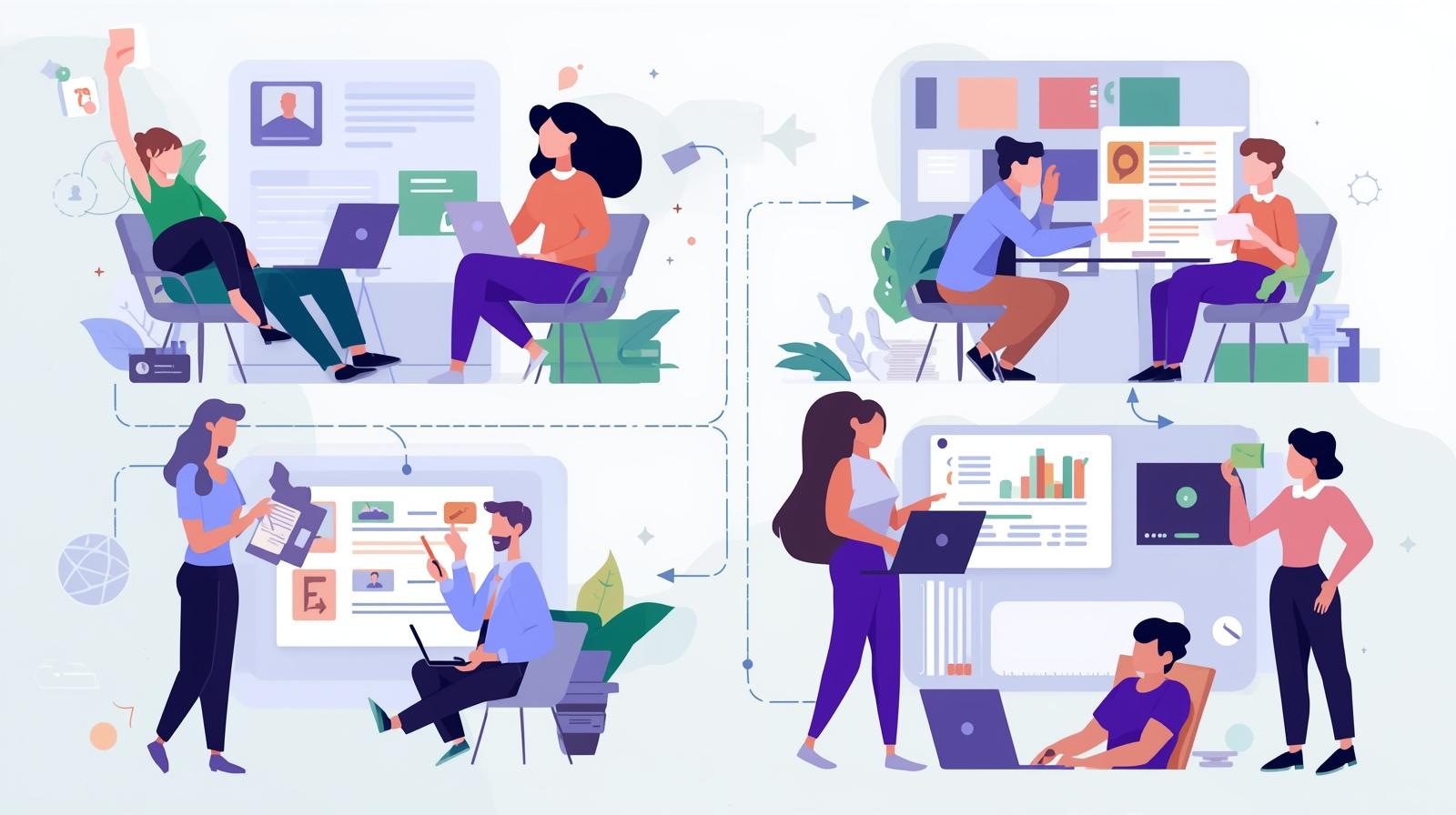
Most nonprofit leaders first encounter AI for grant writing through individual tools: ChatGPT for drafting narrative sections, general-purpose AI assistants for brainstorming, or standalone platforms for specific tasks. While these solo approaches can save time, they fundamentally miss the collaborative reality of grant writing in most organizations. Development directors work with program managers to gather impact data. Executive directors review drafts before submission. Multiple team members contribute specialized sections based on their expertise. Yet most AI tools treat grant writing as a solitary endeavor.
The next evolution in nonprofit grant writing isn't about better individual tools—it's about collaborative AI systems designed for how teams actually work. These platforms combine real-time co-editing with intelligent content libraries, version control with organizational memory, and AI assistance with team coordination. They recognize that successful grant writing depends not just on generating quality prose, but on managing knowledge across submissions, maintaining consistent messaging, and enabling seamless collaboration among colleagues with different roles and expertise.
This shift from solo to team-based AI tools addresses some of the most persistent challenges in nonprofit fundraising: the loss of institutional knowledge when staff members leave, the inconsistency across proposals when different people write them, the inefficiency of recreating similar content for multiple funders, and the coordination overhead of managing collaborative drafts through email attachments and version conflicts. AI platforms built specifically for team collaboration transform these pain points into competitive advantages.
For organizations submitting multiple grant applications annually—whether five or fifty—team-based AI tools fundamentally change the economics and effectiveness of the grant writing process. Rather than each proposal starting from scratch, teams build on a growing repository of proven content. Instead of hunting through email for the latest version, everyone works from a single source of truth. Rather than losing valuable narrative when a staff member departs, the organization retains institutional memory in intelligent systems that learn and improve over time. The result isn't just faster grant writing; it's better proposals, more consistent quality, and preserved knowledge that becomes increasingly valuable with each submission.
This article explores how nonprofit teams can move beyond individual AI tools to collaborative platforms that address the real complexities of grant writing in organizations of all sizes. We'll examine the specific challenges that team-based approaches solve, the platforms designed for collaborative work, and the practical strategies for implementing AI systems that serve your entire development operation—not just individual grant writers working in isolation.
Why Team Collaboration Transforms Grant Writing
Grant writing in nonprofits is inherently collaborative work, even when one person holds the title "grant writer." The development director may lead the writing, but they depend on the program director for outcome data, the finance director for budget details, the executive director for strategic vision, and frontline staff for compelling stories. This distributed expertise creates both opportunity and challenge: the opportunity to craft comprehensive, compelling proposals that draw on deep organizational knowledge, and the challenge of coordinating multiple contributors, managing versions, and maintaining consistent voice across sections written by different people.
Traditional approaches to this collaboration—emailing Word documents back and forth, leaving comments in Google Docs, scheduling endless review meetings—consume enormous time and introduce significant risk. Version confusion leads to accidentally submitting outdated budgets or contradictory narratives. Email threads become labyrinthine searches for "the latest version." Knowledge lives in individuals' heads rather than accessible systems, making staff turnover devastating to grant success rates. The coordination overhead can rival the actual writing work.
AI platforms purpose-built for team collaboration address these challenges at a systemic level. They provide single sources of truth where everyone works from the same document, eliminating version conflicts. They maintain complete edit histories so you can always trace who changed what and when, building accountability without blame. They enable real-time co-editing where multiple team members can contribute simultaneously without overwriting each other's work. Most importantly, they create organizational memory through intelligent content libraries that preserve your best language, proven narratives, and institutional knowledge independent of any individual employee.
Benefits of Team-Based AI
- Preserve institutional knowledge when staff members transition
- Maintain consistent voice and messaging across all proposals
- Reduce time spent on version control and coordination
- Enable subject matter experts to contribute efficiently
- Build on proven content rather than starting from scratch
- Track accountability with clear edit histories and assignments
Risks of Solo AI Tools
- Knowledge and prompts live in individual chat histories
- Inconsistent voice across proposals written by different people
- Version conflicts from manual document management
- Duplicated effort recreating similar content
- Loss of expertise when grant writers leave
- No accountability or audit trail for AI-generated content
The value of team-based AI compounds over time. Your first few proposals benefit from coordination and collaboration features. But as your content library grows with each submission, as the AI learns your organization's voice and priorities, as your team develops shared workflows and best practices, the efficiency gains accelerate. Organizations that invested in collaborative AI platforms report that their tenth grant proposal takes a fraction of the time of their first—not just because the team has learned the tool, but because the system itself has become smarter and more valuable with use.
Common Challenges in Team-Based Grant Writing
Understanding the specific pain points of collaborative grant writing helps clarify why purpose-built AI platforms matter. These challenges aren't theoretical—they represent daily frustrations that consume hours of nonprofit staff time and undermine proposal quality. Addressing them requires more than just good intentions or clearer communication; it demands systems designed specifically to support the complex, iterative, multi-person process of crafting compelling grant applications.
Version Control and Document Management
The "Which version is final?" problem that plagues email-based collaboration
Email-based collaboration creates version chaos that every development director recognizes: "Grant_Proposal_v3_FINAL_edited_JS.docx" competing with "Grant_Proposal_FINAL_FINAL_Feb1.docx" and uncertainty about which incorporates the program director's latest changes. This isn't merely annoying—it's dangerous. Submitting outdated budgets or narratives that contradict each other can sink applications that otherwise deserved funding.
The problem intensifies with multiple review cycles. The executive director reviews version 1 and provides feedback. The program manager simultaneously edits version 1 with updated outcome data. Now someone must manually merge both sets of changes into version 2, hoping nothing gets lost in the process. Add a board chair's review and a consultant's input, and version management becomes a part-time job.
Even platforms like Google Docs that eliminate version proliferation don't fully solve the problem for grant writing. While everyone edits the same document, Google Docs lacks grant-specific features like proposal templates, budget integration, funder requirement tracking, and intelligent content suggestions based on your organization's proven language. Teams end up choosing between version control (Google Docs) and grant-specific functionality (Word documents with email coordination)—a false choice that team-based AI platforms eliminate by offering both.
Role Clarity and Workflow Coordination
Confusion about who does what, when, and how in the grant writing process
Grant writing involves multiple specialized contributors: the development director drafts the narrative, the finance director creates the budget, the program manager provides outcome data, the executive director reviews for strategic alignment, and sometimes external evaluators or board members weigh in. Without clear workflows, this collaboration devolves into confusion: Has the finance director finalized the budget? Is the program manager still updating the logic model? Who's responsible for addressing the board chair's comments?
Research on collaborative grant writing emphasizes that successful teams define roles, responsibilities, and expectations upfront. They establish who drafts which sections, who reviews at each stage, who has final approval, and what the timeline looks like with specific deadlines for each contributor. Without these explicit agreements, even well-intentioned teams stumble over duplicated effort, missed handoffs, and unclear accountability.
Time constraints compound these coordination challenges. Most grant deadlines don't allow leisurely review cycles. When everyone is rushing to meet the submission deadline, ambiguity about roles becomes crisis. Who has authority to make final editing decisions when the executive director and development director disagree? Who updates the budget when program changes affect costs two days before submission? Clear workflows with defined decision rights aren't bureaucratic overhead—they're essential infrastructure for meeting deadlines without chaos.
Consistency Across Proposals and Time
Maintaining unified voice, accurate data, and coherent messaging across multiple applications
Organizations submitting multiple grant applications face a consistency challenge: how do you ensure that your February proposal to Foundation A doesn't contradict your March proposal to Foundation B? That your program description remains current across all applications even as your approach evolves? That your budget figures align across proposals even when different staff members draft them? Inconsistencies don't just create confusion—they undermine credibility with funders who compare notes.
Writing style presents another consistency challenge, especially in organizations where multiple people draft proposals or where grant writing responsibility rotates. Foundation X receives a narrative written in the executive director's formal, data-driven voice. Foundation Y receives one written in the development coordinator's storytelling style. Foundation Z receives one written by a consultant with yet another approach. While different funders appreciate different styles, the underlying voice—the personality and values of your organization—should remain recognizable. Achieving this consistency when multiple authors contribute requires more than style guides; it requires systems that help writers match your organization's established voice.
Temporal consistency matters too. Your organization evolves: programs mature, outcomes improve, leadership changes, strategic priorities shift. Updating all this information across existing proposals, standard language, and content templates becomes a maintenance burden that most nonprofits handle poorly. You submit a proposal using program descriptions that are six months out of date because no one remembered to update the shared template. Or you update the program description in one proposal but forget to cascade the change to others. Team-based AI platforms that centralize content management transform this scattered update process into systematic maintenance that ensures current information flows consistently across all applications.
Knowledge Loss During Staff Transitions
The devastating impact of losing grant writing expertise when employees depart
When a skilled grant writer leaves your organization, they take more than their personal expertise—they take institutional knowledge that took years to build. They know which language resonates with specific funders. They remember why you describe your program one way to health foundations and another way to education funders. They've refined prompts and frameworks that reliably produce quality drafts. They've built relationships with program staff that streamlined data gathering. Their departure can cut grant success rates significantly until a replacement develops comparable knowledge.
This knowledge loss problem intensifies because most grant writing wisdom exists in individuals' heads rather than documented systems. The departing grant writer might hand over files of past proposals, but those documents don't capture the thought process: why they chose specific examples, how they adapted language for different audiences, what they learned from rejections, which foundations prefer what level of detail. The new grant writer must recreate this knowledge through painful trial and error, learning through rejected proposals what their predecessor knew intuitively.
Individual AI tools like ChatGPT exacerbate this knowledge loss problem rather than solving it. If your grant writer develops excellent prompts and techniques using ChatGPT, that knowledge lives in their personal chat history. When they leave, the prompts leave with them. The new grant writer starts over, rediscovering through experimentation what their predecessor had already learned. Team-based AI platforms address this by capturing organizational knowledge in shared systems that persist through staff transitions. Your best prompts, proven narratives, successful frameworks, and institutional memory remain accessible regardless of who holds the grant writer position.
These challenges—version control, workflow coordination, consistency, and knowledge preservation—aren't isolated problems. They compound each other. Version confusion makes workflow coordination harder because no one knows which draft they should review. Poor workflow coordination leads to inconsistencies because different people work from different information. Staff turnover amplifies everything because new team members inherit all these problems without the relationship capital or institutional knowledge to navigate them.
The good news is that these interconnected challenges have interconnected solutions. Team-based AI platforms designed specifically for collaborative grant writing address these problems systematically rather than one at a time. They replace version chaos with single sources of truth, ambiguous workflows with clear task assignments, inconsistency with centralized content management, and knowledge loss with organizational memory. The next sections explore these platforms and how to implement them effectively in your nonprofit.
AI Platforms Built for Team Collaboration
The 2026 landscape of AI-powered grant writing tools includes several platforms specifically designed for team collaboration rather than solo work. These platforms share common features—real-time co-editing, intelligent content libraries, version history, and AI assistance—but differ in their specific approaches, pricing models, and target audiences. Understanding these options helps you choose tools that match your organization's size, grant volume, technical capacity, and collaboration needs.
When evaluating these platforms, focus on features that specifically address the collaborative challenges discussed earlier: How does the platform handle version control? What workflow management tools does it provide? How does it maintain consistency across proposals? What happens to organizational knowledge when staff leave? The answers to these questions matter more than generic feature lists or impressive AI capabilities, because even the most sophisticated AI won't solve your collaboration problems if the platform lacks the right team-oriented infrastructure.
Grantable: Smart Content Library and Dual AI
Centralized intelligence that learns from your organization's grant history
Grantable distinguishes itself through what it calls a "Smart Content Library"—an intelligent repository that doesn't just store your grant materials but actively learns from them and suggests relevant content for new proposals. Unlike simple file storage where you must remember what exists and manually search for it, Grantable's AI analyzes your past successful proposals, program descriptions, impact statements, and organizational information to automatically surface the most relevant content when you start a new application.
The platform combines two complementary AI capabilities: a writing AI that drafts and refines proposal narratives based on your organization's voice and proven language, and a search AI that uses semantic understanding (not just keyword matching) to find relevant content from your library. This dual approach addresses both creation and reuse—generating new content when needed while intelligently leveraging existing proven language whenever appropriate. The result is proposals that maintain consistency because they draw from the same intelligent repository while still being customized for specific funders.
For team collaboration, Grantable offers flexible access on all paid plans, allowing you to add unlimited team members. The collaborative features mirror tools like Google Docs but with grant-specific enhancements: multiple users can edit and comment on proposals in real time, changes are tracked with complete version history, and the platform maintains a single source of truth rather than proliferating document versions. The grant-specific focus means the interface is optimized for proposal development rather than generic document editing.
Grantable's strength for team-based work lies in how it captures and preserves institutional knowledge. As your team submits more grants, the Smart Content Library becomes more valuable, learning which language works for which funders, how your programs are best described, what outcomes resonate most strongly. This organizational memory persists even when individual staff members leave, protecting your nonprofit from the knowledge loss that typically accompanies grant writer turnover.
Grant Assistant: Advanced Semantic AI
Trained on 7,000+ winning proposals with deep nonprofit knowledge
Grant Assistant positions itself as the most comprehensive AI grant writing tool on the market, built on a foundation of over 7,000 winning grant proposals. This extensive training data gives the platform deep understanding of what works in nonprofit grant writing—the language patterns, narrative structures, and data presentations that persuade funders. Unlike general-purpose AI tools that might generate generic prose, Grant Assistant produces content specifically optimized for grant applications based on patterns from thousands of successful examples.
The platform's semantic AI represents a significant technical advancement over keyword-based search. When you ask for content about "youth mentoring outcomes," semantic AI understands the conceptual meaning and finds relevant content even if it uses different terminology like "adolescent guidance results" or "teen coaching impact." This conceptual understanding matters for team collaboration because different staff members describe the same programs using different language. Semantic search ensures everyone can find the content they need regardless of the exact words they use.
Grant Assistant emphasizes its ability to learn and replicate your organization's unique voice across all grant materials. This addresses a critical consistency challenge: when multiple team members draft different proposals or different sections, maintaining a unified voice can be difficult. By training on your organization's existing content, Grant Assistant helps ensure that AI-generated drafts match your established style, whether that's data-driven and formal, narrative and storytelling, or somewhere in between.
For nonprofits concerned about the learning curve for new technology, Grant Assistant's grounding in actual nonprofit grant writing practices provides an advantage. The tool's suggestions and outputs reflect real-world grant writing conventions rather than generic business writing, reducing the editing required to make AI-generated content suitable for submission. This matters for team efficiency: less time spent editing means more time available for strategic thinking about how to position your proposal most effectively for specific funders.
GrantWrite: Centralized Repository and Version Control
Document management designed specifically for grant team workflows
GrantWrite emphasizes document management and version control as core features for team collaboration. The platform maintains a centralized repository for all grant-related documents—proposals, budgets, letters of support, organizational information, program descriptions—ensuring easy access and eliminating the "where did we save that?" problem that plagues email-based collaboration. This centralization matters most for organizations submitting multiple grants, where finding and reusing proven content saves significant time.
Version control in GrantWrite goes beyond simple change tracking. The platform maintains complete history of document evolution with timestamps and attribution, so you can see not just what changed but who changed it and when. This audit trail serves multiple purposes: accountability (who updated the budget?), recovery (reverting problematic changes), and learning (understanding how successful proposals evolved through drafting). For organizations with compliance requirements or careful review processes, this detailed versioning provides essential documentation.
The platform's emphasis on seamless team member collaboration reflects understanding that grant writing involves distributed expertise. The development director might lead proposal coordination, but they need efficient ways to collect input from program managers, review from executive leadership, budget details from finance staff, and sometimes external input from evaluators or consultants. GrantWrite's collaborative features aim to streamline these multi-person workflows rather than forcing teams to coordinate through email or external tools.
For organizations evaluating whether team-based AI tools justify their cost, GrantWrite's focus on centralized document management and version control addresses two of the most time-consuming aspects of collaborative grant writing. If your team currently spends hours each grant cycle hunting for documents, resolving version conflicts, or manually tracking changes across review rounds, these features alone might justify the investment even before considering the AI writing assistance capabilities.
Additional Collaborative Platforms
Other tools supporting team-based grant writing workflows
Jasper offers team collaboration features combined with the ability to train AI on your organization's existing content to learn and replicate your unique communication style. This "brand voice" training helps maintain consistency when multiple team members use AI assistance for different proposals or sections. Jasper's shared access to AI tools and content libraries means everyone on your development team works from the same intelligent foundation rather than individual chat sessions.
Notion AI provides a different approach: rather than grant-specific software, it enhances a comprehensive workspace tool with AI capabilities. For nonprofits already using Notion for project management, documentation, and knowledge management, adding AI assistance for grant writing allows integration with existing workflows. Notion's centralized repository naturally captures organizational information, program descriptions, and impact data that grant writers need. The AI can then reference this existing knowledge base when drafting proposals, ensuring accuracy and consistency.
Instrumentl combines funder research with grant management and includes collaborative features like document libraries for storing past proposals and boilerplate content. While primarily known for helping nonprofits find relevant funding opportunities, Instrumentl's grant writing features emphasize reusing proven content across applications—a critical efficiency for teams submitting to multiple funders. The platform's integration of funder research with proposal development helps teams customize stored content appropriately for different funders' priorities.
For organizations with very limited budgets, Google Docs provides free baseline team collaboration: simultaneous editing, comment threads, change tracking, and shared access. While lacking grant-specific AI assistance and intelligent content management, Google Docs eliminates the version control chaos of email-based collaboration. Many small nonprofits successfully combine free collaboration tools (Google Docs) with affordable AI assistance (ChatGPT) as a stepping stone before investing in integrated platforms. This hybrid approach requires more manual coordination but proves the value of collaborative workflows before committing to specialized software.
When choosing among these platforms, consider your organization's specific collaboration pain points rather than generic feature comparisons. If knowledge preservation through staff transitions is your primary concern, prioritize platforms with strong content libraries and organizational memory like Grantable. If version control and document management cause the most frustration, GrantWrite's specialized features address those needs directly. If you're already invested in ecosystem tools like Notion, enhancing existing workflows might prove more practical than adopting entirely new software.
Most importantly, recognize that the best platform for your organization might not be the one with the most features or the most sophisticated AI. It's the one that your team will actually use consistently, that integrates with your existing workflows, that addresses your specific collaboration challenges, and that fits your budget. Many platforms offer free trials or demo accounts—use them to test real grant writing scenarios with your actual team before committing, because successful technology adoption depends as much on organizational fit as on technical capabilities.
Smart Content Libraries: Building Organizational Memory
The most transformative feature of team-based AI platforms isn't real-time collaboration or version control—those capabilities solve important problems but don't fundamentally change how grant writing works. The true transformation comes from intelligent content libraries that capture and leverage your organization's accumulated grant writing knowledge. These systems create institutional memory that grows more valuable with use, preserving expertise through staff transitions and accelerating each successive proposal by building on proven content.
Traditional approaches to reusing grant content typically involve one of two unsatisfying options: maintaining folders of old proposals that you manually search through hoping to find relevant language, or creating boilerplate "standard language" documents that quickly become outdated and don't account for different funder contexts. Neither approach scales well or captures the nuanced knowledge experienced grant writers develop about what works for which audiences. Smart content libraries use AI to make organizational knowledge both accessible and applicable in ways that folder structures and standard documents never could.
How Smart Content Libraries Work
From simple storage to intelligent organizational memory
Smart content libraries analyze your uploaded grant materials—successful proposals, program descriptions, impact narratives, organizational information, evaluation reports—to understand not just what you wrote but what these documents represent conceptually. When you start a new proposal, the AI doesn't just keyword-match your query to find relevant content; it understands semantic meaning and context to surface the most applicable examples even if they use different terminology or structure.
This semantic understanding transforms content reuse from a manual search-and-copy process to an intelligent suggestion system. You're drafting a needs statement about food insecurity in rural communities for a new funder. The smart library recognizes the conceptual components—needs statement, food insecurity, rural context—and suggests relevant language from past proposals, even ones that addressed "hunger in agricultural regions" or "nutritional access in non-urban areas." The system understands these as related concepts rather than requiring exact phrase matches.
Categorization and learning capabilities distinguish smart libraries from simple document repositories. As you use suggested content, accept certain recommendations, reject others, or modify what the AI proposes, the system learns your preferences and priorities. It notices that you prefer specific outcome metrics over others, that you adapt language in particular ways for health foundations versus community foundations, that certain program descriptions consistently need updating while others remain stable. This learning makes suggestions progressively more useful over time.
The truly valuable aspect of smart content libraries emerges in their organizational memory function. When your experienced grant writer leaves, they don't take the knowledge with them because it's been captured in the system. The new grant writer has access to proven language, successful examples, and the accumulated wisdom of past applications. They can see what worked, what different funders responded to, how program descriptions evolved. This preserved knowledge dramatically accelerates onboarding and reduces the performance gap that typically follows staff transitions.
Building and Maintaining Your Content Library
Practical strategies for creating valuable organizational knowledge assets
Start with Your Best Work
Begin your content library with successful proposals that received funding, particularly those that secured significant grants or broke through to new funders. These documents represent proven language and approaches. Don't feel pressure to upload every grant you've ever submitted—focus on quality over quantity in the initial library. Ten excellent proposals that secured funding provide better training material than fifty mediocre applications including rejections.
Organize by Concept, Not Just Project
While project-based organization seems intuitive (folder for Youth Mentoring Program, folder for Food Pantry, etc.), conceptual organization proves more useful for AI systems. Tag content by what it represents: needs statements, logic models, outcome metrics, budget narratives, organizational histories. This conceptual tagging helps the AI understand what each piece of content accomplishes rather than just which program it describes, making suggestions more contextually appropriate when you're drafting new proposals.
Capture Why, Not Just What
When adding content to your library, include notes about context: Why did this language work for this funder? What feedback did you receive? What variations did you test? This metadata transforms simple document storage into actual knowledge management. Future grant writers (or the AI system itself) can understand not just that specific language worked, but why it worked and when to apply similar approaches. Some platforms support this annotation directly; in others, include it in document titles or internal comments.
Regular Content Maintenance
Smart content libraries remain valuable only if content stays current. Establish quarterly reviews where you update program descriptions, refresh outcome data, remove outdated organizational information, and add recent successful proposals. Assign this maintenance responsibility explicitly—don't let it fall to whenever someone remembers. Outdated content doesn't just fail to help; it actively undermines quality if the AI suggests language that no longer accurately represents your programs or impact.
Build Library Use Into Workflow
The library becomes valuable only when your team actually uses it. Make checking the content library the first step in every new proposal. When drafting, query the library before writing from scratch. After successful submissions, immediately add strong sections to the library while they're fresh. This consistent use creates a virtuous cycle: the library becomes more useful, which encourages more use, which makes it more valuable, which drives further adoption.
The return on investment in building and maintaining a smart content library compounds dramatically over time. Your first few proposals see modest benefits—perhaps 20-30% time savings from reusing some proven language. But proposal number twenty draws on a rich repository of tested content, learned patterns, and institutional knowledge that might reduce drafting time by 60-70% while actually improving quality because you're building on proven approaches rather than reinventing each time.
For small nonprofits concerned about the overhead of maintaining content libraries, start minimal: upload your five best proposals, tag them with basic categories, and commit to adding each new successful proposal as you complete it. This lightweight approach still captures organizational knowledge and provides AI systems with context to generate better suggestions. You can expand sophistication over time as you experience the benefits and develop comfort with the tools. The important step is beginning to systematically capture knowledge rather than letting it remain scattered across individuals' files or, worse, lost entirely when people leave.
Roles and Workflow Design for Team Success
Even the most sophisticated AI platform won't improve your grant writing if your team lacks clear roles, defined workflows, and explicit expectations. Technology amplifies existing organizational dynamics—it makes good processes more efficient and chaotic processes more chaotically efficient. Before implementing team-based AI tools, or as part of that implementation, invest time in clarifying who does what, when, and how in your grant writing process. This clarity transforms collaboration software from another coordination burden into genuine leverage.
Research on successful collaborative grant writing consistently emphasizes upfront agreements about roles, responsibilities, and workflows. Teams that begin with explicit discussions about who drafts which sections, who reviews at each stage, what the timeline looks like, and how decisions get made report significantly smoother collaboration and higher success rates than teams that attempt to "figure it out as we go." The time spent establishing clear processes pays dividends in reduced confusion, faster drafts, and fewer conflicts over authority or approach.
Common Grant Writing Roles and Responsibilities
Who typically contributes what in collaborative grant development
Grant Writer/Development Director (Lead Coordinator)
Typically coordinates the overall process, drafts narrative sections, manages the proposal timeline, integrates contributions from other team members, and serves as primary point of contact for funder questions. In team-based AI platforms, this role often "owns" the proposal document and has final editing authority, though they rely heavily on input from specialists in other areas. The lead coordinator balances between maintaining proposal cohesion (unified voice, logical flow) and incorporating essential expertise from colleagues with deeper program or financial knowledge.
Program Manager/Director (Content Expert)
Provides detailed program information: specific activities, participant demographics, outcome data, logic models, evidence base for approaches used. Program staff typically draft or heavily review sections about program design, implementation, and impact. They catch inaccuracies in how programs are described and provide the concrete details that make proposals credible. In AI-assisted workflows, program managers might review AI-generated program descriptions to ensure accuracy and add specific examples or recent data that the AI wouldn't have access to.
Finance Director (Budget Developer)
Creates the proposal budget, ensures financial accuracy, confirms compliance with funder restrictions, and drafts budget narratives explaining how requested funds will be used. Finance staff verify that program plans are financially realistic and that budget figures align with organizational capacity. They catch problems like underestimating costs, forgetting indirect rates, or proposing match commitments the organization can't fulfill. Finance directors often work in specialized budget templates or accounting systems, then integrate that work into the overall proposal package.
Executive Director (Strategic Reviewer)
Reviews proposals for alignment with organizational mission and strategic priorities, provides final approval before submission, may draft sections about organizational vision or leadership, and represents the organization's voice in key narrative sections. Executive directors typically don't draft most proposal content but review completed drafts to ensure strategic fit and appropriate positioning. Their feedback often focuses on framing, emphasis, and how the proposal represents the organization to external audiences. In smaller organizations, EDs may take on more direct writing responsibilities.
Additional Contributors
Depending on organization size and proposal requirements: evaluators provide measurement and assessment content; HR staff contribute information about organizational capacity and staff qualifications; board members may review and provide input particularly for major applications; external consultants sometimes assist with specialized sections like evaluation design; frontline staff or program participants might contribute stories or testimonials that illustrate impact in compelling ways.
Designing Effective Grant Writing Workflows
Building processes that clarify handoffs, deadlines, and decision rights
Start with Timeline Working Backward
Begin with the submission deadline and work backward to establish realistic milestones: final review due date, first complete draft deadline, budget completion, program information gathering, initial research. Build in buffer time for unexpected delays—proposals always take longer than initial estimates. Establish these dates explicitly at kickoff and confirm everyone can meet them given other responsibilities. This backward timeline planning prevents the crisis scramble that happens when you realize two days before deadline that the finance director hasn't started the budget because they didn't know when you needed it.
Define Decision Rights for Conflicts
Inevitable disagreements arise in collaborative grant writing: Should we emphasize program scale or depth? Include this success story or that one? Request this budget amount or that? Waiting until conflict emerges to determine who decides wastes time and creates tension. Establish upfront who has authority to make final decisions on different types of questions: program design decisions → program director, strategic framing → executive director, budget allocation → finance director, overall proposal positioning → development director. Clear decision rights don't prevent discussion; they provide resolution mechanisms when discussion doesn't achieve consensus.
Establish Review Stages and What Each Accomplishes
Multiple review rounds serve different purposes. Early reviews by program staff should focus on accuracy: are program descriptions correct, are outcome numbers right, is the logic model sound? Later reviews by leadership should focus on strategy: does the proposal position us appropriately, does it align with our priorities, is it compelling to this funder? Final reviews should focus on polish: is the language clear, are there typos, does everything flow? Making these distinct purposes explicit helps reviewers provide the right kind of feedback at the right time rather than everyone trying to comment on everything in every round.
Use Platform Features to Manage Workflow
Team-based AI platforms typically include task assignment, status tracking, and notification features—use them. Assign specific sections to specific people with explicit due dates. Mark sections as "in progress," "ready for review," or "complete." Use automated reminders for approaching deadlines. These platform features replace the endless "just checking on the budget" emails and "did you see my comments?" messages that consume time in unstructured workflows. The coordination overhead that the software handles frees everyone to focus on actual content development.
Document and Refine Your Process
After completing a proposal, conduct a brief retrospective: what worked well in this workflow, what caused problems, what should we change for next time? Document your refined process so future proposals benefit from lessons learned. This continuous improvement approach transforms ad hoc collaboration into systematic capability. Over time, you develop organization-specific workflows that account for your particular team dynamics, capacity constraints, and collaboration patterns. This documented process also dramatically accelerates onboarding when new team members join the grant writing effort.
The relationship between clear workflows and effective technology adoption is mutually reinforcing. Clear roles and processes help you choose the right technology features and use them appropriately. Good technology makes roles and workflows easier to maintain by automating coordination, clarifying status, and reducing the communication overhead that often derails structured processes. But trying to use technology to create workflow clarity in organizations that lack it typically fails—the platform just automates confusion rather than collaboration.
For small nonprofits with limited staff, these workflow recommendations might seem like overkill when three people handle all grant writing. But even small teams benefit from explicit agreements: who drafts first, who reviews, what the timeline looks like, who decides when you disagree. The formality can scale with organizational complexity—a three-person team might establish their workflow in a 15-minute conversation, while a 15-person team spanning multiple departments might need documented processes and formal kickoff meetings. Regardless of scale, the principle holds: clarify roles and workflows before expecting technology to magically improve collaboration.
Best Practices for AI-Powered Team Grant Writing
Implementing team-based AI tools successfully requires more than selecting good software and establishing clear workflows. It demands thoughtful attention to how your team adopts new technology, how you maintain quality standards when using AI assistance, how you balance efficiency gains with the authentic voice and relationships that make grant writing effective, and how you learn and improve over time. These best practices reflect lessons from nonprofits that have successfully integrated collaborative AI into their grant writing operations.
Start Small and Prove Value Before Scaling
Don't try to transform your entire grant writing operation overnight. Begin with a pilot: one proposal, one small team, one funding opportunity that matters but isn't make-or-break. Use this initial project to learn the platform, identify what works and what doesn't, develop team comfort with AI assistance, and demonstrate concrete benefits before expanding. Successful pilots create organizational champions who advocate for broader adoption based on real experience rather than theoretical benefits.
Choose your pilot strategically. Select a grant that represents typical challenges (normal deadline pressure, standard team collaboration, regular funder requirements) rather than either the easiest possible application or the highest-stakes opportunity. The pilot should genuinely test the platform's value for your actual work, not create an unrealistic scenario that over-promises what regular use will deliver. Document time savings, quality improvements, and collaboration benefits from the pilot to build the case for continued investment.
After the pilot, expand thoughtfully based on what you learned. Perhaps you discover that the content library needs more development before it provides strong suggestions—address that before rolling out to more users. Maybe you find that certain team members embrace AI assistance while others resist—start with enthusiasts before requiring skeptics to participate. Use pilot insights to refine your approach, not just to justify proceeding with your original plan unchanged.
Maintain Human Review and Quality Control
AI-generated content should never go from platform to funder without careful human review. Establish clear expectations that AI provides drafts, suggestions, and assistance—not final copy. Team members should review AI outputs for accuracy (are program descriptions correct?), appropriateness (does this language fit this funder's priorities?), and authenticity (does this sound like our organization?). The goal is AI-assisted human writing, not human-reviewed AI writing—the human judgment remains primary.
Consider implementing a staged review process specifically for AI-generated content: first, the person who prompted the AI reviews for basic accuracy and fit; second, a subject matter expert reviews for correctness and completeness; third, the lead grant writer reviews for voice and strategy; finally, leadership reviews for alignment and positioning. This may seem like excessive review, but establishing rigorous quality control early builds confidence in AI assistance and prevents the costly mistakes that can occur when organizations trust AI outputs too readily.
Document and share examples of AI outputs that required significant revision or that contained inaccuracies. This builds healthy skepticism and reinforces review importance. Paradoxically, highlighting AI limitations makes teams more comfortable using AI because they know organizational norms include critical evaluation rather than blind trust. As your team develops experience with what AI does well and what it struggles with, you can refine review processes to focus on actual risk areas rather than reviewing everything equally intensely.
Invest in Team Training and Support
Budget time and resources for training when implementing new AI tools, not just for initial onboarding but for ongoing skill development as the team discovers more sophisticated uses. Consider bringing in platform experts for tailored training rather than just sharing generic video tutorials. Schedule regular skill-sharing sessions where team members demonstrate techniques they've discovered or challenges they've overcome. Learning to use AI tools effectively takes time and practice—organizations that recognize this and support it see much higher returns.
Address the uneven comfort levels your team will have with AI technology. Some staff members (often but not always younger ones) will embrace AI tools eagerly and develop expertise quickly. Others will be skeptical, overwhelmed, or resistant. Both responses are legitimate. Create space for skeptics to voice concerns and questions without judgment. Pair AI-comfortable team members with those who struggle to provide peer support. Celebrate incremental progress rather than expecting instant proficiency. Remember that resistance to new technology often reflects legitimate concerns about job security, quality control, or organizational values—address these underlying issues rather than dismissing resistance as stubbornness.
Build AI literacy alongside tool training. Help team members understand what AI can and cannot do, how it works at a conceptual level, what its limitations are, and where bias or errors might emerge. This foundational understanding makes people better users of AI tools because they can anticipate problems, craft better prompts, and critically evaluate outputs. Organizations that invest in AI literacy find that team members become creative problem-solvers who discover valuable applications beyond the initial use cases leadership imagined.
Communicate Transparently About AI Use
Decide explicitly as an organization whether and how you'll disclose AI use in grant proposals. Some funders now ask directly about AI-assisted content. Some nonprofits choose to proactively disclose even when not asked, viewing transparency as consistent with organizational values. Others treat AI as similar to other writing tools (spell checkers, grammar assistants) that don't require disclosure. There's no universal right answer, but having an intentional policy prevents inconsistency across proposals and ensures everyone on the team knows organizational expectations.
Consider your organization's knowledge management strategy and how AI tools fit within it. If you position AI as part of systematic knowledge capture and reuse—similar to maintaining templates, standard language, and proposal archives—that framing helps stakeholders understand AI as enabling better use of institutional knowledge rather than replacing human expertise. This narrative also helps with potential concerns from board members or donors about AI adoption.
Internally, maintain transparency about how AI suggestions are generated and what data they draw from. Team members should understand that AI recommendations come from your content library, not magic. This demystification makes AI less threatening and helps people engage with it as a tool they can understand and control rather than an inscrutable black box. When people understand how the system works, they become better at prompting it effectively and catching when its suggestions miss the mark.
Treat Your Content Library as a Strategic Asset
Your smart content library represents accumulated organizational knowledge that becomes more valuable over time—treat it accordingly. Assign responsibility for library maintenance to specific staff members with explicit time allocated for this work. Schedule regular reviews to update outdated content, add recent successful proposals, and refine organization schemes. Just as you wouldn't let your donor database decay through neglect, don't let your grant writing knowledge base deteriorate because no one owns its upkeep.
Consider access controls and versioning for your content library, especially as it grows. Not all content should be accessible to all users—confidential financial information, sensitive program details, or funder-specific customizations might need restricted access. Implement version control so you can trace how content evolves and revert problematic changes. These administrative considerations become increasingly important as your library grows from a few dozen documents to hundreds of pieces of content used across many proposals.
Recognize that building a valuable content library takes time and intentional effort. The library won't magically become useful by uploading every document you have. It requires curation: selecting quality examples, adding metadata and context, organizing content logically, removing outdated material, and continuously refining based on what proves helpful in actual use. Organizations that achieve the highest value from AI-powered grant writing treat content library development as a strategic investment, not an afterthought or one-time setup task.
Focus on Relationship Building, Not Just Efficiency
The time AI saves in grant writing should free you to invest more in funder relationships, not to submit more applications with the same level of engagement. Use efficiency gains to research funders more thoroughly, personalize outreach more carefully, and cultivate relationships more deliberately. Grant success depends as much on relational factors as proposal quality—AI can improve proposals but can't replace the human connections that build funder confidence and trust. The most successful nonprofits use AI to handle routine tasks so staff can focus on relationship work that AI cannot replicate.
Resist the temptation to treat AI efficiency as primarily about doing more with less. While resource-constrained nonprofits understandably want to submit more applications without adding staff, this volume approach often produces diminishing returns. Better strategy: use AI to maintain your current grant volume with less frantic scrambling, then invest the recovered time in prospect research, personalized cultivation, thoughtful proposal customization for top prospects, and relationship stewardship with current funders. Quality over quantity applies to grant writing even when AI makes quantity more achievable.
Remember that funders increasingly use AI themselves to screen applications and evaluate proposals. This technological change on both sides of the grant relationship makes authentic differentiation more important, not less. Your organization's unique voice, specific approach, real relationships, and genuine stories become more valuable when many proposals use similar AI-assisted language. Don't let AI assistance homogenize your proposals into generic competence—use the efficiency AI provides to craft more distinctive, relationship-driven applications that stand out precisely because they reflect real human connection rather than optimized but impersonal content.
These best practices aren't exhaustive—you'll discover your own organization-specific learnings as you implement team-based AI tools. The key is approaching implementation thoughtfully and learning from experience rather than assuming technology alone will solve collaboration challenges. The nonprofits achieving the greatest success with AI-powered grant writing share common characteristics: they start small and expand based on evidence, they maintain rigorous quality control, they invest in team development, they treat knowledge management as strategic work, and they use efficiency gains to deepen relationships rather than just accelerate transactions. These practices transform AI from a tactical writing assistant into genuine strategic leverage for your fundraising operation.
The Future of Collaborative Grant Writing
The evolution from solo AI tools to team-based collaborative platforms represents a fundamental shift in how nonprofits approach grant writing—from individual craft to institutional capability, from personal expertise to organizational memory, from ad hoc processes to systematic knowledge management. This transformation addresses some of the most persistent challenges in nonprofit fundraising: the coordination overhead that rivals actual writing work, the inconsistency across proposals that undermines credibility, the knowledge loss when experienced staff depart, and the inefficiency of recreating similar content for multiple funders.
Team-based AI platforms succeed not primarily because they generate better prose than individual tools, but because they address grant writing as it actually exists in nonprofits: a collaborative process involving distributed expertise, requiring coordination across roles, building on accumulated knowledge, and demanding consistency across time and applications. Platforms designed for this reality—with real-time collaboration, intelligent content libraries, version control, and organizational memory—provide leverage that solo tools cannot match regardless of how sophisticated their language models become.
The investment required to implement collaborative AI tools successfully extends beyond software costs to include team training, workflow development, content library curation, and ongoing refinement based on experience. Yet organizations that make this comprehensive investment consistently report that benefits compound over time: initial efficiency gains expand as content libraries grow, quality improvements accelerate as teams develop expertise with the tools, and knowledge preservation proves invaluable as staff turnover occurs. The platforms become more useful with use, creating positive feedback loops that justify and exceed the initial investment.
Looking forward, the distinction between team-based and solo AI tools will likely intensify rather than disappear. General-purpose AI assistants like ChatGPT or Claude will continue improving at generating text, but they won't develop the grant-specific collaboration features, organizational memory systems, and workflow management capabilities that purpose-built platforms provide. Meanwhile, specialized platforms will incorporate increasingly sophisticated AI but differentiate primarily through collaboration infrastructure and knowledge management rather than raw writing quality. The future belongs to platforms that understand grant writing as organizational work, not individual authorship.
For nonprofit leaders deciding whether to invest in team-based AI tools, the calculation should focus less on whether AI can write well (it can and will improve) and more on whether your current collaboration processes serve you adequately. If version confusion frustrates your team, if knowledge walks out the door when people leave, if maintaining consistency across proposals consumes excessive time, if coordinating contributions creates bottlenecks—these problems justify collaborative platforms regardless of AI capabilities. The AI assistance is valuable, but addressing systemic collaboration challenges often matters more for organizational effectiveness.
The transition from solo to team-based AI tools mirrors a broader shift in how nonprofits approach technology: moving from individual productivity tools to organizational systems, from tactical solutions to strategic infrastructure, from discrete applications to integrated platforms. This evolution demands more upfront investment and more systematic implementation but delivers greater returns by addressing organizational rather than merely individual needs. As AI capabilities become commoditized—available in every tool from every vendor—competitive advantage will come from how well you integrate those capabilities into collaborative workflows, preserve institutional knowledge, and build sustainable processes rather than from accessing the latest language model.
The most successful nonprofits will be those that use AI-powered collaboration to do something that previously wasn't feasible: maintain grant writing quality and consistency even with staff turnover, submit more applications without proportionally increasing staff, respond more quickly to emerging opportunities because proven content is immediately accessible, and continuously improve through systematic learning captured in organizational memory. These capabilities don't just make existing work easier—they enable organizational capacities that transform fundraising from constraint to competitive advantage.
Ready to Transform Your Grant Writing Process?
Let's discuss how team-based AI tools can address your specific collaboration challenges, preserve your institutional knowledge, and accelerate your fundraising success with systematic approaches tailored to your organization.