
The AI Divide: Why 2.6 Billion People Without Internet Are Being Left Behind
As artificial intelligence reshapes how we access information, deliver services, and solve problems, a fundamental question confronts the social sector: what happens to the communities we serve when AI-powered tools require internet connectivity that one-third of the world's population doesn't have? While nonprofits race to adopt ChatGPT, cloud-based analytics, and automated donor engagement platforms, 2.6 billion people remain offline, unable to benefit from the AI revolution and increasingly marginalized as AI-enabled services become the norm rather than the exception.
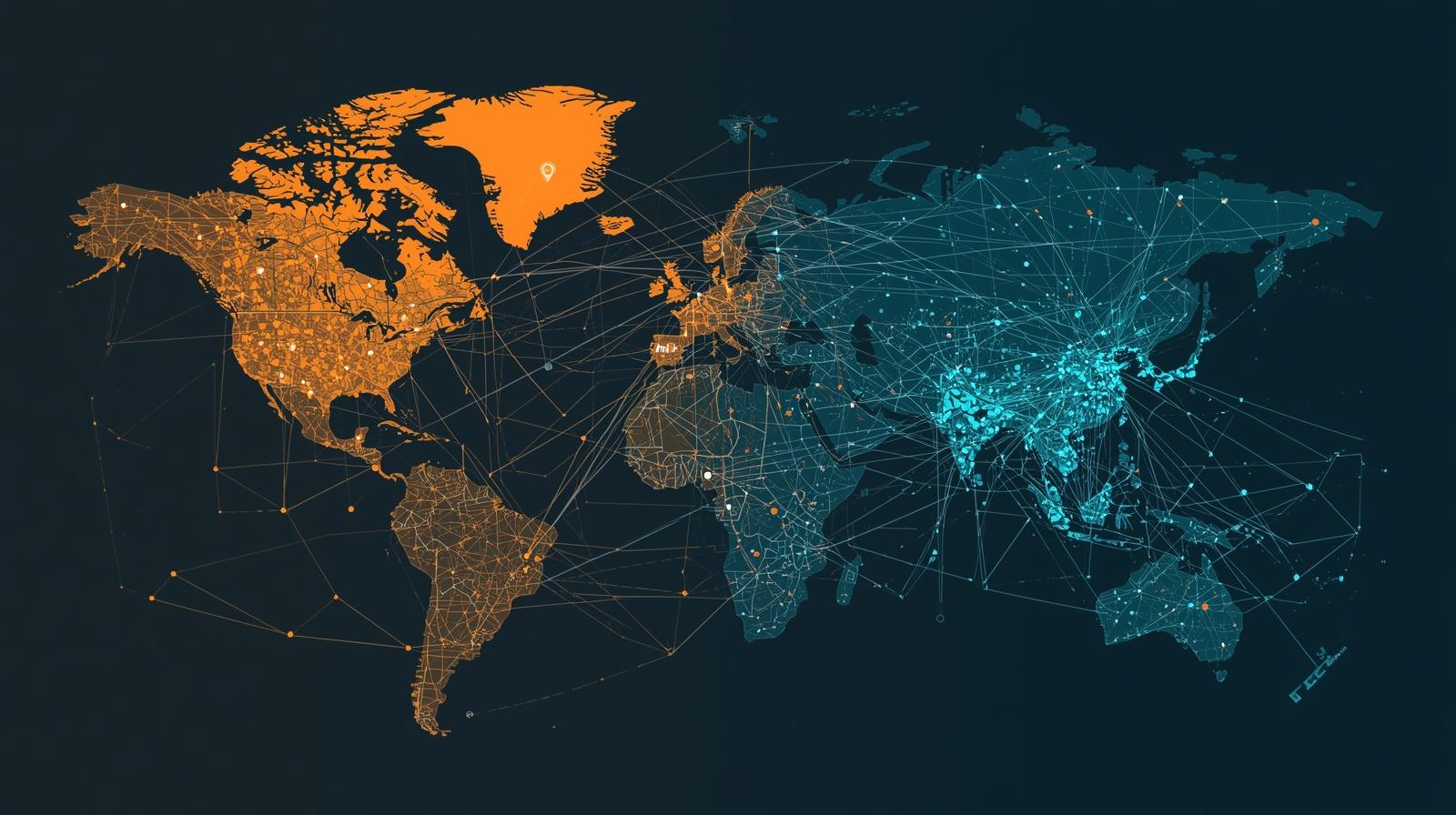
The digital divide is not new. For decades, development organizations, governments, and technology companies have worked to connect the unconnected, recognizing that internet access has become essential infrastructure for education, economic opportunity, and civic participation. Yet despite these efforts, the International Telecommunication Union estimates that 2.6 billion people, representing 32 percent of the world's population, remain offline.
The emergence of AI as a transformative technology amplifies this divide in ways that go beyond simple connectivity. AI-powered services require not just internet access, but reliable, high-speed connectivity capable of supporting cloud-based applications, real-time data processing, and continuous model updates. The gap between those who can access AI tools and those who cannot is creating a new tier of digital inequality, one where AI becomes a multiplier of existing disparities rather than a bridge across them.
For nonprofits, this presents both an ethical challenge and a practical dilemma. Many organizations serve communities on both sides of the digital divide. A refugee resettlement agency might use AI-powered case management tools for staff in urban offices while serving recent arrivals who lack smartphones or reliable internet. An international development nonprofit might deploy sophisticated donor analytics in their headquarters while working with rural communities where electricity is intermittent and internet nonexistent. As we enthusiastically adopt AI to improve our operations, are we inadvertently widening the gap between those we can serve effectively and those we cannot?
This article examines the scope and nature of the AI divide, explores who is being left behind and why, investigates emerging solutions that bring AI benefits to offline communities, and offers guidance for nonprofits navigating the tension between operational efficiency and equitable access. The goal is not to argue against AI adoption, but to ensure that as we embrace these powerful tools, we do so with intentionality about inclusion and a commitment to serving all communities, not just those with reliable connectivity.
Understanding the Scale of the Problem
When we talk about 2.6 billion people without internet access, the number is so large it risks becoming abstract. To grasp the magnitude: that's more than the combined populations of North America, South America, and Europe. It's equivalent to everyone in China and India being offline. These aren't people in remote, uninhabited regions, they're concentrated in communities where nonprofits actively work: rural villages, urban slums, refugee camps, and economically marginalized areas within developed nations.
The divide is starkly geographic and economic. In high-income countries, 93 percent of the population uses the internet, compared to just 27 percent in low-income countries. Urban areas fare far better than rural regions: globally, 83 percent of urban dwellers are online while only 48 percent of rural populations have internet access. These disparities map directly onto the communities most nonprofits serve.
But connectivity alone doesn't tell the full story. Even where internet infrastructure exists, affordability, device access, digital literacy, and cultural factors create additional barriers. A community health worker in rural Nigeria might technically have cellular coverage but lack the smartphone needed to run AI-powered diagnostic tools. A farmworker in California's Central Valley might have a basic mobile phone with limited data that can handle voice calls and SMS but cannot support cloud-based applications. An elderly program participant might have a donated tablet but lack the technical skills to navigate AI-assisted services.
The AI era introduces new layers of exclusion. Many AI applications are designed for cloud deployment, assuming always-on connectivity and modern devices. Machine learning models grow in size and complexity, requiring more bandwidth and processing power. Natural language interfaces default to English or other major languages, excluding speakers of indigenous or minority languages. The result is that even communities with partial connectivity may find themselves unable to access AI-enabled services designed without their constraints in mind.
Dimensions of the AI Divide
Overlapping barriers to AI access
- Infrastructure gap: 2.6 billion people lack internet connectivity entirely, unable to access cloud-based AI services
- Device barrier: Many with connectivity lack smartphones or computers required for AI applications
- Affordability challenge: Data costs prohibit regular use of bandwidth-intensive AI tools even where networks exist
- Literacy divide: Limited digital skills prevent effective use of AI interfaces and applications
- Language exclusion: AI systems trained primarily on English and major languages fail speakers of minority languages
- Design assumptions: AI tools built for high-resource contexts don't function in low-bandwidth or offline environments
- Economic sustainability: Free AI access is temporary as platforms shift to paid models, pricing out resource-constrained organizations
For nonprofits, the scale of the problem means that decisions about technology adoption carry real consequences for equity. When a youth development organization chooses an AI-powered tutoring platform that requires high-speed internet, they may inadvertently create a two-tier system where urban students with connectivity access superior resources while rural students continue with traditional methods. When a health nonprofit deploys AI diagnostic tools that only work on smartphones, they may improve care for some communities while leaving others further behind.
Who Gets Left Behind
The AI divide doesn't affect everyone equally. Specific populations face compounded disadvantages that make AI access particularly challenging, often the same communities that nonprofits prioritize in their mission work.
Rural communities face fundamental infrastructure challenges. While urban areas benefit from competitive telecommunications markets and dense population that makes broadband deployment economically viable, rural regions often lack basic cellular coverage. Satellite internet provides some relief but remains expensive and limited in bandwidth. For nonprofits working in rural development, agricultural extension, or remote education, the assumption that beneficiaries can access cloud-based AI tools is often fundamentally flawed.
Refugee and displaced populations experience multiple barriers simultaneously. Temporary camps may lack any infrastructure. Transit situations make establishing connectivity difficult. Documentation requirements for mobile accounts create barriers for those without legal status. Language diversity means AI tools trained on major languages fail to serve them. Humanitarian organizations increasingly rely on AI for needs assessment and service delivery, yet the populations most in need often have least access to the technology.
Elderly and disabled communities face accessibility challenges that extend beyond connectivity. Interfaces designed for young, tech-savvy users create barriers for those with visual, hearing, or cognitive impairments. Voice-based AI systems struggle with speech variations from disabilities or age-related changes. The rapid pace of technology evolution leaves older adults continually playing catch-up. Nonprofits serving seniors or people with disabilities must carefully evaluate whether AI tools genuinely improve accessibility or create new obstacles.
Low-income populations in developed nations experience what researchers call the "homework gap," children who lack home internet access required for online learning. This extends to adults who can't access AI-powered job search tools, government services, or health information. Having an address in a wealthy country doesn't guarantee digital inclusion when smartphones are unaffordable, data plans are too expensive, and public access points have closed.
Indigenous communities face unique challenges around language and cultural appropriateness. AI systems rarely support indigenous languages, making voice interfaces and natural language processing useless. Cultural protocols around information sharing may conflict with data-hungry AI systems. Geographic isolation compounds connectivity challenges. Nonprofits working with indigenous populations must recognize that AI designed for mainstream populations may be fundamentally unsuitable without significant adaptation.
Populations Facing Compounded Barriers
Communities at highest risk of AI exclusion
Geographic Factors
- Rural communities with limited broadband infrastructure and sparse cellular coverage
- Island nations and remote regions where connectivity costs are prohibitive
- Conflict zones where infrastructure has been damaged or service is unreliable
Socioeconomic Barriers
- Low-income households unable to afford devices or data plans for AI-enabled services
- Informal workers and gig economy participants with unstable income for technology expenses
- Unhoused populations lacking stable addresses or charging infrastructure for devices
Demographic Vulnerabilities
- Elderly populations with limited digital literacy and accessibility needs
- Refugees and migrants navigating language barriers and documentation requirements
- People with disabilities requiring assistive technologies that don't interface well with AI
Cultural and Linguistic Factors
- Indigenous communities whose languages lack AI training data and digital resources
- Speakers of minority languages with limited or no AI support for natural language processing
- Communities with cultural protocols around data that conflict with AI system requirements
Understanding who gets left behind matters because it reveals that the AI divide isn't random or inevitable. It follows existing patterns of marginalization and inequality. The communities least likely to access AI benefits are often the same communities facing the most severe challenges that AI might help address: limited healthcare, inadequate education, economic insecurity, social isolation. Without intentional intervention, AI risks becoming another mechanism that concentrates advantage among the already advantaged while leaving vulnerable populations further behind.
Solutions and Innovations: Bringing AI to Offline Communities
While the scale of the AI divide is daunting, innovative organizations and technology developers are creating solutions that bring AI benefits to communities without reliable internet access. These approaches recognize that waiting for universal connectivity is not an option when AI-enabled services are becoming essential infrastructure.
Voice-based AI for feature phones represents one of the most promising developments. Organizations like Viamo have deployed systems that work on basic mobile phones without internet access. Users dial a toll-free number and interact with AI via voice, receiving information about agriculture, health, education, or other services in their local language. The AI processing happens on cloud servers, but users only need basic cellular voice service, not data connectivity.
Viamo's work in Sub-Saharan Africa demonstrates the potential. In Tanzania, farmers use AI-enabled voice companions to get customized agricultural advice. In Sierra Leone, students receive AI tutoring through daily phone calls to basic feature phones. Healthcare workers in Nigeria access clinical decision support through voice hotlines, getting AI-generated responses to health queries without needing smartphones or internet.
What makes voice-based AI particularly powerful is its compatibility with existing infrastructure. Most rural areas have at least basic cellular voice coverage even when data networks are absent. Feature phones are far more affordable than smartphones. Voice interfaces work for users with limited literacy. The technology meets communities where they are rather than requiring them to overcome multiple barriers to access.
Local AI models offer another approach. Instead of requiring constant cloud connectivity, these systems run AI models directly on devices or local servers. Technologies like Wakoma's OfflineAI enable organizations to deploy AI capabilities in environments without reliable internet. Educational platforms like Kolibri bring AI-driven assessments and personalized learning to students without Wi-Fi by running locally.
Local AI requires different tradeoffs than cloud-based systems. Models must be smaller and simpler to run on less powerful hardware. Updates can't happen automatically and require periodic syncing when connectivity is available. But for many nonprofit applications, these limitations are acceptable when the alternative is excluding entire communities from AI-enabled services.
SMS and text-based interfaces provide AI access through the most basic form of digital communication. While less sophisticated than voice or app-based interactions, text messaging works on every mobile phone and requires minimal data. Organizations are experimenting with AI chatbots that operate via SMS, enabling users to get information, schedule appointments, or access services through simple text exchanges that work even on the most basic phones.
Voice-First AI Solutions
- Works on basic feature phones without internet
- Toll-free calling removes cost barriers
- Supports multiple local languages and dialects
- No literacy requirements for voice interaction
- Cloud processing means no device limitations
Offline AI Technologies
- Runs locally without internet dependency
- Complete privacy for sensitive data
- Works during connectivity outages
- No ongoing data costs for users
- Periodic updates when connectivity available
Hybrid approaches combine multiple strategies to maximize reach. A health nonprofit might use voice AI for patient triage, offline models for clinic-based diagnosis, and cloud-based systems for administrative functions at headquarters. This layered approach ensures that AI benefits reach beneficiaries with varying levels of connectivity while maintaining sophisticated capabilities where infrastructure allows.
Infrastructure partnerships address the root connectivity problem. Initiatives like the EDISON Alliance bring together governments, corporations, and nonprofits to build digital infrastructure in underserved areas. The nonprofit Internet Society is working to build 100 community internet networks in developing regions. These efforts recognize that while alternative AI delivery methods help, long-term equity requires closing the infrastructure gap.
What these innovations share is a fundamental shift in design philosophy. Rather than building AI systems for ideal conditions and hoping excluded communities will eventually gain access, they start with the constraints of low-resource environments and build appropriately. This requires different technological choices, often lower profit margins for commercial entities, and willingness to prioritize reach over sophistication. For nonprofits, it means seeking out and supporting technologies specifically designed for the communities we serve rather than assuming mainstream AI tools will work for everyone.
What Nonprofits Can Do
Addressing the AI divide requires action at multiple levels, from individual nonprofit technology choices to sector-wide advocacy for equitable access. While no single organization can solve systemic infrastructure gaps, nonprofits can make deliberate choices that ensure AI adoption doesn't inadvertently exclude the communities they exist to serve.
Conduct equity audits of AI implementations. Before deploying any AI tool, map who will and won't be able to access it. If you're implementing an AI-powered client portal, what percentage of your beneficiaries have the devices, connectivity, and digital literacy to use it? If some populations can't access it, what alternative pathways exist? This analysis should happen during planning, not after deployment when exclusion has already occurred. Document these equity considerations in your AI strategy planning from the outset.
Maintain non-AI alternatives alongside AI services. The temptation when adopting efficient AI systems is to phase out manual processes entirely. Resist this urge when it would exclude populations without AI access. A youth program might use AI scheduling tools for families with smartphones while maintaining phone-based registration for those without. A food bank might deploy AI-powered intake for walk-in clients but keep paper forms for those uncomfortable with technology. Hybrid approaches cost more than all-digital systems, but that cost is the price of equitable access.
Prioritize AI solutions designed for low-resource contexts. When evaluating AI tools, ask vendors explicitly about offline capabilities, feature phone compatibility, and support for low-bandwidth environments. Favor platforms that work across connectivity levels over those requiring high-speed internet. Consider open-source AI tools that can be deployed locally rather than requiring cloud access. Budget for solutions that reach all populations rather than just those easiest to serve.
Invest in digital inclusion alongside AI adoption. Many nonprofits approach AI implementation as separate from broader digital equity work. Instead, integrate these efforts. When rolling out AI tools, include device lending programs, digital literacy training, and internet access support. Partner with libraries, community centers, or telecommunications providers to create connectivity access points. The investment in inclusion infrastructure amplifies the value of AI investments by ensuring they reach intended populations.
Advocate for equitable AI policy. Individual organizational responses address symptoms but don't solve the underlying infrastructure gap. Nonprofits should join coalitions pushing for universal broadband access, affordable devices, and AI regulation that prioritizes equity. Support initiatives funding connectivity in underserved areas. Amplify the voices of communities being left behind in technology policy conversations. Systemic problems require systemic solutions that go beyond what any single nonprofit can achieve.
Practical Steps for Equitable AI Implementation
Actions nonprofits can take today
Before Implementation
- Survey beneficiaries about device access, connectivity, and digital literacy before selecting AI tools
- Require vendors to demonstrate how their AI solutions work in low-connectivity environments
- Budget for digital inclusion support as part of AI implementation costs, not as separate expense
- Include equity metrics in success criteria: not just efficiency gains but reach across populations
During Deployment
- Pilot test with least-connected populations first, not most-connected as is typical
- Provide multiple access pathways: app-based, web-based, phone-based, and in-person options
- Partner with community organizations that already serve digitally excluded populations
- Train staff to support people using AI tools for the first time, not assuming comfort with technology
After Implementation
- Track usage demographics to identify who is and isn't accessing AI-enabled services
- Gather feedback specifically from excluded populations about barriers they experienced
- Adjust implementation based on equity data, not just efficiency metrics
- Share lessons learned with other nonprofits to build sector knowledge about inclusive AI
Build coalitions for shared infrastructure. Individual nonprofits often lack resources to deploy specialized AI solutions for offline communities. Collaborative approaches can pool resources and share costs. A consortium of health nonprofits might jointly fund a voice-based AI hotline serving all their beneficiaries. A network of education organizations could share offline AI tools and training resources. Collaboration extends reach and reduces per-organization costs of inclusive technology.
Center affected communities in design decisions. The best judge of whether AI solutions work for offline or limited-connectivity populations are those populations themselves. Include beneficiaries without reliable internet access in technology advisory committees. Test prototypes with the least-connected rather than most-connected users. Let community feedback guide features and implementation, even when that means choosing less sophisticated but more accessible solutions.
The Cost of Doing Nothing
Some might argue that addressing the AI divide is too complex, too expensive, or beyond the scope of individual nonprofit missions. After all, closing infrastructure gaps is government responsibility. Developing inclusive AI is for technology companies. Nonprofits should focus on their core programs, not technology equity.
This perspective misses the fundamental reality that AI is rapidly becoming infrastructure, not optional enhancement. As more services move to AI-enabled platforms, access to AI determines access to opportunity. When job applications filter through AI screening, education relies on AI tutoring, healthcare uses AI diagnosis, and social services deploy AI triage, lack of AI access means exclusion from essential systems.
For nonprofits specifically, the cost of ignoring the AI divide is mission failure. If your youth development program adopts AI tools that only work for middle-class families with smartphones and home internet, you're no longer serving the most vulnerable young people. If your health nonprofit deploys AI-powered patient engagement that requires reliable connectivity, you're creating a two-tier system where the healthiest and most resourced get better care. If your international development work uses sophisticated AI analytics for urban programs but maintains manual processes for rural communities, you're widening the very inequality you exist to address.
The urgency stems from path dependency. Once organizations build systems around assumptions of connectivity and digital access, those systems become harder to retrofit for inclusion. Data structures designed for cloud deployment don't easily adapt to offline use. Workflows built around smartphone apps require fundamental redesign to work via voice or SMS. Staff trained on AI-assisted processes struggle to maintain manual alternatives. The longer nonprofits wait to address equity in AI adoption, the more entrenched exclusive systems become.
Research shows that unequal access to AI is already reshaping power dynamics across the sector, with better-equipped organizations becoming more visible, better funded, and more influential while resource-constrained organizations serving marginalized communities risk being left behind. This feedback loop accelerates inequality. Organizations that can afford sophisticated AI tools attract more funding based on demonstrated efficiency, enabling further technology investment, while organizations serving the most vulnerable populations struggle to compete without similar capabilities.
The AI divide is not a temporary problem that will solve itself as connectivity expands. Even as infrastructure improves, new technologies emerge that require greater bandwidth, more powerful devices, and higher digital literacy. The gap between cutting-edge AI capabilities and what's accessible to low-resource communities will persist unless specifically addressed. Nonprofits cannot afford to wait for universal connectivity before thinking about equitable AI deployment.
Conclusion: Choosing Equity in the AI Era
The AI revolution offers nonprofits unprecedented tools to increase impact, improve efficiency, and better serve communities. These benefits are real and substantial. But they risk creating a divided world where those with connectivity and resources access AI-enhanced services while 2.6 billion people remain excluded from technologies reshaping society.
This divide is not inevitable. Voice-based AI, offline models, hybrid approaches, and infrastructure partnerships demonstrate that we can bring AI benefits to offline and underserved communities when we choose to prioritize equity. The question is whether the nonprofit sector will make that choice, not just rhetorically but through concrete technology decisions, budget allocations, and advocacy efforts.
Every nonprofit faces this choice repeatedly: when selecting AI tools, designing implementation plans, allocating budgets, and deciding whether to maintain non-AI alternatives. Each choice either widens or narrows the AI divide. There is no neutral ground. Adopting AI tools without considering access barriers excludes populations. Waiting to adopt AI until universal access exists means forgoing benefits that could serve connected communities today.
The path forward requires holding two truths simultaneously. AI can dramatically improve nonprofit effectiveness and reach. And AI can exclude the most vulnerable populations if implemented without intentional attention to equity. Both are true. The challenge is embracing AI's potential while refusing to accept exclusion as an acceptable cost.
For individual nonprofits, this means conducting equity audits, maintaining hybrid systems, investing in digital inclusion, and choosing inclusive technologies even when they cost more or offer less sophistication. For the sector, it means collaborative infrastructure, advocacy for universal connectivity, and collective pressure on AI developers to prioritize accessibility.
The AI divide will not close on its own. Technology companies optimize for profitable markets, not underserved populations. Governments move slowly on infrastructure. The nonprofit sector, uniquely positioned at the intersection of vulnerable communities and emerging technology, must be the voice insisting that AI development prioritizes equity and inclusion, not just capability and profit.
Two and a half billion people without internet access represent the largest mass exclusion from an emerging technology infrastructure in human history. How the nonprofit sector responds to this reality will define whether AI becomes a tool for equity or another mechanism concentrating advantage among the already advantaged. The choice is ours.
Ready to Build Equitable AI Systems?
Let's discuss how your nonprofit can adopt AI technologies that serve all communities, not just those with the best connectivity. Together we can ensure technology advances equity rather than widening divides.