
Built on ServiceNow, Powered by Agentic AI: Evaluating the New Class of Unified Nonprofit Suites
A new category of software is being pitched to nonprofits in 2026: one platform, one data model, agents that run work end to end across every department. The promise is real, and so is the risk. This is a procurement guide for deciding whether a unified agentic suite belongs in your stack.
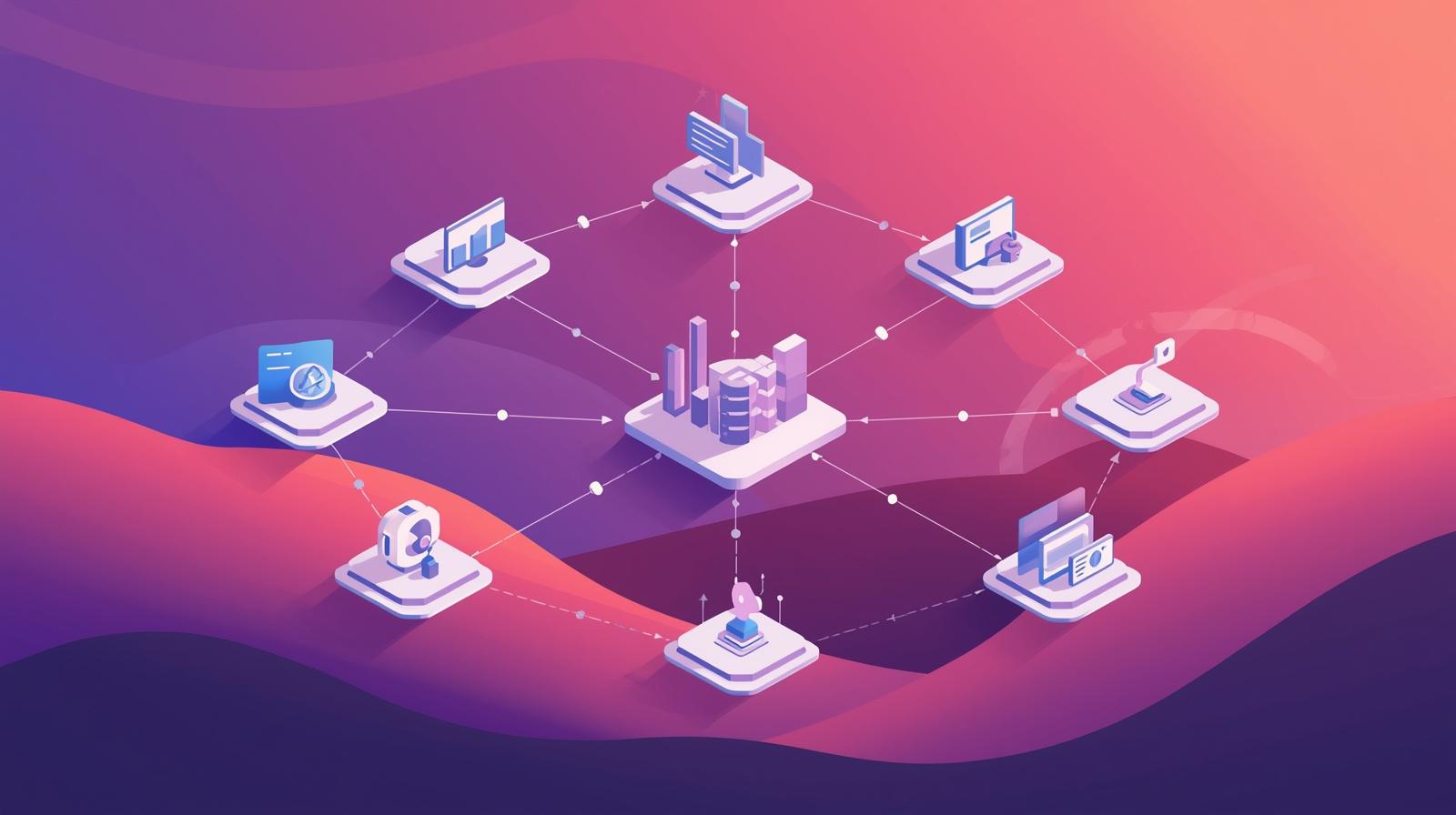
For most of the last decade, the nonprofit technology conversation has been a conversation about point solutions. You picked a CRM, then a separate email tool, then a separate volunteer database, then a grant tracker, then a case management system, and you stitched them together with integrations, exports, and the occasional spreadsheet. Each tool was chosen because it was the best in its category. The cost of that strategy was a stack of disconnected systems and a data model that lived in fragments across a dozen vendors.
In 2026, a different pitch is reaching nonprofit leaders. Enterprise platform vendors, with ServiceNow as the most visible example, are describing themselves not as a tool but as a foundation. The framing at industry conferences this year has been explicit. ServiceNow positioned itself at its Knowledge 2026 event as "the AI control tower for business reinvention," a single platform meant to sense, decide, act, and govern autonomous work across an entire organization. The product language talks about AI specialists for finance, HR, legal, and case management, all operating on one underlying data layer rather than in separate apps.
These platforms were not built for nonprofits. They were built for large enterprises, and the marketing examples are about insurance claims and IT service desks. But the architecture they represent, a unified platform where agentic AI runs across every workflow instead of being bolted onto individual apps, is now being sold downmarket through implementation partners, sector bundles, and nonprofit-specific configurations. Some of these will be genuinely transformative for the right organization. Others will be a six-figure mistake for a nonprofit that did not need an enterprise platform and could not staff one.
This article is a procurement guide, not a product review. We will define what a unified agentic suite actually is, explain the genuine advantages it offers over a stack of point solutions, lay out the trade-offs that vendors do not put on the slide, and give you a structured way to decide whether your organization is a fit. The goal is to let you walk into a demo of one of these platforms and ask the questions that separate a serious option from an expensive distraction.
What a Unified Agentic Suite Actually Is
The term gets used loosely, so it helps to be precise. A unified agentic suite has three defining characteristics, and a product that lacks any one of them is something else wearing the label.
The first characteristic is a single underlying data model. Every department in the organization, whether it is finance, programs, development, or HR, reads and writes to the same database with the same record types and the same relationships. There is no nightly sync between the CRM and the case management tool because they are not separate tools. This is the structural difference from a point-solution stack, and it is the foundation everything else rests on.
The second characteristic is a shared workflow and automation layer. The platform treats a multi-step process, a grant application moving from intake to review to award to reporting, as a first-class object that can span departments. The workflow does not stop at the boundary of an app because there are no app boundaries inside the platform. Branching logic, approvals, and escalations are configured once and run everywhere.
The third characteristic, the one that makes 2026 different from 2021, is that agentic AI is woven through both of the first two layers. An agent is not a chatbot in a sidebar. It is a configurable actor that can read the shared data model, reason about a situation, take steps in the shared workflow layer, hand work to another agent, and escalate to a human at defined gates. The vendor language for this in 2026 talks about an "autonomous workforce" and "AI specialists," and what those phrases describe is software that completes work rather than just suggesting it.
The Unified Suite Model
One platform, one data layer, agents across departments
- Single shared database for every department
- Workflows that span functions without integration
- Agents that act across the whole platform
- One login, one reporting layer, one audit trail
- Centralized governance over every AI action
The Best-of-Breed Model
Specialized tools per function, joined by integrations
- Each department picks the strongest tool for its job
- Deeper, more specialized features per category
- Faster to swap a single tool that underperforms
- Lower commitment, easier to start small
- Integration and data consistency become your problem
The Genuine Case For a Unified Agentic Suite
It is easy for a sector that has lived with point solutions to be reflexively skeptical of the unified pitch. That skepticism is healthy, but it should not be total. There are real, structural reasons a unified agentic suite can outperform a stack of best-of-breed tools, and a fair evaluation has to take them seriously.
Agents Need a Shared Data Model to Be Useful
An agent is only as capable as the data it can see and the actions it can take. In a point-solution stack, an agent in the CRM cannot reliably reason about a grant deadline that lives in a separate tracker, because that data arrives through an integration that may be hours stale or missing custom fields entirely. The unified suite removes that ceiling. An agent operating on one data model can see the donor, the grant, the program outcome, and the budget line in a single reasoning step, which is the difference between a genuinely useful agent and a clever assistant confined to one screen.
This is the strongest argument for the unified model, and it is getting stronger as agentic AI matures. The more you want AI to actually run cross-functional work rather than draft individual documents, the more the fragmented stack works against you.
Centralized Governance Over Autonomous Work
When agents start taking actions on their own, governance stops being optional. In a fragmented stack, every tool with an AI feature has its own permission model, its own audit log, and its own idea of what the agent is allowed to do. Reconstructing what happened when something goes wrong means stitching together logs from five vendors. A unified suite offers a single place to see every agent, what it is permitted to do, what it actually did, and where a human signed off. For a nonprofit board worried about AI accountability, that single pane of governance is a real asset.
This advantage compounds with regulatory pressure. As disclosure and oversight requirements grow, having one auditable system is materially easier than defending a dozen.
Lower Integration Burden on a Thin IT Team
Best-of-breed strategies push the integration work onto the buyer. Industry research on suite versus best-of-breed decisions consistently finds that organizations with limited IT capacity lean toward unified suites, while organizations with deep technical teams and complex operations lean toward best-of-breed. Most nonprofits sit firmly in the first group. They do not have an integration engineer. They have an operations manager who also handles IT, and every connector that breaks lands on that person's desk. A unified suite trades the freedom to pick the perfect tool for the relief of not maintaining the seams between fifteen of them.
That relief is not free, as the next section makes clear, but for a genuinely understaffed organization it can be the deciding factor.
One Workflow Layer Means One Place to Improve
In a fragmented stack, improving a cross-departmental process means coordinating changes across multiple tools, multiple vendors, and multiple admins. In a unified suite, the workflow is one object. When a nonprofit wants to redesign how a case moves from intake through service delivery to outcome reporting, it changes one workflow rather than renegotiating the handoffs between four systems. For organizations that are serious about moving AI from one-off prompts to documented, repeatable processes, a single workflow layer is a meaningful accelerant.
This connects directly to the maturity problem most nonprofits face. The gap between organizations getting real value from AI and those stuck at the experimentation stage is largely a gap in repeatable workflows, and a unified platform makes those workflows easier to build and maintain.
The Trade-Offs Vendors Do Not Put on the Slide
Every advantage above is real. So is every cost below. The mistake nonprofits make is hearing the upside in a polished demo and discovering the downside eighteen months into a contract. A serious evaluation puts both columns on the same page before signing.
Generic Depth Versus Specialist Depth
A unified suite is, by design, a generalist. Its fundraising module will not match a dedicated nonprofit fundraising platform on the depth of moves management, gift processing, or donor analytics. Its case management will be configurable rather than purpose-built for your service model. The platform is betting that the value of integration outweighs the loss of category depth. For some organizations that bet pays off. For a development team whose entire program depends on sophisticated major-gift tooling, the generic module can be a daily frustration that no amount of integration elegance offsets.
The honest question is which of your functions genuinely needs specialist depth and which would be perfectly served by a competent generalist. Most organizations have one or two functions in the first category and many in the second.
Implementation Cost and the Configuration Burden
Enterprise platforms are powerful because they are configurable, and configurable means they arrive as a framework, not a finished product. The license fee is often the smaller number. The larger number is the implementation, which is typically delivered by a partner, measured in months, and priced as a multiple of the annual license. A point solution can be live in a week. A unified suite can take two quarters and a dedicated internal project lead. Nonprofits that budget only for the license and not for the implementation, the partner, and the internal time are setting up a project that stalls halfway.
Worse, the configurability never really ends. Someone has to own the platform, keep workflows current, and adjust agent permissions as the organization changes. That is a role, not a one-time task, and it has to exist in the org chart before the contract is signed.
Vendor Lock-In and the Cost of Reversing
The unified data model is the suite's greatest strength and its sharpest hook. When every department lives on one platform, leaving it is not a tool swap, it is an organizational migration. Pricing increases at renewal are harder to push back on, because the alternative is rebuilding your entire operation elsewhere. Best-of-breed stacks are painful in many ways, but they preserve the ability to replace one underperforming tool without disturbing the rest. A unified suite trades that optionality away. That is an acceptable trade for some organizations and a dangerous one for others, but it should be a conscious decision, not a surprise discovered at the first renewal.
Before signing, a nonprofit should ask precisely how its data comes out of the platform, in what format, and at what cost, and should get that answer in writing.
Built for Enterprises, Sold to Nonprofits
These platforms were designed around enterprise org charts, enterprise compliance regimes, and enterprise IT departments. A nonprofit-specific bundle is usually a configuration layer sitting on top of an enterprise core, not a product built from the nonprofit's needs outward. That means the platform's defaults, terminology, and assumptions may not match how a nonprofit actually works, and closing that gap is configuration time you pay for. It also means the roadmap is driven by enterprise customers. The features that get prioritized are the features large commercial clients ask for, and the nonprofit-specific needs sit further down the queue.
None of this is disqualifying. But it should temper any expectation that the platform will feel like it was made for you, and it should sharpen your questions about how committed the vendor really is to the nonprofit segment.
A Decision Framework: Is Your Nonprofit a Fit?
The unified-versus-best-of-breed question does not have a universal answer. It has an answer that depends on your organization's size, complexity, IT capacity, and tolerance for lock-in. The following four questions, asked honestly, will sort most nonprofits into the right lane.
Do You Have Platform-Owner Capacity?
A unified suite needs a designated owner with real time allocated, not a volunteer hour here and there. If you cannot name the person and the percentage of their role this would take, you are not ready for a platform of this kind. A best-of-breed stack is more forgiving of thin administration.
How Many Functions Need Specialist Depth?
List your core functions and mark each one as needing best-in-class depth or being well served by a competent generalist. If most need specialist depth, a suite will frustrate your teams. If most are generalist-friendly, the integration savings of a suite become compelling.
How Cross-Functional Is Your Real Work?
If your highest-value processes genuinely cross departments, intake to service to outcome to funder reporting, a shared data model pays off. If your departments operate largely independently, the unification benefit is smaller and harder to justify against the cost.
Can You Absorb the Lock-In Risk?
Be honest about your bargaining position at renewal. If a future price increase would be financially survivable and the data export terms are clear and reasonable, the lock-in is manageable. If it would not be, the optionality of a best-of-breed stack is worth protecting.
A useful pattern for many mid-sized nonprofits is a hybrid. Adopt a unified platform for the operational core, finance, case management, internal service workflows, where integration matters most and specialist depth matters least. Keep a best-of-breed tool for the one or two functions that genuinely depend on category-leading depth, most often fundraising. This is not the cleanest architecture, but it is often the most honest fit, and it preserves optionality where you most need it while capturing unification where it pays.
Running the Evaluation Without Getting Sold
If a unified agentic suite clears the framework above, the next risk is the evaluation process itself. These vendors run a polished sales motion designed for enterprise procurement, and a nonprofit team can be carried along by the momentum of the demo. A few disciplines keep the evaluation grounded.
First, insist on a demo built around your data and your workflow, not the vendor's reference scenario. Ask them to model one real cross-departmental process from your organization. The polished demo always works. The version built on your actual messy process is the one that tells you the truth.
Second, get the total cost of ownership in writing, not just the license. That means the license, the implementation partner fee, the estimated internal staff time, the cost of any specialist tools you will keep alongside it, and the cost of training. Industry research consistently finds that cost is the single biggest factor in suite decisions, and the cost that sinks projects is almost never the license. It is everything around it.
Third, talk to a nonprofit reference customer of similar size, not an enterprise one. Ask the reference specifically about implementation length, what went over budget, what the agents actually do well, and what they had to give up by leaving best-of-breed tools. A vendor unwilling to provide a comparable nonprofit reference is telling you something about how proven they are in your segment.
Fourth, pressure-test the agentic claims specifically. It is easy for "agentic AI" to mean, in practice, the same bolted-on chatbot in a new wrapper. Ask which agents act autonomously today versus on the roadmap, where the human approval gates sit, what happens when an agent fails mid-workflow, and how you audit a decision an agent made. The architecture-level questions that distinguish genuinely embedded intelligence from cosmetic features apply just as much to a unified suite as to a single CRM.
Conclusion
The new class of unified agentic suites represents a genuine architectural shift, not just a marketing cycle. As AI moves from drafting documents to running workflows, the fragmented point-solution stack starts to work against the very capability nonprofits are being told to adopt. A platform with a single data model and a shared workflow layer gives agents the room to be genuinely useful, and it gives boards a single place to govern autonomous work. Those are real advantages, and the nonprofits that fit the profile will find the unified model compelling.
But these platforms were built for enterprises, they carry a heavy implementation and ownership burden, they trade specialist depth for integration, and they lock you in more tightly than any point solution. A nonprofit that signs because the demo was impressive, without an honest reckoning of platform-owner capacity, specialist needs, cross-functional reality, and lock-in tolerance, is taking on enterprise-grade risk without enterprise-grade resources to manage it.
The right posture is neither reflexive skepticism nor enthusiasm. It is disciplined evaluation. Use the four-question framework to decide whether the category fits your organization at all. If it does, run the evaluation on your data, your costs, and a comparable nonprofit reference. If it does not, a well-chosen best-of-breed stack with strong AI tools layered above it remains a perfectly defensible strategy. The worst outcome is not picking the wrong model. It is picking either model without understanding what you traded away.
Related Reading
For deeper background on the architecture, procurement, and cost questions raised here, the following articles connect directly to the evaluation:
- Why Bolted-On AI Will Underperform: An Architecture Argument for Nonprofit IT Leaders explains the AI-native versus retrofit distinction that applies to evaluating any agentic claim, including a unified suite.
- From Per-Seat to Per-Token: How Nonprofit Software Pricing Is Quietly Restructuring in 2026 covers the pricing shifts that make total cost of ownership harder to forecast on any platform.
- The Nonprofit AI Vendor Evaluation Checklist offers a structured procurement framework that complements the suite-specific questions above.
- Building a Strategic Plan for AI at Your Nonprofit helps establish the organizational priorities a platform decision should serve.
- The Five AI Budget Line Items Nonprofits Always Miss details the recurring costs that turn an attractive license quote into a budget overrun.
Evaluate a Platform Before You Commit
One Hundred Nights helps nonprofits run disciplined evaluations of unified agentic suites and best-of-breed stacks, model true total cost of ownership, and choose the architecture that fits the organization rather than the demo.