
Using AI for Succession Planning: Identifying and Developing Future Leaders
The nonprofit sector faces a significant leadership transition challenge in 2026, with many long-time leaders departing and organizations struggling to prepare for continuity. AI offers powerful capabilities to transform succession planning from an annual exercise into a dynamic, data-driven process that identifies high-potential employees, develops leadership pipelines, and ensures organizational stability during transitions.
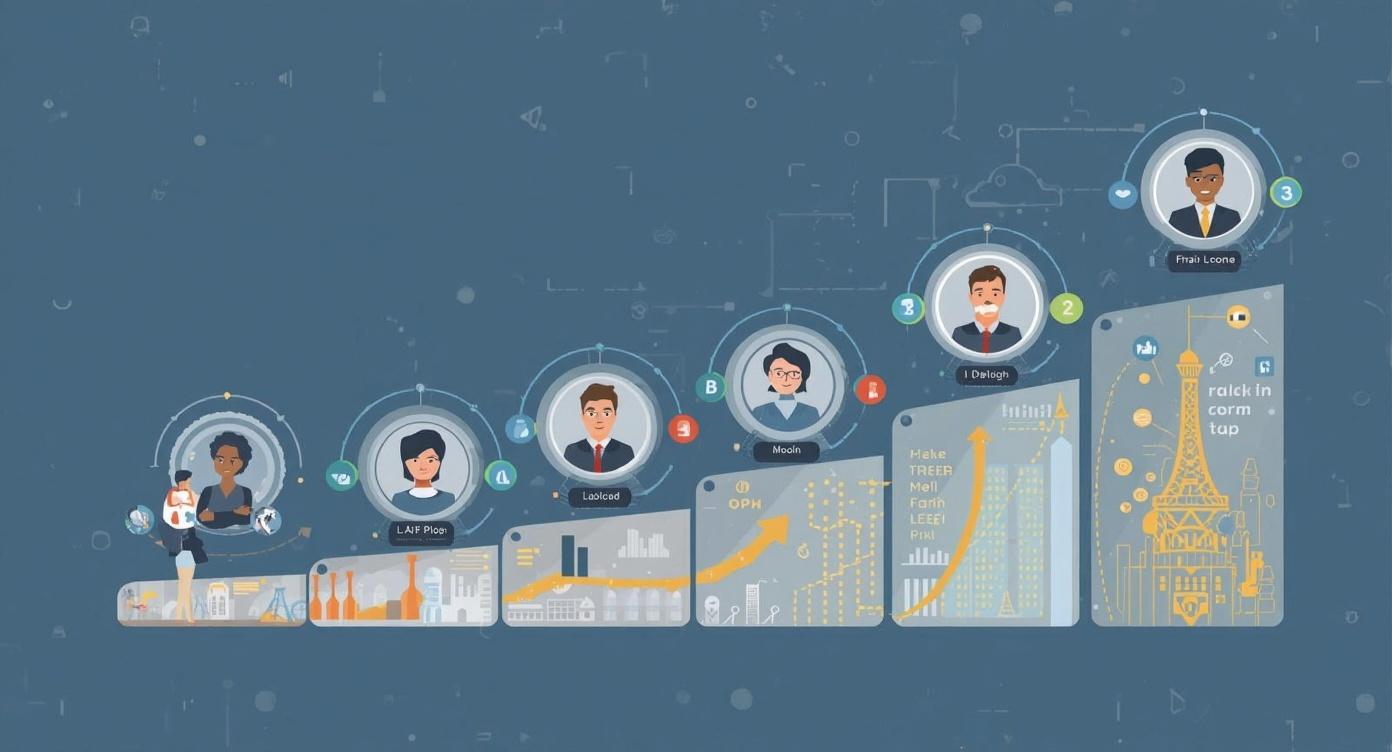
Leadership transitions represent one of the most critical moments in a nonprofit's lifecycle. When done well, they bring fresh perspectives and renewed energy. When mismanaged, they can destabilize programs, erode donor confidence, and derail strategic momentum. Yet according to BoardSource's 2021 research, only 29% of nonprofits have a written succession plan in place—leaving the vast majority unprepared for inevitable leadership changes.
The challenge is intensifying. A demographic shift continues across the nonprofit sector, with many long-time leaders departing and creating transitional risks for organizations. By 2027, 40% of companies will face leadership gaps, and fewer mid-level managers are being developed, creating a shrinking leadership pipeline. The question isn't whether your organization will face a leadership transition—it's whether you'll be ready when it happens.
This is where AI fundamentally reshapes how organizations approach succession planning. Rather than relying on annual reviews, gut instinct, or informal assessments of who might be "ready" for leadership, AI enables continuous talent intelligence. It analyzes skills, performance patterns, development trajectories, and potential fit for critical roles across your organization. It surfaces candidates you might have overlooked and identifies specific development needs before they become gaps.
This article explores how nonprofits can leverage AI to build robust succession planning systems—from identifying high-potential employees to creating personalized development plans, assessing leadership readiness, and ensuring smooth knowledge transfer during transitions. Whether you're preparing for an expected retirement or building organizational resilience against unexpected departures, AI provides the tools to move from reactive scrambling to proactive leadership development.
The Succession Planning Crisis in Nonprofits
Before diving into AI solutions, it's important to understand the magnitude of the challenge facing nonprofit organizations. The leadership pipeline crisis isn't a distant threat—it's happening now, and it's affecting organizations of all sizes.
Many nonprofit leaders have been in their roles for decades, building deep institutional knowledge, donor relationships, and program expertise that can't easily be transferred. As these leaders retire, organizations face not just a vacancy but a potential knowledge crisis. The tacit understanding of which community members to engage, when silence signals distrust, and which approaches work in specific contexts often lives in experienced leaders' heads rather than in documented systems.
Compounding this challenge, nonprofits often lack robust institutional memory systems to capture this knowledge before it walks out the door. Traditional succession planning—an annual review where leadership identifies potential successors—proves inadequate for several reasons. It's snapshot-based rather than continuous, it relies heavily on recency bias and personal relationships, it doesn't systematically assess skills against future role requirements, and it often identifies gaps too late to address them through development.
Additionally, many organizations discover during a leadership search that the skills needed for tomorrow's challenges differ from what made current leaders successful. The executive director who excelled at grassroots organizing in 2010 may not have the digital fluency, data literacy, or systems-thinking capabilities needed for 2026's operating environment. This creates a mismatch between the leaders you're developing and the leaders you'll actually need.
The Reality of Nonprofit Leadership Transitions
- Only 29% of nonprofits have a written succession plan (BoardSource, 2021)
- 40% of companies will face leadership gaps by 2027
- Fewer mid-level managers are being developed, shrinking the leadership pipeline
- Demographic shifts are accelerating leader departures across the sector
- Traditional annual succession planning reviews prove inadequate for dynamic environments
How AI Transforms Succession Planning
AI fundamentally changes succession planning by making it continuous, comprehensive, and objective. Rather than relying on annual snapshots and manager perceptions, AI analyzes ongoing patterns in skills, performance, development, and potential across your entire organization.
At its core, AI-powered succession planning compares employee skills, experiences, and competencies against the requirements of critical roles. It surfaces candidates across the organization who fit the criteria—not just those in direct reporting lines or those who have actively expressed leadership ambitions. This democratizes opportunity and often reveals hidden talent that traditional approaches miss.
AI removes much of the guesswork from identifying leadership potential. According to HR analytics studies, AI-based evaluations can predict leadership potential with up to 80% accuracy by analyzing behavioral data, psychometric assessments, and performance patterns. This allows organizations to be proactive with data-backed succession planning rather than making decisions based on incomplete information or unconscious bias.
Continuous Talent Intelligence
Real-time analysis instead of annual reviews
AI conducts ongoing analysis of employee skills, performance, and development trajectories rather than limiting assessment to annual review cycles. This enables organizations to identify emerging leaders early and track readiness in real-time.
- Monitors skill development and competency growth continuously
- Tracks performance patterns and leadership indicators over time
- Updates succession readiness assessments as employees develop
- Provides early warning when leadership pipelines become thin
Comprehensive Candidate Discovery
Finding potential beyond the obvious choices
AI analyzes your entire workforce to identify high-potential employees who might be overlooked by traditional succession planning processes. It looks across departments, locations, and reporting structures to find the right fit for critical roles.
- Surfaces candidates outside traditional advancement paths
- Identifies transferable skills from adjacent roles or sectors
- Evaluates potential based on competencies, not just tenure
- Reduces bias by focusing on objective skill assessments
Skills-Based Matching
Aligning capabilities with future role requirements
AI compares employee skills and experiences against the specific competencies required for critical leadership roles. This creates objective, data-driven assessments of readiness and identifies precise development gaps.
- Maps current competencies against future role requirements
- Identifies skill adjacencies that suggest readiness for new roles
- Pinpoints specific development needs for succession candidates
- Assesses readiness for evolving organizational needs, not just current roles
Personalized Development Planning
Creating targeted pathways to leadership readiness
Once AI identifies succession candidates and their development gaps, it can create personalized learning paths that prepare them for leadership roles. This ensures development investments align with organizational succession needs.
- Recommends specific training and development activities
- Suggests stretch assignments and project opportunities
- Tracks progress toward succession readiness over time
- Adjusts development plans as organizational needs evolve
Identifying High-Potential Employees with AI
One of AI's most valuable succession planning capabilities is identifying employees with high leadership potential who might not be obvious candidates through traditional assessment methods. This goes beyond simply looking at current performance to analyzing patterns that predict future leadership success.
AI evaluates leadership qualities through multiple data sources including behavioral data from work patterns, results from psychometric assessments and personality inventories, performance reviews and 360-degree feedback, participation in development activities and learning velocity, and demonstrated competencies in critical thinking, problem-solving, initiative, leadership, and communication. By synthesizing these diverse inputs, AI creates a more complete picture of an employee's leadership potential than any single assessment could provide.
Importantly, AI can identify potential in ways that reduce unconscious bias. Traditional succession planning often favors employees who are most visible to senior leadership, most vocal in meetings, or who fit conventional leadership stereotypes. AI, when properly designed and audited, can surface quieter contributors whose work speaks for itself, employees whose leadership style differs from the current norm, staff in remote locations or less prominent departments, and individuals whose backgrounds or identities differ from typical leaders in your sector.
The shift toward skills-based assessment particularly benefits nonprofits. Rather than requiring specific credentials or traditional career paths, AI can identify employees whose competencies align with leadership requirements regardless of how they developed those capabilities. This expands your talent pool and creates advancement opportunities for staff whose potential might be overlooked in more conventional processes.
Key Competencies AI Assesses for Leadership Potential
Cognitive Competencies
- Strategic thinking and long-term planning ability
- Problem-solving and analytical capabilities
- Decision-making under uncertainty
- Systems thinking and pattern recognition
- Learning agility and adaptability
Interpersonal Competencies
- Communication and influence skills
- Emotional intelligence and self-awareness
- Team building and collaboration
- Conflict resolution and relationship management
- Initiative and ownership mentality
Building AI-Powered Leadership Development Pipelines
Identifying high-potential employees is only the first step. The real value of AI-powered succession planning lies in systematically developing those individuals into ready-now leaders. According to Gartner research, 60% of leaders will need training in AI-related competencies by 2025 just to stay relevant—but leadership development needs extend far beyond technical skills.
AI enables organizations to create personalized development paths for succession candidates based on their current competencies, target roles, learning preferences, and organizational timelines. Rather than generic leadership training, AI can recommend specific experiences, assignments, and learning opportunities that address each candidate's unique development needs.
This personalization significantly improves development effectiveness. Instead of sending everyone through the same program, AI might identify that one succession candidate needs exposure to financial management, another needs practice leading cross-functional projects, and a third would benefit from external board experience. Each receives a development plan tailored to move them toward readiness for their potential future role.
Components of AI-Powered Development Planning
Building comprehensive leadership readiness
Competency Gap Analysis
AI compares each succession candidate's current skills against the competencies required for target leadership roles. This creates a precise map of development priorities and helps allocate training resources effectively.
- Maps current competencies against future role requirements
- Prioritizes development needs based on organizational timelines
- Identifies adjacent skills that can accelerate development
- Updates gap analysis as employees develop new capabilities
Personalized Learning Recommendations
Based on identified gaps, AI recommends specific training programs, courses, certifications, and learning resources that align with each candidate's development needs and learning style. This might include formal training programs, online courses and certifications, mentoring relationships, and industry conferences or peer learning networks.
- Suggests learning content matched to development priorities
- Adapts recommendations based on learning progress and feedback
- Identifies nonprofit-specific leadership development resources
- Balances formal training with experiential learning opportunities
Stretch Assignments and Project Opportunities
AI can identify project opportunities and stretch assignments that provide succession candidates with relevant leadership experience. This experiential learning often proves more valuable than formal training for developing practical leadership capabilities.
- Matches candidates with projects that develop target competencies
- Suggests cross-functional experiences to broaden perspectives
- Identifies opportunities to practice decision-making with real stakes
- Creates visibility for succession candidates across the organization
For nonprofits with limited training budgets, AI can prioritize the most impactful development investments. Rather than sending all succession candidates to expensive executive education programs, AI might identify that targeted mentoring relationships, specific project experiences, and selective external training would be more cost-effective ways to address development needs. This ensures your limited resources create maximum leadership readiness.
AI Tools and Platforms for Nonprofit Succession Planning
While comprehensive succession planning platforms can be expensive, nonprofits have several options for incorporating AI into leadership development and talent management processes. The key is starting with tools that align with your budget, team capacity, and organizational maturity.
Many organizations already have access to AI capabilities through existing HR systems. If you use platforms like BambooHR, Paycom, or similar nonprofit HRIS solutions, explore their talent management and development modules—you may have more capabilities than you realize. Microsoft 365 and Google Workspace, which many nonprofits already have through discount programs, also include AI features that can support succession planning activities.
Starting with What You Have
Leverage existing tools before investing in new platforms
Before purchasing specialized succession planning software, maximize AI capabilities in tools you already use. Many nonprofits discover untapped features in their current systems.
- Microsoft 365 Copilot can help analyze performance data and create development plans
- Google Workspace AI can assist with competency mapping and documentation
- Many HRIS platforms include talent management modules you may not be using
- ChatGPT or other generative AI can help structure competency frameworks and assessment tools
Dedicated Succession Planning Platforms
Purpose-built tools for comprehensive talent management
For organizations ready to invest in specialized platforms, several succession planning tools incorporate AI capabilities. These typically work best for mid-sized to large nonprofits with formal talent management processes.
- Eightfold AI combines dynamic skill analysis, talent intelligence, and skill adjacencies
- TalentGuard offers AI-powered succession planning focused on retention and engagement
- Plum emphasizes industrial/organizational psychology with AI competency assessment
- Many platforms offer nonprofit discounts—always ask about pricing for 501(c)(3) organizations
For smaller nonprofits or those just beginning to formalize succession planning, consider starting with a phased approach. Use generative AI tools like ChatGPT to help structure your competency frameworks, create assessment rubrics, and draft development plans. Build your succession planning processes manually while documenting everything. Once you have clear processes and understand your needs, you'll be better positioned to select the right platform investment—or you may discover that simpler tools meet your needs perfectly well.
Using AI for Knowledge Transfer During Leadership Transitions
Even with excellent succession planning, leadership transitions create knowledge transfer challenges. When a long-time leader departs, they take with them years of tacit knowledge, relationships, context, and institutional memory. AI can help capture and transfer this knowledge more systematically than traditional handoff processes.
AI-powered knowledge management systems can document the outgoing leader's expertise in several ways. Through structured interviews and documentation, AI can help extract and organize knowledge that exists primarily in the departing leader's head. By analyzing email patterns, meeting notes, and communication history (with appropriate privacy safeguards), AI can identify key relationships, decision-making patterns, and institutional knowledge that successors need to understand.
AI can also create searchable knowledge bases that new leaders can query. Rather than expecting successors to absorb everything during a brief transition period, AI enables them to access institutional knowledge on demand as questions arise in their new role. This might include answers to questions like: Who are the key stakeholders for this initiative? What approaches have we tried before and what were the results? Why was this decision made? What are the sensitivities around this community relationship?
For nonprofits experiencing unexpected leadership departures, AI tools can help reconstruct critical knowledge from available documentation, identify key relationships by analyzing communication patterns, surface important context from past meeting notes and decisions, and create continuity despite abrupt transitions. While this reactive approach isn't ideal, it's far better than losing institutional knowledge entirely.
Building Knowledge Transfer into Succession Planning
The best approach to knowledge transfer is making it ongoing rather than crisis-driven. Organizations can use AI to continuously capture institutional knowledge so it's available regardless of who leaves or when.
- Implement AI meeting assistants that capture and organize decisions and context
- Use AI to create living documentation that updates as processes evolve
- Build relationship maps that preserve stakeholder context and history
- Document decision rationales and lessons learned systematically
- Create searchable archives of key communications and strategic thinking
Implementation Considerations and Best Practices
Successfully implementing AI-powered succession planning requires thoughtful change management, clear governance, and attention to both technical and human factors. Organizations that rush into AI tools without addressing these considerations often struggle to achieve meaningful results.
Start with Clear Competency Frameworks
AI can only assess what you've defined as important. Before implementing AI succession planning, invest time in articulating the competencies, skills, and qualities that make leaders successful in your organization. This might differ from generic leadership frameworks—what works for a corporate environment may not align with nonprofit leadership needs.
- Define competencies for specific leadership roles, not generic frameworks
- Include both technical and interpersonal/emotional intelligence competencies
- Consider future needs, not just what made past leaders successful
- Involve diverse perspectives in defining what leadership means in your context
Address Bias and Ensure Fairness
AI systems can perpetuate or even amplify biases present in training data or assessment criteria. Nonprofits must actively monitor for bias and ensure succession planning systems create equitable opportunities across demographics, backgrounds, and working styles.
- Audit AI recommendations for demographic disparities in advancement opportunities
- Ensure competency frameworks don't inadvertently favor dominant cultural norms
- Use AI as decision support, not automated decision-making for succession choices
- Regularly review whether AI is surfacing diverse candidates or reinforcing patterns
Maintain Transparency with Employees
Staff need to understand how succession planning works, what data informs decisions, and how to engage with development opportunities. Opaque systems create anxiety and reduce participation in development activities.
- Communicate what competencies and experiences advance leadership readiness
- Provide feedback to employees about their development progress and opportunities
- Explain how AI supports rather than replaces human judgment in succession decisions
- Create pathways for employees to self-nominate for development opportunities
Focus on Development, Not Just Assessment
The goal of succession planning isn't simply identifying who's ready for leadership—it's building organizational capacity by developing more leaders. AI should support growth, not just evaluate current state.
- Invest in development activities, not just succession planning software
- Create stretch opportunities and leadership experiences for high-potential employees
- Measure development progress over time, not just initial assessments
- Celebrate leadership growth, even when it leads employees to opportunities elsewhere
Getting Started: A Practical Roadmap
For nonprofits ready to implement AI-powered succession planning, start with these foundational steps that build organizational capacity regardless of which specific tools you eventually adopt.
Phase 1: Foundation (Months 1-3)
- 1.Identify critical roles where leadership transitions would significantly impact operations or strategy
- 2.Define competency frameworks for each critical leadership role, involving diverse perspectives in this process
- 3.Assess current talent against these frameworks to understand baseline leadership readiness
- 4.Inventory existing AI capabilities in your current HR systems and productivity tools
Phase 2: Pilot Implementation (Months 4-9)
- 5.Start with accessible AI tools (Microsoft Copilot, ChatGPT, etc.) to support succession planning processes
- 6.Create development plans for high-potential employees identified through assessment
- 7.Implement knowledge capture processes using AI meeting assistants and documentation tools
- 8.Pilot with 2-3 critical roles before expanding organization-wide
Phase 3: Scale and Refine (Months 10-18)
- 9.Evaluate pilot results and refine competency frameworks and processes based on learnings
- 10.Expand to additional critical roles using proven processes and tools
- 11.Consider dedicated succession planning platforms if your processes and needs justify the investment
- 12.Establish ongoing monitoring of leadership pipeline health and development progress
Remember that succession planning is fundamentally about organizational resilience and sustainability. AI provides powerful tools to support this work, but it doesn't replace the need for intentional leadership development, meaningful relationships between mentors and emerging leaders, and organizational commitment to building deep leadership benches. The technology works best when it amplifies and scales human judgment rather than attempting to replace it.
Conclusion
Leadership transitions are inevitable. The question facing nonprofits isn't whether you'll experience them, but whether you'll be prepared when they occur. Traditional succession planning approaches—annual reviews, informal assessments, and reactive responses to departures—leave too many organizations vulnerable to leadership gaps and knowledge loss.
AI transforms succession planning from a periodic exercise into continuous talent intelligence. It enables organizations to identify high-potential employees across the entire workforce, create personalized development plans that prepare them for leadership roles, assess readiness objectively based on competencies rather than tenure or visibility, and systematically capture and transfer institutional knowledge during transitions. This shift from reactive to proactive leadership development strengthens organizational resilience regardless of who leaves or when.
For resource-constrained nonprofits, the path forward doesn't require expensive enterprise software. Start with clear competency frameworks, use accessible AI tools to support assessment and development planning, focus on building leadership capacity through meaningful experiences, and implement knowledge capture as an ongoing practice. Even modest investments in these areas create significant value by ensuring your organization can weather leadership transitions without losing momentum.
The nonprofit sector faces unprecedented leadership transitions in the coming years. Organizations that build robust succession planning systems now will emerge stronger, while those that wait will struggle with continuity challenges and knowledge loss. AI provides the tools to prepare proactively—the question is whether your organization will use them while there's still time to develop the leaders you'll need.
Ready to Build Your Leadership Pipeline?
Don't wait for a leadership crisis to start succession planning. We can help you implement AI-powered talent management systems that identify and develop future leaders, ensuring organizational continuity and resilience.