
Vibe Coding for Nonprofits: How Non-Technical Staff Can Build Custom AI Tools
A new generation of AI-powered development tools has made it possible for program directors, development officers, and operations staff to build functional software without writing a single line of code. Here is what nonprofits need to know before diving in.
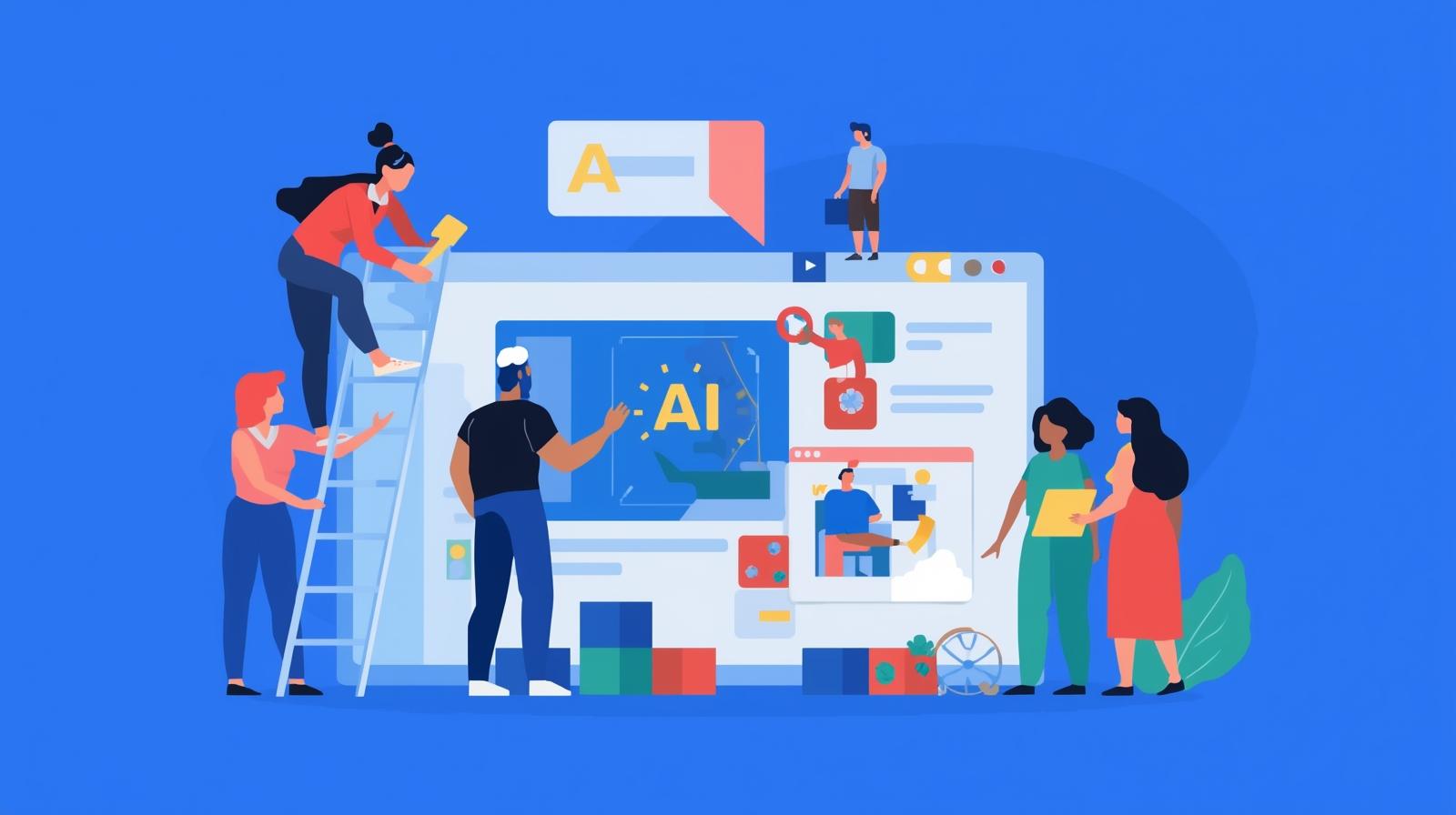
For most of the history of software, if your nonprofit needed a custom tool, you had a narrow set of options: hire a developer, convince a volunteer with technical skills to donate their time, or cobble together spreadsheets and workarounds. Custom software was expensive, slow to build, and often misaligned with the actual needs of the staff who would use it because those staff had no way to participate in building it.
That assumption is now being challenged by a practice called vibe coding. Coined by Andrej Karpathy, a co-founder of OpenAI, in February 2025, vibe coding describes a style of software development where a person describes what they want in plain language and an AI system generates the actual code. The person tests whether it works and continues describing changes, while the AI handles all the technical implementation. No programming languages, no developer credentials, no months of coursework required.
The platforms that have emerged to support this approach, including Bolt, Lovable, Replit Agent, and v0 by Vercel, have grown with remarkable speed. Lovable, one of the leading vibe coding platforms, was generating approximately $7 million in annual revenue at the start of 2025 and reached $206 million in annual recurring revenue by November, representing one of the fastest growth trajectories in software startup history. These tools are being used by Y Combinator startups, major corporations, and increasingly, by nonprofits and social impact organizations that finally see a viable path to building the tools they have always needed.
This guide covers the realistic opportunity, the platforms worth knowing, what your team can actually build, and the security risks that are critical to understand before putting any tool in front of clients or donors. The potential is real, but so are the pitfalls, and nonprofits handling sensitive information about vulnerable populations need to approach this space with clear eyes.
What Vibe Coding Actually Is (and Is Not)
The term "vibe coding" captures a specific approach to AI-assisted development: you give in to the AI's capabilities, describe what you want in natural language, and let the model handle the technical details. Karpathy's original framing was intentionally casual. He described accepting all AI changes without reading the code, pasting error messages directly back to the AI when something broke, and ignoring the underlying implementation as long as the result worked.
In practice, the most effective vibe coding today sits somewhere between that carefree original vision and traditional software development. The best practitioners bring clear thinking about what they want, an ability to describe requirements in precise language, and a willingness to test and iterate. What they do not need is an understanding of programming languages, software architecture, or development toolchains. The AI handles that layer entirely.
Karpathy himself has since described the practice as somewhat dated compared to the more structured "agentic engineering" that has emerged as AI coding tools have matured. The field has evolved from purely informal prompting toward more systematic specification of what you want before prompting the AI. For nonprofits, this evolution is good news: the results are more reliable and the tools are more capable than they were a year ago.
What Vibe Coding Looks Like in Practice
A program director at a workforce development nonprofit wants a tool to track client employment placements. With vibe coding, the process might look like this:
- Open a platform like Lovable or Bolt and type: "Build a web app where case managers can log client job placements. Each client should have a name, case number, employer, job title, start date, and wage. Staff should be able to search by client name or employer, filter by date range, and export the data to CSV."
- The AI generates a complete web application, including a database, login system, forms, search functionality, and export button, typically within two to five minutes.
- The program director tests the result, notices the form needs an additional field for "hours per week," and types that request in plain English.
- The AI updates the application. This back-and-forth continues until the tool matches the actual workflow.
The result, in this example, is a functional web application that a development team would have charged $5,000 to $15,000 to build. The total cost with vibe coding might be $25 to $100 in platform subscription fees and a few hours of the program director's time. This is not a hypothetical scenario: organizations like Better.sg, a Singapore-based tech-for-good nonprofit, built a complete CRM platform using Lovable with approximately 50 hours of volunteer time and $20 in tool costs.
The Key Platforms: Bolt, Lovable, Replit, and v0
The vibe coding ecosystem has grown rapidly, with dozens of tools competing for users. For nonprofits new to this space, four platforms are worth understanding first. Each has different strengths, pricing structures, and target users.
Bolt.new: Fast Prototypes in the Browser
Best for: Getting a working prototype running quickly with minimal setup
Bolt.new, built by StackBlitz, runs entirely in your web browser. There is nothing to install. You describe your application, and Bolt generates a complete, runnable full-stack application directly in the browser window. It supports databases, third-party packages, and deploys to hosting platforms like Netlify. The tool has grown to over 5 million users and reached $40 million in annual revenue within its first five months of operation, signals that it is delivering real value to real users.
Strengths
- No installation needed
- Fast from description to working app
- Tokens roll over one month
Pricing
- Free: 1M tokens/month
- Pro: $25/month (10M tokens)
- Business: $100 or $200/month
Lovable: Full-Stack Apps with Clean Design
Best for: Complete applications with both frontend and backend, especially for teams new to coding
Lovable is particularly well-designed for non-technical users. It generates complete React applications with modern design, and handles backend functionality through Supabase (for databases and user authentication) and GitHub integration for version control. The team behind Lovable has specifically noted nonprofit use cases. Notably, Lovable offers a nonprofit discount for organizations that submit supporting documentation, making it worth contacting their support team if your organization is considering the Pro plan.
Strengths
- Conversational interface designed for non-technical users
- Strong authentication support via Supabase
- Nonprofit discount available on request
Pricing
- Free: 5 daily credits
- Pro: $25/month (100 credits)
- Business: $50/month (team features)
Replit Agent: Autonomous Building for True Beginners
Best for: Complete beginners who want AI to handle environment setup and infrastructure automatically
Replit began as a browser-based code editor and has evolved into a full AI development platform. Replit Agent builds autonomously: when you describe your application, it handles not just code generation but also environment configuration, database setup, and infrastructure decisions without requiring user input on those details. It has been used by the Human Rights Foundation to build tools for activists, demonstrating its accessibility to mission-driven organizations. Note that Replit has faced user criticism over its credit-based pricing model; monitor usage carefully to avoid unexpected charges.
Strengths
- Most beginner-friendly of the major platforms
- Handles infrastructure setup automatically
- Documented nonprofit and social impact use cases
Pricing
- Starter: Free
- Core: $25/month with credits
- Teams: $40/user/month
v0 by Vercel: Best-Looking Output for Front-End Work
Best for: Organizations that want polished, professional-looking interfaces and are comfortable with some technical concepts
v0 started as a UI component generator and has expanded into a full-stack builder. It produces the most visually polished output of any major vibe coding tool, generating code built on React, Tailwind CSS, and shadcn/ui components. You can even upload a sketch or screenshot of what you want and v0 will build toward that vision. It integrates tightly with Vercel's hosting infrastructure. v0 is somewhat more technical in orientation than Bolt or Lovable, making it better suited to organizations that have at least one staff member comfortable with web concepts, even if not with coding itself.
Strengths
- Best visual output quality of any major platform
- Can build from sketches or screenshots
- One-click deploy to Vercel hosting
Pricing
- Free: $5 in credits
- Premium: $20/month ($20 in credits)
- Team: $30/user/month
What Nonprofits Can Realistically Build
The vibe coding platforms of early 2026 are capable enough to produce genuinely useful internal tools for nonprofits, but they are not equally suited to all applications. Understanding which types of tools are within reach is essential for setting realistic expectations and avoiding costly mistakes.
High-Value, Realistic Builds
Tools that deliver genuine value and are within reach for non-technical staff
- Volunteer sign-up and shift scheduling portals
- Grant application deadline and status trackers
- Event registration pages with email confirmations
- Internal resource directories (partner organizations, services)
- Program outcome and placement tracking dashboards
- Staff onboarding portals and training checklists
- Inventory trackers for food pantries, supply closets, and equipment
- Simple reporting dashboards connected to Google Sheets
Beyond Realistic Scope
Applications that require professional development to build safely and reliably
- Native iOS or Android mobile applications
- HIPAA-compliant systems handling medical or health data
- Applications storing information about undocumented populations
- Payment processing systems beyond simple donation forms
- Integrations with legacy or proprietary organizational systems
- Tools expected to scale to thousands of concurrent users
- Client-facing case management systems for vulnerable populations
The distinction that matters most for nonprofits is between internal tools used by trained staff and external or client-facing tools that handle sensitive data. Vibe-coded internal tools that track operational data (grant deadlines, volunteer hours, program outcomes) represent a strong opportunity with manageable risk. Tools that handle sensitive information about the people you serve require a much higher bar of security and reliability that vibe coding tools are not yet consistently delivering.
What Is Possible: A Real Nonprofit Example
Better.sg, a Singapore-based tech-for-good nonprofit, offers one of the most detailed documented examples of vibe coding applied to social impact work. The organization used Lovable as the primary development tool to build a complete CRM platform for a network of home-based cafes operated as social enterprises. The platform needed to handle cafe registration, menu management, customer orders, and payment processing, with role-based access control that distinguished between cafe operators and platform administrators.
The build involved 8 volunteer developers and 2 testers, each committing a maximum of 4 hours per week. The project delivered a production-ready minimum viable product in 6 weeks using approximately 50 to 55 total volunteer hours. Infrastructure costs were minimal: free-tier services for the backend, plus $20 in Lovable subscription fees. The finished platform was estimated to handle up to 50,000 customers for approximately $70 per month in ongoing infrastructure costs.
Notably, the team documented that during user acceptance testing, they cleared 27 bugs in under 2 hours using AI assistance. The AI's ability to identify and fix problems quickly was a significant contributor to the project's compressed timeline.
The Human Rights Foundation Experiment
At a Human Rights Foundation workshop, technical lead Justin Moon demonstrated vibe coding by building a complete new website for a partner organization in approximately eight minutes, using only voice commands. The team also vibe-coded an application called "Chorus" before the Oslo Freedom Forum, which allowed users to create groups, share content, and exchange money in a censorship-resistant environment. These examples illustrate both the speed of the medium and its application to mission-critical work for organizations operating in constrained environments.
The Security Risks Nonprofits Cannot Ignore
This is the part of the vibe coding conversation that does not get enough attention in the breathless coverage of new tools and rapid prototypes. AI-generated code carries real and documented security risks, and those risks are particularly consequential for nonprofits that handle sensitive information about clients, donors, or vulnerable populations.
A Veracode study testing over 100 leading AI models across 80 coding tasks found that only 55% of AI-generated code was secure. The research identified specific patterns of vulnerability: 86% of tested code samples failed to defend against cross-site scripting attacks, 88% were vulnerable to log injection, and 20% were vulnerable to SQL injection. AI models also referenced non-existent code packages in up to 21% of suggestions, a practice that sophisticated attackers exploit by creating malicious packages with those names. A 2026 security review of 15 test applications built with popular vibe coding tools found 69 distinct vulnerabilities, including six critical flaws.
Hardcoded Secrets
AI tools frequently embed passwords, API keys, and database credentials directly in the code rather than storing them securely in environment variables. If that code is shared, pushed to a public GitHub repository, or accessed by someone who should not have it, those credentials are exposed. For a nonprofit's donor database or client management system, this is a serious breach risk. Always specifically ask the AI to review how credentials are stored, and verify the answer by asking a knowledgeable person to check.
Authentication Gaps
A vibe-coded internal tool might be fully functional but lack proper authentication: anyone with the link can access donor records, client files, or program data. This is not a hypothetical scenario. It is a well-documented pattern in AI-generated applications, where the AI builds the functional parts of the tool but implements authentication as an afterthought, incorrectly, or not at all. Always test your tool by attempting to access it without logging in. If it works without authentication, the tool should not handle any sensitive data until that is fixed.
Insecure Data Storage
AI-generated code may store sensitive information without encryption, in plaintext databases, or in locations that are more accessible than intended. For organizations handling medical information, housing instability data, legal case details, or information about undocumented individuals, insecure storage is not just a technical problem. It can directly endanger the people you serve. This category of vulnerability requires a security review from someone with actual technical expertise before the tool goes into production use.
The Governance Gap
Security researchers have specifically noted that the opportunity for natural-language code writing is significant, especially for small and under-resourced organizations like nonprofits, but it comes with the risk of creating organizations that write code but lack internal governance and knowledge about safe code writing. Nonprofits that adopt vibe coding without establishing any governance framework around it, such as a review process, security checklist, or access to technical expertise for sensitive applications, are creating risk that may not surface until a breach occurs.
A Framework for Responsible Vibe Coding
- Classify the data first. Before building, identify what categories of information the tool will store. Internal operational data (grant deadlines, volunteer schedules) carries lower risk than client personal information or donor financial data.
- Prototype before committing to sensitive data. Build and validate the tool with dummy or synthetic data before entering real client or donor information.
- Get a security review for sensitive applications. A one-time code review from a developer costs $500 to $2,000, far less than the reputational and legal cost of a data breach. This is a worthwhile investment for tools that will handle sensitive information.
- Test authentication explicitly. Always verify that unauthenticated users cannot access data before putting any sensitive information into a vibe-coded tool.
- Avoid regulatory-risk applications. Tools that must comply with HIPAA, GDPR, or PCI-DSS are not appropriate candidates for vibe coding without professional security involvement.
The Real Cost of Vibe Coding
Platform pricing makes vibe coding look almost free at first glance. Most tools offer free tiers, and paid plans start at $20 to $25 per month. But the true cost involves several factors that are easy to underestimate, and some organizations have been surprised by bills that were far higher than expected.
What Costs Are Often Overlooked
- Credits run out faster than expected during debugging and iteration cycles
- More capable AI models cost 3 to 10 times more per task, even within the same subscription
- Hosting, database, and backend services (Supabase, Vercel, Netlify) add $25 to $75 per month
- Third-party APIs (email, payments, mapping) carry their own charges
- Staff time for testing, iteration, and maintenance is real labor cost
Realistic Budget Estimates
- Simple internal tool prototype: $20 to $100 in platform fees, plus 4 to 16 hours of staff time
- Production-ready internal tool: add $50 to $75 per month in infrastructure
- Security-reviewed tool handling sensitive data: add $500 to $2,000 for professional code review
- Comparable custom development cost: $5,000 to $15,000 initial build, plus maintenance
- Lovable nonprofit discount available on request, worth exploring
Even with the hidden costs factored in, the economics favor vibe coding for internal tools that would otherwise not get built at all. The comparison is not usually between vibe coding and custom development; it is between vibe coding and continuing to use spreadsheets, email threads, and paper forms because no budget exists for proper software. From that baseline, even an imperfect vibe-coded tool represents a genuine improvement in how your organization operates.
How to Get Started: A Practical Path
The most effective way to introduce vibe coding in a nonprofit context is to start with a small, internal tool that solves a real operational problem, does not involve sensitive client or donor data, and has a staff champion willing to invest time in testing and iteration.
Identify the Right First Project
Choose an internal tool that solves a genuine pain point for your team. Grant deadline tracking, volunteer shift scheduling, and event registration pages are all strong candidates. The tool should replace a spreadsheet or manual process, not handle sensitive client data. A clear champion on staff who will invest time in building and testing it is essential.
Write a Detailed Specification Before Prompting
The quality of what you get out of a vibe coding tool is directly related to the quality of what you put in. Before opening the platform, write out a clear description of the tool: what data it needs to store, who will use it, what they need to be able to do, and what the outputs should look like. The more specific you are, the less iteration you will need. Think of it as writing a job description for the software, not as having a casual conversation.
Start with Bolt or Lovable's Free Tier
Both Bolt and Lovable offer free tiers that are sufficient for initial exploration. Start with one of them, build your prototype with dummy data, and test it thoroughly before spending any money. If the tool proves genuinely useful, then evaluate whether a paid plan and infrastructure investment makes sense. This approach keeps the exploration cost close to zero while you validate the concept.
Test Authentication and Data Access Before Going Live
Before adding any real organizational data, explicitly test whether unauthenticated users can access the tool. Open the tool in a private or incognito browser window without logging in and attempt to navigate to the data. If you can see anything you should not, stop and fix the authentication before proceeding. This one step catches one of the most common and serious security gaps in AI-generated applications.
Build on What Works
If your first tool succeeds, document what made it work: the quality of the initial specification, the platform you used, and the iteration process. That knowledge compounds. Each successful project makes your organization more capable of building the next one. Organizations that develop this capacity over time gain a genuine competitive advantage in operational efficiency relative to peers who remain dependent on expensive custom development or generic off-the-shelf tools that never quite fit.
For nonprofits looking to build broader AI capability across their organization, vibe coding represents a natural complement to developing AI champions on your team and establishing a thoughtful organizational approach to AI adoption. Staff who become comfortable building tools with AI are also developing intuitions about how AI works that make them more effective users of AI assistance in all parts of their work.
The Opportunity Is Real, and So Is the Responsibility
Vibe coding represents a genuine shift in who can build software, and nonprofits that are under-resourced and perpetually short of developer time have more to gain from this shift than almost any other sector. The ability to build a grant tracking tool in an afternoon, to create a volunteer scheduling portal without a six-month technology project, and to put functional custom software in the hands of program staff at a cost of tens rather than thousands of dollars is a meaningful change.
The responsible path is to approach this capability with clear eyes about its limitations. Start with internal tools and operational data. Invest in a security review before handling sensitive information. Build governance practices before building complex tools. The organizations that will get the most from vibe coding are those that treat it as a powerful tool that requires thoughtful use, not a magic solution that eliminates the need for deliberate judgment about risk.
For the right applications, and there are many of them in the day-to-day operations of most nonprofits, vibe coding is one of the most accessible and impactful AI applications your organization can explore right now. The free tiers of the major platforms cost nothing but time. The potential to transform how your team operates is worth taking seriously.
Ready to Build Your Nonprofit's AI Capability?
From vibe coding to organizational AI strategy, we help nonprofits develop practical technology capacity that serves their mission. Let's explore what is possible for your organization.