
Why A Majority of Nonprofits Still Don't Have an AI Policy (And How to Create Yours)
While 82% of nonprofits now use AI, fewer than 10% have formal policies governing its use. This dangerous governance gap exposes organizations to legal, ethical, and reputational risks. Learn why this gap exists, why it matters, and how to create a comprehensive AI policy that protects your mission while enabling innovation.
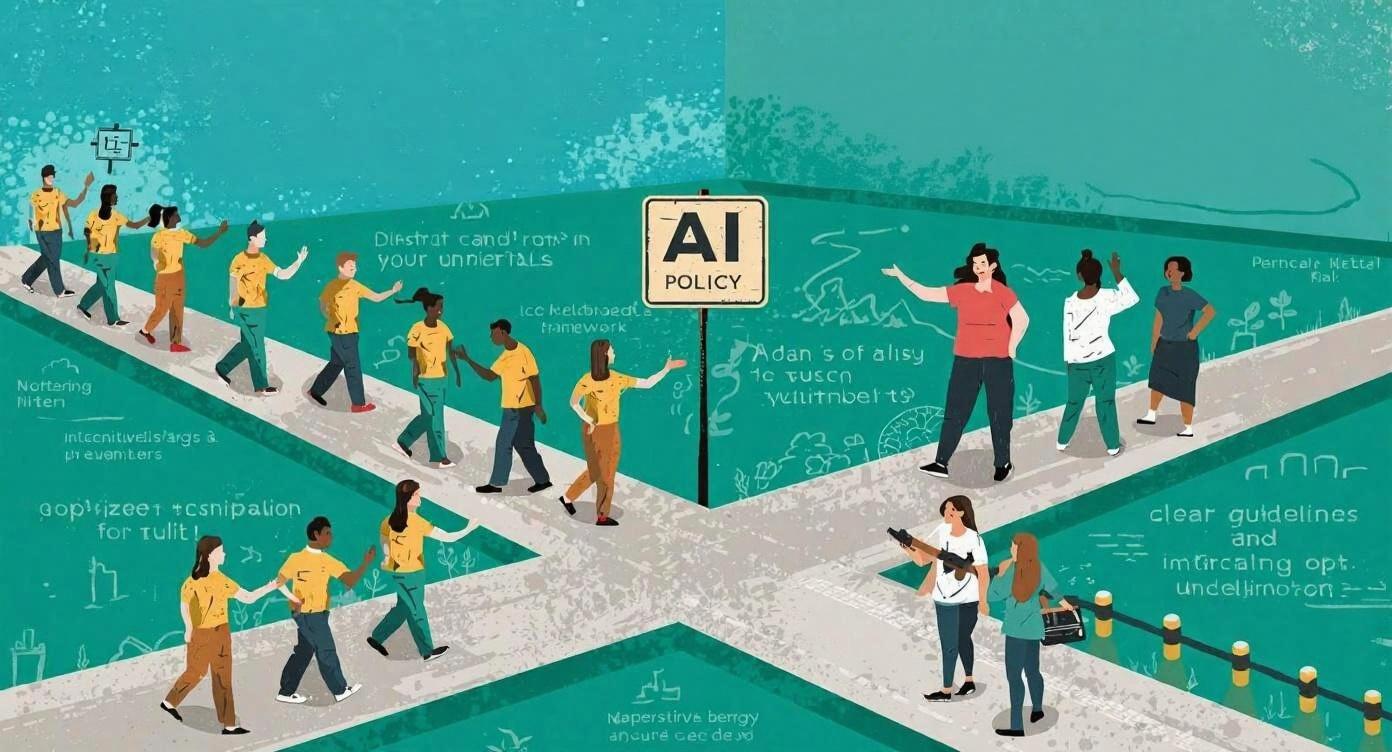
Your nonprofit's staff is already using AI. They're drafting donor emails with ChatGPT, designing graphics with generative image tools, analyzing program data with AI-powered analytics, and automating routine tasks with intelligent workflow systems. The adoption is happening organically, driven by individual initiative and departmental needs. But here's the concerning reality: if your organization is like most nonprofits, there's no formal policy governing any of this activity.
Recent research reveals a startling governance gap in the nonprofit sector. According to multiple 2024-2025 surveys, while 82% of nonprofits now use AI tools in some capacity, fewer than 10% have established formal policies to guide that use. This represents one of the most significant governance failures in the modern nonprofit landscape—organizations are deploying powerful technology that handles sensitive beneficiary data, shapes donor communications, and influences programmatic decisions, all without clear guidelines, oversight, or accountability frameworks.
The risks of this policy vacuum are substantial. Without clear guidelines, staff members make independent decisions about what data to share with AI systems, which tools to use, and how to verify AI-generated outputs. Some may be inadvertently exposing confidential donor information to commercial AI platforms. Others might be using AI to make decisions about program participants without considering bias or fairness implications. Legal liability questions remain unanswered. Board members, often unaware of the extent of AI adoption in their organizations, cannot fulfill their fiduciary duty to oversee technology-related risks.
This article examines why such a large majority of nonprofits lack AI policies despite widespread adoption, explores the specific barriers preventing policy development, and provides a comprehensive framework for creating an AI policy tailored to nonprofit needs. Whether you're a nonprofit leader concerned about governance gaps, a board member seeking to understand your oversight responsibilities, or a staff member advocating for clearer guidelines, this guide will help you understand the urgency of the situation and take concrete steps toward responsible AI governance.
The good news is that creating an effective AI policy doesn't require technical expertise or significant resources. It requires clarity about your values, understanding of your risks, and commitment to responsible innovation. Nonprofits that develop thoughtful AI policies now will be better positioned to leverage AI's benefits while protecting their missions, their stakeholders, and their reputations. Let's explore how to close this critical governance gap.
The Scope of the Problem: By the Numbers
Before exploring solutions, it's essential to understand just how widespread this governance gap has become. The statistics paint a troubling picture of rapid technology adoption outpacing organizational governance structures.
According to the 2024 Nonprofit Standards Benchmarking Survey and subsequent research published in 2025, 82% of nonprofits now use AI in some capacity. This represents a dramatic increase from just a few years ago, when AI adoption in the nonprofit sector hovered around 20-30%. The acceleration has been remarkable—and largely ungoverned. Of these organizations using AI, fewer than 10% have established formal policies to guide its use. This means approximately 70-76% of all nonprofits are using AI without any formal governance framework.
The lack of preparation is equally concerning. Research from GivingTuesday's AI Readiness Report shows that 92% of nonprofits report feeling unprepared for AI, while 60% express significant uncertainty and mistrust about the technology. This unease exists alongside widespread adoption—a paradox that highlights how AI tools have proliferated faster than organizational understanding and governance capacity have developed.
Key Statistics: The AI Governance Gap
Understanding the scale of policy adoption challenges
- 82% of nonprofits use AI tools, yet fewer than 10% have formal policies governing that use—creating a massive governance gap
- 92% of nonprofits feel unprepared for AI, indicating widespread anxiety despite rapid adoption
- 40% of nonprofits report no one in their organization is educated about AI, yet staff are using these tools daily
- 70% express concerns about data privacy and security, 63% worry about accuracy, and 57% about bias and representation
- Less than 20% of nonprofits have discussed AI with their funders, despite 75% believing funders have little understanding of AI needs
- 52% of nonprofit practitioners report feeling scared of AI, yet continue using it without formal guidelines
These numbers reveal a sector caught between opportunity and anxiety. Nonprofits recognize AI's potential to enhance their work—the top three use cases are internal productivity (35%), marketing and communications (31%), and development and fundraising (24%). But this adoption is happening in a governance vacuum, with organizations moving forward despite feeling unprepared, under-educated, and concerned about risks they don't fully understand how to mitigate.
The consequences of this governance gap extend beyond internal operations. As more nonprofits use AI to interact with donors, serve beneficiaries, and make programmatic decisions, the potential for harm—from privacy violations to algorithmic bias—increases exponentially. Without policies in place, organizations have no framework for preventing problems, no process for addressing issues when they arise, and no clear lines of accountability when things go wrong. This isn't just a compliance issue; it's a fundamental question of organizational responsibility and mission fidelity.
Why Nonprofits Lack AI Policies: Understanding the Barriers
The governance gap exists not because nonprofit leaders don't care about responsible AI use, but because multiple barriers prevent policy development. Understanding these obstacles is the first step toward overcoming them. The challenges fall into several interconnected categories, each requiring different solutions.
Resource Constraints: The Primary Obstacle
Limited capacity affects policy development
The most frequently cited barrier to AI policy adoption is straightforward: nonprofits lack the time, money, and personnel to develop comprehensive governance frameworks. This resource scarcity manifests in several ways that compound the challenge.
Financial constraints prevent many organizations from hiring consultants or legal advisors to help draft policies. According to recent surveys, less than one-third of nonprofit respondents believe they have the resources to explore AI use systematically. Even among organizations that have adopted AI tools, 48% report higher technology-related expenses, with 84% stating that additional funding is essential to sustain development. When budgets are tight, policy development often loses to more immediate operational needs.
Staff capacity presents an equally significant challenge. Many nonprofits operate with lean teams where every staff member already wears multiple hats. Adding "AI policy development" to someone's responsibilities—particularly when that person likely lacks expertise in this area—feels overwhelming. In organizations where 40% report that no one is educated about AI, asking staff to create an AI policy without external support is unrealistic.
- Small and mid-sized nonprofits often lack dedicated IT or legal staff who could lead policy development
- Budget pressures force organizations to prioritize immediate programmatic needs over governance infrastructure
- The perceived complexity of AI policy creation leads organizations to postpone the work indefinitely
Knowledge and Expertise Gaps
Technical literacy challenges policy creation
You can't govern what you don't understand. More than half of nonprofit leaders report that their staff lack the expertise to use or even learn about AI effectively. This knowledge gap creates a circular problem: organizations need AI policies, but feel unqualified to create them because they don't understand AI well enough to know what to include.
The rapidly evolving nature of AI technology exacerbates this challenge. By the time a nonprofit leader begins to understand current AI capabilities, new developments emerge that change the landscape. Generative AI tools evolved dramatically between 2023 and 2025, and agentic AI systems are now introducing yet another paradigm shift. Leaders worry that any policy they create will immediately become outdated.
Among organizations that have adopted AI tools, 41% cite lack of in-house technical expertise as a significant barrier to effective implementation and governance. This expertise gap affects not just policy creation but also enforcement and evaluation. Even if an organization adopts a template policy from an external source, staff may lack the knowledge to adapt it appropriately, communicate it effectively, or monitor compliance with its provisions.
- Leadership may not understand AI well enough to identify what risks the policy should address
- Technical terminology and concepts create barriers to meaningful policy discussions
- Rapid technological change makes organizations hesitant to commit to specific policy language
Employee Resistance and Cultural Barriers
Organizational culture affects policy adoption
In the 2024 Nonprofit Standards Benchmarking Survey, one-third of organizations listed employee resistance as a barrier to AI adoption—and this resistance extends to policy development as well. The reasons for this resistance are varied and often emotionally charged. Some staff members fear that creating an AI policy legitimizes technology they view as threatening to their jobs. Others worry that formal policies will restrict their ability to use helpful tools they've already integrated into their workflows.
The fact that 52% of nonprofit practitioners report feeling scared of AI reveals deep anxiety about these technologies. This fear manifests in different ways across organizations. Some teams avoid the policy conversation entirely, hoping that if they don't formally acknowledge AI use, they won't have to confront difficult questions about its implications. Others resist policy development because they associate it with bureaucracy and restriction rather than empowerment and protection.
Generational and cultural divides can also complicate policy conversations. Younger staff members who grew up with technology may dismiss concerns about AI risks as overblown, while older staff or those working directly with vulnerable populations may be hypervigilant about potential harms. Finding common ground that respects both innovation and caution requires skilled facilitation—another capacity that resource-constrained nonprofits often lack.
- Staff fear that AI policies will be overly restrictive and impede their work
- Anxiety about job displacement makes policy conversations emotionally charged
- Different comfort levels with technology create divisions within teams
Perceived Complexity and Risk Overwhelm
Understanding AI risks can paralyze action
As nonprofits learn more about AI risks, many become paralyzed rather than motivated to act. The range of concerns is genuinely daunting: 70% worry about data privacy and security, 63% about accuracy and reliability, 57% about bias and discrimination. Add concerns about legal liability, ethical implications, environmental impact, and mission drift, and the policy development task can feel insurmountable.
This overwhelm often leads to analysis paralysis. Organizations feel they need to address every possible risk comprehensively before implementing any policy. They worry about liability if their policy isn't thorough enough, but also about creating documents so complex that no one can understand or follow them. The perceived need for perfection prevents progress toward "good enough" governance that could provide immediate value.
The existential nature of some AI risks—from algorithmic bias perpetuating systemic inequities to potential misuse of beneficiary data—raises the emotional stakes of policy development. For nonprofits serving vulnerable populations, the thought of getting AI governance wrong isn't just about organizational liability; it's about potentially causing real harm to the communities they exist to serve. This weight can make leaders reluctant to move forward without certainty they cannot achieve.
- The breadth of potential AI risks makes comprehensive policy development feel overwhelming
- Fear of legal liability if policies are inadequate prevents organizations from starting
- Concern about causing harm to vulnerable populations raises emotional stakes
Lack of External Pressure and Support
Limited funder engagement and sector guidance
Unlike for-profit companies facing regulatory pressures and market demands for AI governance, nonprofits operate in an environment with minimal external accountability for AI policy development. Research shows that 75% of nonprofits believe funders have little to no understanding of their AI-related needs, and fewer than 20% have ever discussed AI with their funders. This lack of engagement from the philanthropic sector removes what could be a significant motivator for policy development.
Without funders asking questions about AI governance, nonprofits have less incentive to prioritize policy development over more immediate operational needs. If grants don't require organizations to demonstrate responsible AI practices, and major donors don't inquire about data protection in AI systems, nonprofit leaders reasonably conclude that AI policy isn't urgent compared to program delivery, fundraising, or regulatory compliance in other areas.
The nonprofit sector also lacks the robust intermediary support infrastructure that exists for other governance areas. While organizations like NTEN, TechSoup, and a few consultancies are beginning to offer resources, the sector doesn't yet have the equivalent of widely adopted standards like the Better Business Bureau's Wise Giving Alliance Standards or the Standards for Excellence. This absence of sector-wide guidance leaves individual organizations trying to reinvent the wheel rather than adapting established frameworks to their specific contexts.
- Funders aren't yet requiring AI governance as part of grant compliance
- Limited sector-wide standards or best practice frameworks for nonprofit AI policy
- Accreditation bodies haven't yet incorporated AI governance into their standards
These barriers are real and significant, but they're not insurmountable. Understanding them is the first step toward developing strategies that work within nonprofit constraints rather than ignoring them. The organizations that have successfully developed AI policies share common approaches: they started with simple frameworks rather than comprehensive documents, they involved staff in the process to build buy-in, they adapted existing templates rather than starting from scratch, and they treated policy development as an iterative process rather than a one-time project.
Why AI Policies Matter: The Case for Urgent Action
Before diving into policy creation, it's worth articulating clearly why this work matters. For time-strapped nonprofit leaders, every new initiative requires justification. AI policy development isn't just another administrative task—it's a fundamental governance responsibility that protects your organization's ability to fulfill its mission.
Protecting Vulnerable Populations and Sensitive Data
Most nonprofits work with vulnerable populations or handle sensitive information—often both. Without clear AI policies, staff members make individual decisions about what data to share with AI tools. Someone might copy donor email addresses into a generative AI tool to help craft a fundraising campaign, inadvertently exposing private contact information to a commercial platform. A program coordinator might use AI to analyze beneficiary data without considering whether the tool's terms of service permit processing of protected health information or educational records.
The consequences of these seemingly minor decisions can be significant. Data breaches damage donor trust and can trigger legal liability under regulations like GDPR, CCPA, or sector-specific laws like HIPAA and FERPA. More fundamentally, they represent a failure of the organization's duty of care to the people it serves. An AI policy establishes clear guidelines about what data can and cannot be processed through AI tools, ensuring that staff understand their responsibilities and that vulnerable populations remain protected. For more information on building ethical AI practices, see our article on responsible AI implementation for nonprofits.
Preventing Algorithmic Bias and Mission Drift
AI systems can perpetuate and amplify existing biases in ways that directly contradict nonprofit missions. An organization committed to equity might unknowingly use an AI recruitment tool that discriminates against certain demographic groups. A nonprofit serving diverse communities might implement an AI-powered intake system that performs poorly for non-English speakers or people with disabilities.
Without a policy that requires bias assessment and ongoing monitoring, these problems can persist undetected—or worse, be dismissed when raised because there's no framework for evaluating them. Organizations that use AI to make or inform decisions about program eligibility, resource allocation, or client services need explicit policies about fairness, transparency, and accountability. Your AI policy should articulate your organization's values and ensure that technology serves them rather than undermining them.
Managing Legal and Financial Risk
The legal landscape around AI is evolving rapidly, with new regulations emerging at federal, state, and international levels. The EU AI Act, various state-level AI regulations, and forthcoming federal frameworks will create compliance obligations for nonprofits just as they do for businesses. Organizations without AI policies lack the foundational governance structure needed to respond to these regulatory requirements.
Beyond regulatory compliance, AI policies provide important legal protections. If an AI-related incident occurs—from a data breach to an allegation of discriminatory treatment—having a documented policy demonstrates that the organization took reasonable steps to prevent harm. Conversely, the absence of any policy can be used as evidence of negligence in legal proceedings. Insurance companies are beginning to ask questions about AI governance when underwriting cyber insurance and directors and officers liability policies. Organizations without policies may face higher premiums or difficulty obtaining coverage.
Building Donor and Community Trust
Research reveals a "donor AI paradox": while AI can enhance fundraising effectiveness, 31% of donors report they would give less to organizations they know use AI. This resistance stems partly from lack of transparency about how nonprofits use these technologies. An AI policy—particularly one that's publicly shared—demonstrates that your organization has thoughtfully considered the implications of AI use and established appropriate safeguards.
Transparency about AI governance can differentiate your organization in a crowded philanthropic landscape. Donors increasingly care about operational practices, not just programmatic outcomes. Being able to articulate clearly how you use AI, what protections are in place, and how you ensure alignment with your mission builds confidence. For community members and program participants, knowing that your organization has formal policies governing how their data is handled and how AI influences decisions affecting them demonstrates respect and accountability.
Empowering Staff and Enabling Innovation
While some view policies as restrictive, well-designed AI policies actually empower staff by providing clarity. When team members know what's permitted and what's not, they can confidently use AI tools that enhance their work without constantly wondering if they're crossing a line. Clear guidelines reduce anxiety and decision fatigue, allowing staff to focus their energy on mission-driven work rather than ethical puzzles.
Good AI policies also enable innovation by creating safe spaces for experimentation. Rather than a blanket prohibition on AI use due to uncertainty about risks, a thoughtful policy can define pilot programs, establish review processes for new tools, and create mechanisms for learning from both successes and failures. Organizations with clear policies can move faster than those paralyzed by policy absence, because they have frameworks for making decisions rather than starting each conversation from scratch. Learn more about building organizational capacity for AI in our guide to developing AI champions in nonprofits.
Fulfilling Board Fiduciary Duties
Board members have fiduciary duties to exercise care and loyalty in overseeing the organization. In 2026, this necessarily includes understanding and governing the organization's use of significant technologies. Boards cannot fulfill their oversight responsibilities if they don't know what AI tools the organization uses, how those tools affect operations and stakeholders, and what risks they create.
An AI policy provides the foundation for board oversight. It defines what requires board approval versus staff-level decision-making, establishes reporting mechanisms so boards receive relevant information, and creates accountability structures. Without such a policy, boards operate blind to a significant dimension of organizational risk. As AI governance becomes a standard component of nonprofit best practices—and as legal standards around AI continue to evolve—board members who fail to ensure appropriate policies are in place may face personal liability for breach of fiduciary duty.
Creating Your AI Policy: A Practical Framework
Now that we understand why most nonprofits lack AI policies and why those policies matter, let's turn to the practical question: how do you actually create one? The good news is that you don't need to become an AI expert or hire expensive consultants to develop an effective policy. What you need is a structured approach, access to good templates, and commitment to an iterative process.
The framework below breaks policy development into manageable phases. Most organizations can complete an initial policy within 4-6 weeks, with subsequent refinement continuing over time. Remember: a simple policy you can actually implement is infinitely more valuable than a comprehensive policy that sits in a drawer because it's too complex to operationalize.
Phase 1: Assessment and Preparation
Understanding your current state and needs
Before drafting policy language, invest time understanding how AI is currently being used in your organization and what risks matter most for your specific context. This assessment phase prevents you from creating a generic policy that doesn't address your actual situation.
Conduct an AI Use Inventory
Survey staff across departments to identify what AI tools they're currently using, how they're using them, and what data they're processing. This inventory often reveals surprising patterns—staff in different departments may be using incompatible tools for similar purposes, or teams may be duplicating efforts without realizing it. The inventory also helps you understand the skill and comfort levels across your organization.
Identify Your Risk Profile
Not all nonprofits face the same AI risks. An organization working with healthcare data faces different compliance requirements than one focused on environmental advocacy. Similarly, nonprofits serving children, refugees, or other vulnerable populations need more stringent data protection measures than those with less sensitive information. Clarify which risks are most significant for your organization based on your mission, populations served, data handled, and regulatory environment.
Review Existing Policies
Your AI policy doesn't exist in isolation—it should integrate with existing policies around data security, privacy, acceptable technology use, and ethical conduct. Review these policies to identify gaps, contradictions, or areas where AI-specific guidance is needed. Sometimes you can address AI governance through amendments to existing policies rather than creating an entirely separate document.
Form a Working Group
Don't create your AI policy in isolation. Form a small working group (3-5 people) that includes representatives from programs, operations, technology (if you have dedicated IT staff), and leadership. Include at least one board member to ensure board engagement. This diverse perspective prevents blind spots and builds buy-in for the policy from its earliest stages.
Phase 2: Core Policy Development
Building your foundational framework
Rather than starting from scratch, begin with a template and adapt it to your organization's specific needs. Several organizations have published nonprofit-specific AI policy templates that provide excellent starting points.
Start with a Template
Recommended templates include Community IT's "Acceptable Use of AI Tools in the Nonprofit Workplace," the NTEN/ANB Advisory template adapted from NIST's AI Risk Management Framework, Freewill's Sample Nonprofit AI Use Policy, and TechSoup's AI Usage Policy developed in partnership with Microsoft. Download several templates and review them with your working group to identify which structure and approach fits your organization best.
Essential Policy Components
Regardless of which template you choose, your AI policy should address these core elements:
- Purpose and Scope: Clearly articulate why the policy exists, what it covers, and who it applies to. State how it connects to your mission and values.
- Definitions: Define key terms like "artificial intelligence," "generative AI," "training data," and other concepts that appear in your policy. Use plain language rather than technical jargon.
- Acceptable Use Standards: Specify what uses of AI are permitted, encouraged, and prohibited. Be concrete: instead of "use AI responsibly," say "do not input personally identifiable donor information into AI tools unless they meet our data security requirements."
- Data Protection Requirements: Address how different types of data can be used with AI tools. Distinguish between public information, internal communications, donor/member data, and highly sensitive information about program participants. Specify requirements for data anonymization and consent.
- Bias and Equity Standards: Articulate your organization's commitment to fairness and your approach to preventing discriminatory outcomes. If AI systems will influence decisions affecting people, require bias assessments and ongoing monitoring.
- Transparency and Disclosure: Specify when and how the organization will disclose AI use to donors, program participants, and the public. Address whether AI-generated content requires labeling.
- Accountability and Oversight: Define who is responsible for AI governance, how decisions about new tools get made, and what approval processes exist. Establish mechanisms for reporting concerns.
- Vendor Evaluation Criteria: If your organization procures AI tools, establish standards for evaluating vendors, including their data practices, security measures, and ethical commitments.
- Training and Support: Commit to providing staff with education about AI and the policy itself. Specify what training will be provided and how often.
- Policy Review and Updates: AI technology evolves rapidly, so your policy should include a commitment to regular review—typically annually or when significant new technologies emerge.
Adapt, Don't Adopt
As you work with templates, resist the temptation to simply adopt one wholesale. Templates are starting points that need customization for your specific context. A healthcare nonprofit needs different data protection language than an arts organization. A small grassroots group needs different approval processes than a large international NGO. The adaptation process—though time-consuming—ensures your policy reflects your organization's actual needs and capabilities.
Phase 3: Stakeholder Engagement and Refinement
Building buy-in and improving the policy
Once your working group has developed a draft policy, it's time to engage broader stakeholders. This phase is crucial for both improving the policy and building the organizational support needed for effective implementation.
Staff Consultation
Share the draft with all staff and actively solicit feedback. Host a meeting or series of meetings where staff can ask questions, raise concerns, and suggest improvements. Pay particular attention to feedback from staff who will be most affected by the policy—those currently using AI tools extensively and those working directly with sensitive populations or data.
Frame the consultation as a genuine opportunity for input, not a rubber-stamp process. Some staff members may identify risks or use cases the working group didn't consider. Others may flag where policy language is unclear or where requirements seem impractical given real-world workflows. This feedback is invaluable for creating a policy that can actually be implemented rather than one that sounds good but proves unworkable.
Board Review and Approval
Present the policy to your board for review and formal approval. Provide context about why AI governance matters, what the policy aims to accomplish, and how it was developed. Be prepared to answer questions about implementation costs, enforcement mechanisms, and how the board will receive ongoing information about AI use and governance.
Some boards may want to establish an AI oversight committee or add AI governance to the responsibilities of an existing committee (often technology, risk, or governance). Support this interest—formal board-level oversight strengthens governance and ensures the policy receives appropriate attention.
Consider External Perspectives
Depending on your organization's context, you might also want input from program participants, community members, or major donors. Organizations serving vulnerable populations should particularly consider whether those populations have concerns about AI use that the policy should address. This consultation demonstrates respect and may surface important issues that internal stakeholders didn't consider.
Phase 4: Implementation and Communication
Putting policy into practice
A policy that sits in a document library doesn't protect your organization. Implementation requires deliberate effort to integrate the policy into organizational practices and culture.
Training and Education
Conduct training for all staff on the AI policy within the first month of adoption. This training should cover not just the policy's requirements but also the reasoning behind them. Help staff understand what problems the policy aims to prevent and how following it protects both the organization and the people it serves. Make training interactive—use real scenarios and have staff work through decision-making processes using the policy framework.
Create Implementation Tools
Develop practical tools that help staff apply the policy in their daily work. This might include a decision tree for evaluating whether a particular AI tool is appropriate for a specific use case, a checklist for conducting bias assessments, or a form for requesting approval to pilot new AI tools. These tools translate policy principles into actionable guidance.
Establish Clear Points of Contact
Designate someone (or a small team) as the go-to resource for AI policy questions. Staff need to know who to ask when they're unsure whether a particular use case complies with the policy. This person or team also becomes the mechanism for tracking how the policy is working in practice and identifying areas that need clarification.
Communicate Publicly
Consider publishing your AI policy (or a summary) on your website. Transparency about AI governance builds donor and community trust. You don't need to share proprietary information about specific tools or internal processes, but publicly articulating your commitment to responsible AI use and the principles guiding that use can differentiate your organization.
Phase 5: Monitoring, Evaluation, and Evolution
Keeping your policy relevant and effective
AI governance is not a "set it and forget it" endeavor. Your policy needs ongoing attention to remain effective as technology, regulations, and your organization's needs evolve.
Regular Monitoring
Establish mechanisms for ongoing monitoring of AI use and policy compliance. This might include periodic surveys of staff about their AI tool use, regular reviews of AI-related expenses to understand what tools are being procured, or audits of specific high-risk applications. The goal isn't punitive enforcement but rather understanding how AI use is evolving and whether the policy is keeping pace.
Incident Response
Your policy should include a process for responding when problems arise—from policy violations to AI-related incidents like data breaches or bias complaints. Document these incidents and the organization's response. These records inform policy refinement and demonstrate accountability.
Scheduled Reviews
Commit to reviewing and updating the policy at least annually. Technology changes, new use cases emerge, and regulations evolve. Your working group should reconvene to assess whether the policy still reflects current needs and best practices. Don't be afraid to modify the policy based on experience—the willingness to evolve demonstrates maturity rather than weakness.
Stay Connected to the Broader Conversation
Join nonprofit technology communities, attend webinars on AI governance, and follow organizations like NTEN and NetGain that focus on responsible AI adoption in the social sector. Learning from other nonprofits' experiences helps you refine your approach and anticipate emerging issues before they affect your organization.
Special Considerations for Different Types of Nonprofits
While the general framework above applies to most nonprofits, certain types of organizations face unique considerations that their AI policies should address. Understanding these special circumstances helps you tailor your policy appropriately.
Small Nonprofits and Grassroots Organizations
If your organization has fewer than 10 staff members or operates primarily with volunteers, creating a comprehensive AI policy may feel overwhelming. Consider starting with a simple one-page "AI Acceptable Use Guidelines" that covers the essentials: what types of data can never be shared with AI tools, which approved tools staff can use, and who to ask if someone is unsure about a use case. You can expand these guidelines over time as your capacity and AI use evolve.
Small organizations should also leverage free templates and resources rather than trying to hire consultants. The Community IT and Freewill templates are specifically designed for resource-constrained nonprofits. Don't let perfection be the enemy of good—a simple policy you actually implement protects your organization far more than no policy at all.
Healthcare and Human Services Nonprofits
Organizations handling protected health information must ensure their AI policies integrate with HIPAA compliance requirements. Your policy should explicitly prohibit inputting PHI into consumer AI tools that aren't HIPAA-compliant, establish processes for Business Associate Agreements with AI vendors, and address how AI-generated clinical or case management decisions will be reviewed by qualified professionals.
Similarly, nonprofits serving children need to address COPPA requirements, while those handling educational data must consider FERPA. Your policy should specify additional safeguards for these highly protected data categories beyond standard privacy measures.
International Development Organizations
Nonprofits operating across multiple countries face the complex challenge of navigating different AI regulations and data protection laws. The EU AI Act establishes risk-based requirements for AI systems, while countries like China, Brazil, and Canada have their own frameworks. Your policy may need to specify different requirements for different jurisdictions or establish organization-wide standards that meet the most stringent applicable regulations.
International organizations should also consider connectivity and infrastructure constraints in some operating contexts. Your policy might need to address offline AI tools and establish different protocols for field operations versus headquarters work.
Advocacy and Civil Rights Organizations
Nonprofits engaged in advocacy work, particularly around sensitive political issues, need to consider unique risks related to surveillance, data security, and adversarial access to information. Your AI policy should address whether staff can use AI tools that might expose sensitive campaign strategies, activist lists, or coalition partner information. Consider requiring that certain high-sensitivity work only use locally-hosted or open-source AI tools that don't share data with external servers.
Federated Nonprofits with Chapters or Affiliates
Organizations with semi-autonomous chapters face the challenge of balancing consistency with local flexibility. Your national or international headquarters might establish a baseline AI policy that all affiliates must meet, while allowing individual chapters to adopt more stringent standards based on their specific contexts. Alternatively, you might create a detailed policy framework that chapters can adapt with guidance. The key is ensuring that all affiliates have some form of AI governance while respecting their autonomy.
Moving from Paralysis to Progress
The fact that a majority of nonprofits lack AI policies despite widespread AI use represents a significant governance gap—but it's one that can be closed. The barriers are real: resource constraints, knowledge gaps, cultural resistance, and limited external pressure all contribute to policy inaction. But these barriers aren't insurmountable, particularly when you approach policy development as an iterative process rather than a one-time perfect product.
Start where you are. If you're a small organization with limited capacity, begin with a simple one-page set of guidelines that addresses your most critical risks. If you're a larger organization with more resources, adapt an existing template rather than creating a policy from scratch. Involve staff in the process to build understanding and buy-in. Focus on clear, actionable guidance rather than comprehensive coverage of every possible scenario. Commit to regular review and evolution rather than trying to create a permanent, unchangeable document.
The urgency of this work cannot be overstated. Every day without an AI policy is a day your organization operates with unmanaged risk—risk to the vulnerable populations you serve, risk to donor trust, risk to your mission, and risk to your organizational sustainability. As AI technologies become more powerful and more deeply integrated into nonprofit operations, these risks will only grow. As regulations evolve and accountability standards rise, organizations without governance frameworks will find themselves increasingly exposed.
But there's also opportunity in this moment. Nonprofits that develop thoughtful AI policies now—even simple ones—position themselves as responsible leaders in their sectors. They build trust with donors and communities. They empower their staff to innovate confidently within clear guardrails. They fulfill their board's fiduciary duties and demonstrate commitment to their values. They prepare themselves to adapt to evolving regulations rather than scrambling reactively. Most importantly, they ensure that AI serves their mission rather than undermining it.
The governance gap exists not because nonprofit leaders don't care about responsible AI use, but because the task has felt too complex, too technical, and too resource-intensive given competing priorities. This article has aimed to demystify the process and provide a roadmap that organizations of any size can follow. The templates exist, the frameworks are available, and the sector is beginning to develop shared understanding of what responsible AI governance looks like.
Your organization doesn't need to wait for perfect clarity about AI technology or complete consensus about every policy detail. You need to start. Draft a policy, even a simple one. Share it with staff and board. Implement it, learn from the experience, and refine it. The journey from policy absence to policy maturity begins with a single step—and that step is more accessible than most nonprofit leaders realize.
If most nonprofits currently lack AI policies, that makes the opportunity all the more significant for those who act now. Be among the organizations that close this governance gap. Your mission, your stakeholders, and your long-term sustainability depend on it. For additional guidance on implementing responsible AI practices, explore our resources on strategic AI planning and nonprofit AI leadership.
Ready to Develop Your AI Policy?
We help nonprofits develop comprehensive yet practical AI governance frameworks tailored to their specific needs, risks, and resources. From policy development to staff training to ongoing governance support, we can guide your organization through the process.