
The A2A Protocol Explained for Nonprofit Operations Leaders
Google's Agent-to-Agent (A2A) protocol is the emerging standard that allows AI agents from different vendors and platforms to coordinate work with each other. Understanding it positions nonprofit operations leaders to make strategic decisions about AI infrastructure before those decisions are made for them.
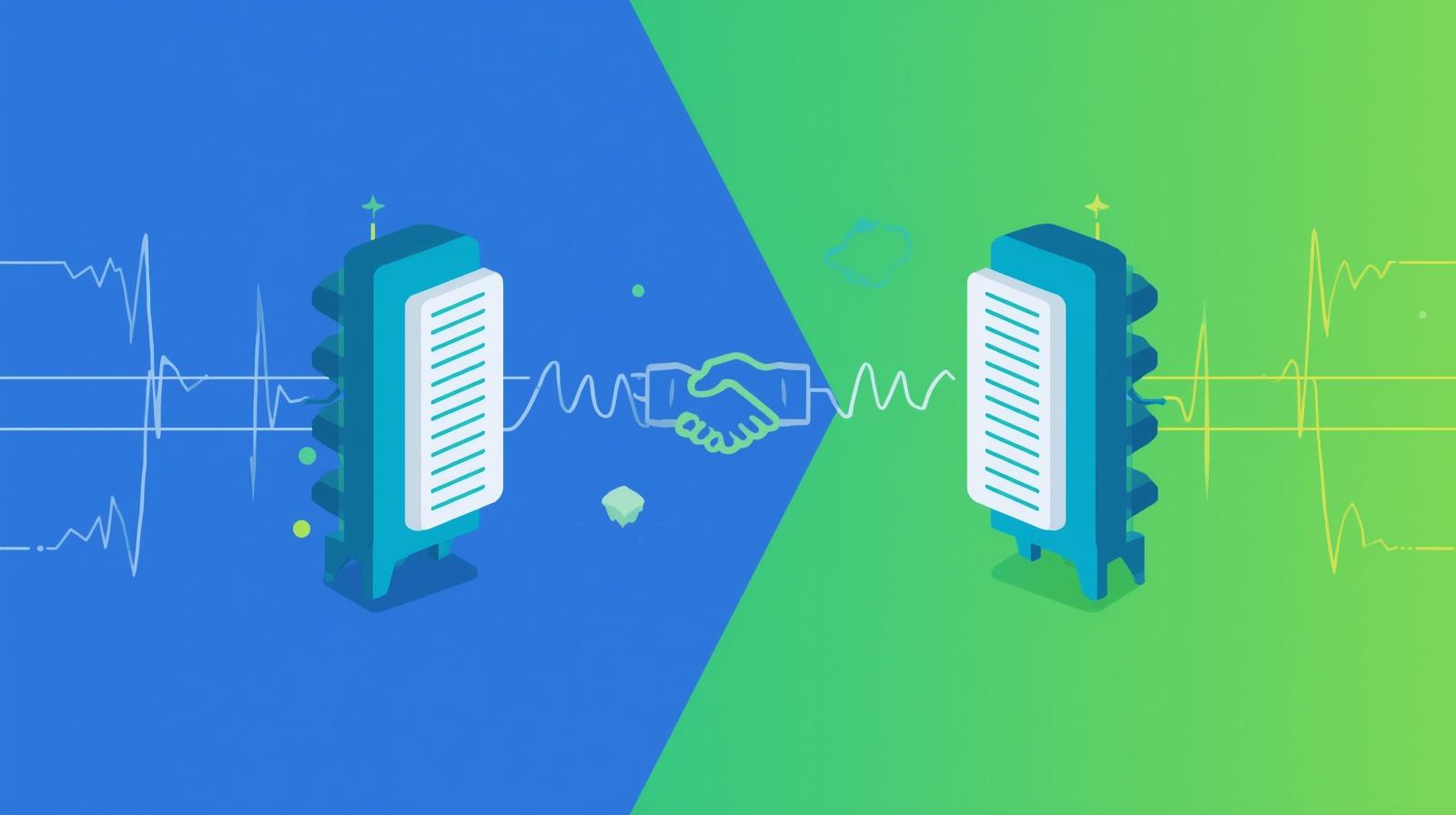
Somewhere in the next eighteen months, the nonprofit technology decisions being made today will determine whether your organization's AI systems can work together or remain isolated tools that staff juggle manually. That may sound like an abstract infrastructure concern, but it has immediate and concrete operational consequences. Which platforms you evaluate, which vendors you commit to, and how you structure AI deployments across departments will either position you to build compounding AI capacity or lock you into fragmented systems that require constant human coordination to function.
The Agent-to-Agent protocol, commonly called A2A, sits at the center of this question. Created by Google and launched in April 2025, A2A is the open technical standard that allows AI agents, regardless of which vendor built them, to discover each other's capabilities, communicate securely, and delegate work between themselves. It is the protocol that makes multi-agent AI systems possible at organizational scale without requiring every component to come from the same vendor. Understanding A2A is not a technical exercise for engineers; it is a strategic literacy requirement for operations leaders who are evaluating AI platforms, setting infrastructure policy, or planning AI adoption roadmaps.
This article provides a comprehensive explanation of A2A oriented specifically toward nonprofit operations leaders. It covers what the protocol does technically (in accessible terms), how it relates to Anthropic's Model Context Protocol, why it matters more than traditional API integrations, which platforms support it today, what genuine multi-agent workflows look like for nonprofit operations, the security and governance considerations that accompany it, and what your organization would actually need in order to implement it. By the end, you will have a clear framework for evaluating A2A's relevance to your organization's current situation and a set of practical questions to bring to vendor conversations.
One important note on scope: this article focuses on A2A specifically. For a side-by-side comparison of A2A and MCP, the two protocols most relevant to nonprofits in 2026, see our article on MCP vs. A2A for nonprofit stacks. For the organizational and ethical dimensions of deploying autonomous AI agents, see our guide to agentic AI for nonprofits. This article provides the deep technical and strategic grounding on A2A itself.
What A2A Is and the Problem It Solves
To understand why A2A exists, start with the problem it was designed to solve. As AI agents became more capable in 2024 and 2025, organizations began deploying multiple agents for different functions: one agent handling donor communications, another managing grant research, another processing program intake. Each agent was powerful within its domain, but they could not talk to each other. When work needed to flow from one agent to another, a human had to carry it, copying outputs from one system and pasting them into another, or writing custom integration code that only worked for that specific combination.
This was not just inefficient; it defeated the purpose of automation. The promise of agentic AI is that complex, multi-step workflows can run with minimal human coordination. But if every handoff between agents requires a human intermediary or bespoke integration code, the automation ceiling is very low. Organizations with multiple AI agents from different vendors faced a choice: give up on multi-agent workflows, or build and maintain custom integrations for every agent pairing. Neither option was acceptable.
A2A solves this by defining a universal language that AI agents use to communicate with each other. Rather than requiring custom integration code for each agent combination, A2A establishes a standard set of rules: how agents announce what they can do, how they request work from each other, how they pass information securely, how they report progress and results. Any agent that speaks A2A can work with any other agent that speaks A2A, regardless of which company built either of them. The integrations shift from multiplicative (every new agent requires custom connections to every existing agent) to additive (each new A2A-compliant agent can immediately work with all existing ones).
The analogy that technical teams often use is the telephone network. Before standardized telephone protocols, different telephone systems could not connect to each other. You could only call people on the same network you used. Once standards were established, any telephone connected to any phone line could call any other telephone in the world. A2A does the same thing for AI agents: it creates a universal network layer so that agents can "call" each other regardless of vendor, platform, or deployment environment.
The Core Functions A2A Enables
A2A provides four essential capabilities that isolated agents cannot achieve on their own
- Agent discovery: Agents can find other agents and learn what those agents are capable of, without anyone manually configuring the connection. Each agent publishes a standardized description of its abilities that other agents can read and understand.
- Task delegation: An orchestrating agent can assign work to a specialist agent and receive results back, all through a standard interface. The orchestrating agent does not need to know how the specialist does its work, only what it can produce.
- Secure communication: Agents exchange information over encrypted connections with authentication built into the protocol. An agent receiving a task request can verify it is coming from an authorized source before acting on it.
- Cross-vendor interoperability: A Salesforce agent can coordinate with a Claude agent can coordinate with a ServiceNow agent, all within the same workflow, because all three speak the same A2A language. Vendor choice becomes a capability decision rather than a compatibility constraint.
How A2A Works: The Technical Architecture in Plain Language
You do not need to understand A2A at the engineering level to make strategic decisions about it, but understanding the key architectural concepts gives you the vocabulary to have productive conversations with technical staff and vendors, and helps you ask the right questions when evaluating platforms.
A2A is built on technologies that the internet already uses widely. It uses HTTPS (the same protocol your browser uses to load secure websites) for communications, and JSON (a standard data format used in virtually every modern web application) for the information that agents exchange. This is not an exotic or proprietary technology stack; it runs on ordinary infrastructure that any modern organization already has. The A2A-specific contribution is the set of conventions and rules that define how agents should use these existing technologies to communicate with each other.
Agent Cards: The Foundation of A2A Discovery
How agents announce themselves and their capabilities to the network
Every A2A-compliant agent publishes an Agent Card: a structured document in JSON format that lives at a predictable, standardized web address (specifically at the path /.well-known/agent.json). Think of it as a business card that an agent makes available to anyone who wants to work with it. The Agent Card contains:
- Identity: The agent's name, description, and the organization that operates it
- Capabilities: What tasks this agent can perform, expressed in standardized terms other agents can parse
- Endpoints: The web addresses where other agents can send task requests
- Authentication requirements: What credentials or tokens an agent needs to receive before it will accept work
- Supported interaction patterns: Whether the agent responds immediately, works asynchronously on long tasks, or streams progress updates as it works
Critically, Agent Cards do not expose internal logic, training data, proprietary models, or access credentials. An agent advertising its capabilities through an Agent Card is not revealing how it does what it does, only what it can do. This design protects vendor intellectual property and limits the attack surface if an Agent Card is read by an unauthorized party.
Task Lifecycle: How Work Flows Between Agents
The five states of an A2A task request from initiation to completion
When one agent (the client agent) wants work done by another (the server agent), A2A defines a precise lifecycle for that interaction. Understanding this lifecycle helps operations leaders evaluate whether A2A deployments have appropriate oversight and intervention points.
- Submitted: The client agent sends a task request to the server agent's endpoint, including context and any relevant data the server agent will need
- Working: The server agent acknowledges receipt and begins processing; the client agent can poll for updates or receive streaming progress notifications
- Input-required: If the server agent needs clarification or additional information, it can pause and signal that it is waiting for input, creating a defined intervention point for human oversight
- Completed: The server agent returns its output to the client agent in a structured format the client can incorporate into the broader workflow
- Failed: If the server agent cannot complete the task, it returns a structured error the client agent can handle, escalate, or route to human review
The "input-required" state deserves particular attention from operations leaders. One of the governance concerns about autonomous AI systems is that they will run without any opportunity for human review. A2A's task lifecycle includes explicit pause states where agents can surface decisions or ambiguities to human reviewers before proceeding. Well-designed A2A workflows use this capability deliberately, building in human checkpoints for consequential decisions while allowing routine steps to proceed automatically.
A2A also supports what the specification calls "push notifications": a mechanism by which a server agent can alert a client agent or a human monitoring system that something significant has happened without waiting to be polled. For nonprofit workflows involving time-sensitive decisions, such as a compliance issue surfaced during grant processing or an unusual pattern in beneficiary intake data, push notifications allow A2A systems to escalate immediately rather than waiting for the next scheduled check.
A2A, MCP, and Traditional APIs: Understanding the Differences
Nonprofit technology conversations in 2026 involve three distinct types of integration: traditional APIs, MCP, and A2A. These are not competing alternatives; they operate at different layers and serve different purposes. Understanding how they relate prevents both the confusion of treating them as interchangeable and the error of assuming you need to choose between them.
Traditional APIs (Application Programming Interfaces) have been the standard mechanism for software systems to communicate for decades. An API defines a set of functions one application exposes so other applications can use them. Your CRM has an API that allows other software to read and write donor records. Your accounting software has an API that allows other software to retrieve financial data. APIs are mature, well-understood, and ubiquitous, and they will continue to be a foundational layer of organizational technology for the foreseeable future.
The limitation of APIs in the AI context is that they are designed for software-to-software communication, not for AI agents acting with autonomous judgment. An API call is a precise, pre-programmed instruction: "retrieve records where donation date is after January 1 and amount is greater than $1,000." The calling software must know exactly what it wants and how to ask for it. An AI agent, by contrast, operates with varying context, adapts its approach based on what it finds, and may need to chain many API calls in a sequence it determines dynamically. Traditional APIs provide the actions; they do not provide the coordination layer that allows AI agents to choose which actions to take and in what order.
MCP (Model Context Protocol) sits above the API layer. It provides a standard way for an AI agent to connect to tools, data sources, and APIs. Rather than requiring each AI model to learn the specific syntax of each API it might use, MCP provides a universal interface: any AI that speaks MCP can use any tool that has an MCP server, regardless of the underlying API details. MCP is about one agent connecting to many tools and data sources. It expands what a single AI agent can access and do.
A2A operates at yet another layer: not agent-to-tool, but agent-to-agent. It is about how multiple AI agents coordinate with each other. Where MCP gives an agent access to a broader set of capabilities, A2A allows agents to delegate work to each other based on specialization. A workflow that involves a research agent finding information, passing it to an analysis agent for interpretation, which passes results to a drafting agent for content creation, requires A2A for the coordination layer even if each individual agent uses MCP to connect to its specific tools.
| Layer | Technology | What It Connects | Nonprofit Example |
|---|---|---|---|
| Data/action access | Traditional APIs | Software to software | Salesforce records exported to accounting system |
| Agent-to-tool | MCP | One AI to many tools and data sources | Claude reads Salesforce, writes Google Docs, sends Slack messages through a unified interface |
| Agent-to-agent | A2A | Many AI agents coordinating with each other | Grant research agent delegates compliance checking to a specialist agent and receives a structured response |
Why A2A Is Qualitatively Different from API Integration
Operations leaders who have experience with traditional integrations sometimes initially treat A2A as "just another integration standard." The distinction matters more than it might seem. API integrations are static and predetermined: a developer designs exactly what data flows between exactly which systems in exactly which circumstances. A2A enables dynamic, autonomous coordination where agents discover capabilities at runtime and delegate work based on context, not pre-programming.
- APIs require explicit programming for every workflow; A2A agents can determine at runtime which other agents to involve based on the specific task at hand
- API integrations break when data formats change; A2A agents can adapt because they communicate in natural-language-adjacent formats with semantic meaning, not rigid field mappings
- API integrations scale linearly with technical effort; A2A integrations scale with agent count, because each new A2A-compliant agent can immediately coordinate with all existing A2A agents
- APIs transfer data between systems; A2A transfers work, context, and judgment between agents, which is a fundamentally different kind of coordination
A2A Adoption in 2026: Which Platforms Support It
A2A launched in April 2025 with 50 founding partner organizations. By mid-2025, that number had grown to more than 150 participating organizations. Understanding which platforms support A2A matters directly for nonprofit technology procurement decisions, because it determines which vendor combinations can be connected into multi-agent workflows without custom development.
The A2A protocol is now governed by the Linux Foundation's Agentic AI Foundation (AAIF), alongside MCP. This joint governance is significant: it means both protocols are maintained as open standards under neutral stewardship rather than under the control of any single vendor. For nonprofits evaluating long-term technology commitments, both standards have the institutional backing needed to persist regardless of competitive dynamics between individual technology companies.
IBM's Agent Communication Protocol (ACP), which was often mentioned in the same breath as MCP and A2A during 2024 and early 2025, formally merged into A2A in August 2025. IBM's research contributions and some ACP-specific technical capabilities were incorporated into A2A's development roadmap. This consolidation means the market settled on two standards rather than three, which is a better outcome for organizations that had been watching from the sidelines and waiting to see which standard would win.
Enterprise Platforms with A2A Support
Platforms relevant to nonprofit organizations with active A2A implementation
- Salesforce Agentforce 3: Full A2A support, meaning Salesforce agents can coordinate with agents from other vendors. Directly relevant to nonprofits using Salesforce NPSP or Nonprofit Cloud with Agentforce.
- ServiceNow: Supports both MCP and A2A natively. Used by larger nonprofits for IT service management and workflow automation.
- SAP: A2A integration across SAP's AI agent offerings. Relevant for larger nonprofits with SAP financial or ERP systems.
- Atlassian: A2A support in Atlassian's AI capabilities, relevant for nonprofits using Jira or Confluence for project management.
- Google Vertex AI Agent Builder: First-party A2A support, enabling agents built on Google's platform to coordinate with external A2A agents.
AI Platforms with A2A Implementation
AI model providers and agent frameworks that speak A2A
- LangChain and LangGraph: Popular open-source frameworks for building AI agents, with A2A support enabling LangChain-built agents to interoperate with agents on other platforms.
- CrewAI: Multi-agent framework with A2A support, frequently used for nonprofit workflows including grant research and donor analysis. See our article on multi-agent AI systems for nonprofits.
- Microsoft Azure AI Agent Service: A2A implementation in Azure's agent hosting infrastructure, enabling agents built on Azure to participate in cross-vendor workflows.
- PayPal: A2A support relevant to nonprofits using PayPal's nonprofit payment processing and donor management tools.
The practical implication for nonprofit technology procurement is straightforward: add A2A support to your vendor evaluation checklist. It sits alongside questions like "does this platform support MCP?" as a standard indicator of a vendor's commitment to interoperability over lock-in. Vendors that support both MCP and A2A are investing in standards-based infrastructure that allows their products to work well with others. Vendors that resist both may be protecting proprietary integration revenue at the expense of your organization's flexibility.
It is also worth noting that A2A adoption is unevenly distributed across platform size. Enterprise platforms like Salesforce, SAP, and ServiceNow have implemented A2A in their production offerings. Smaller and more specialized nonprofit-specific software vendors are still earlier in their adoption curves. If your organization uses niche nonprofit-specific platforms, ask vendors directly about their A2A roadmap and timeline, not just their current support status.
Multi-Agent Workflows for Nonprofit Operations: What A2A Makes Possible
The value of A2A becomes tangible when you map it to the actual operational workflows of a nonprofit organization. The following scenarios illustrate what multi-agent coordination looks like in practice, across different operational domains. None of these are science fiction; organizations with dedicated technical staff and appropriate platforms are running versions of these workflows today. They will become increasingly accessible to mid-size nonprofits over the next twelve to twenty-four months.
Grant Lifecycle Management
The most comprehensive multi-agent use case for nonprofit development departments
A complete grant lifecycle involves at least five distinct competencies: opportunity research and prospecting, narrative drafting, budget development and financial compliance, regulatory and programmatic compliance checking, and workflow routing for review and approval. Today, a human development officer (or a small team) coordinates all five, passing work between themselves, between departments, and between different software systems.
In an A2A-enabled workflow, an orchestrating grant management agent receives a prompt to prepare a submission for a specific grant opportunity. It delegates research to a prospect research agent that scans the funder's 990s, public statements, and previous grant recipients to build a strategic profile. The grant management agent receives that research and delegates narrative drafting to a writing agent with deep organizational knowledge, passing the funder profile as context. The writing agent produces a draft and returns it. The grant management agent simultaneously delegates the budget to a financial agent that has access to the organization's actual program costs and restricted fund balances. It delegates compliance review to a regulatory agent that checks 2 CFR 200 requirements for federal funding or state-specific requirements for state grants. The grant management agent assembles all components, identifies any conflicts or gaps surfaced by the specialist agents, and presents a consolidated package to a human development officer for review.
The development officer's role shifts from coordinator to reviewer. The hours spent gathering information, chasing down budget figures from finance, waiting for compliance sign-off, and reformatting content are replaced by a single review and approval step. A task that previously took three to five days of elapsed time across multiple staff members is compressed to the time it takes an officer to review and refine a complete, coordinated package.
- Specialist agents bring domain depth that a single generalist agent cannot match
- Parallel delegation (research, budget, compliance running simultaneously) compresses timelines dramatically
- Human oversight is preserved at the assembly and review stage, not eliminated
Multi-Program Beneficiary Services Coordination
Coordinating intake, eligibility, and service delivery across program areas
Many nonprofits run multiple programs with partially overlapping eligibility criteria, separate intake processes, and distinct staff teams. Beneficiaries who qualify for multiple programs often fall through the gaps between them, not because the programs are unavailable but because no one is systematically looking across program boundaries. A2A enables cross-program coordination without requiring a unified database or merged staff teams.
An intake agent for the housing assistance program processes an initial application. As part of that workflow, it uses A2A to query an eligibility agent for each of the organization's other programs, passing the relevant demographic and situational details. The eligibility agents return their assessments independently, without the intake agent needing to know the specific eligibility logic of each program. The intake agent consolidates the results and presents the case worker with a complete picture of which programs the applicant qualifies for across the organization, in a single intake session.
This scenario is particularly relevant for larger nonprofits with organizational structures that have historically created program silos. A2A allows each program's agent to maintain its own eligibility logic (preserving the programmatic expertise within each team) while enabling cross-program coordination at the coordination layer.
Donor Stewardship and Major Gift Cultivation
Coordinating relationship intelligence, communications, and reporting across development functions
Effective major gift fundraising requires synthesizing information from multiple domains: giving history and capacity signals from the CRM, relationship notes from the development officers' files, organizational impact data from the program teams, and sector news about the donor's philanthropic interests from external sources. Today, a major gifts officer does this synthesis manually before every significant donor interaction.
In an A2A-enabled workflow, a donor engagement agent responsible for major gift relationships can delegate tasks to specialist agents before a development officer's preparation time. A CRM analysis agent pulls the complete giving and engagement history. A capacity research agent runs wealth screening signals. A program impact agent retrieves outcomes data relevant to this donor's stated interests. A news monitoring agent reports on recent public statements or philanthropic activity. The donor engagement agent assembles a pre-meeting briefing that takes a development officer five minutes to review rather than forty-five minutes to compile.
After meetings, the donor engagement agent can coordinate a follow-up workflow: a correspondence drafting agent produces a personalized thank-you or follow-up based on the meeting notes the officer enters, a calendar agent schedules the next touchpoint, and a reporting agent logs the interaction details across the CRM fields the officer would normally have to update manually.
Disaster Response and Crisis Operations
Coordinating rapid-response workflows across multiple operational domains simultaneously
Disaster relief and humanitarian response organizations operate under conditions where coordination speed is directly connected to impact. Traditional coordination requires phone calls, emails, and manual data entry across multiple systems, with human coordinators acting as switchboards between logistics, communications, field teams, and donors. A2A enables a coordination architecture where multiple specialized agents handle different operational dimensions simultaneously.
During an active response, a coordination agent manages the overall operational picture. It delegates to a logistics agent tracking resource deployment and supply chain, a beneficiary intake agent processing incoming requests for assistance, a communications agent preparing situation updates for donors and media, and a donor notification agent identifying major donors with relevant geographic or programmatic interests and preparing personalized impact updates. These agents work in parallel, surface escalations to human coordinators, and maintain a real-time integrated picture that previously required a dedicated operations center to assemble manually.
- Parallel operation of multiple agent functions eliminates the bottleneck of sequential human coordination
- Push notifications surface exceptions and decisions immediately rather than waiting for scheduled check-ins
- Human coordinators focus on judgment calls and relationships rather than information routing
Multi-Agent Orchestration: Key Concepts for Nonprofit Leaders
A2A enables multi-agent systems, but enabling the technology is not the same as designing effective multi-agent workflows. Operations leaders who understand the core architectural concepts of multi-agent orchestration are better positioned to evaluate vendor proposals, identify design flaws, and provide meaningful oversight of deployed systems.
Orchestrator vs. Specialist Agents
In a multi-agent system, one agent typically acts as the orchestrator: it receives the high-level goal, breaks it into component tasks, delegates those tasks to specialist agents, and assembles the results. Specialist agents have deep capability in a specific domain but may have no awareness of the broader workflow they are participating in.
This separation has a governance implication: the orchestrator is typically where organizational policy should be most strongly encoded. It is the agent making decisions about what work to do, in what order, with what approvals required. Specialist agents can be evaluated on the quality of their outputs in isolation; the orchestrator must be evaluated on the quality of its coordination decisions.
Synchronous vs. Asynchronous Delegation
A2A supports both immediate (synchronous) responses and long-running (asynchronous) tasks. A synchronous task is one where the client agent waits for the server agent to complete before proceeding. An asynchronous task is one where the client agent delegates work and proceeds with other tasks while waiting for a callback or polling for completion.
For nonprofit workflow design, the distinction matters for timeline management. A grant compliance check might be synchronous because the grant management agent cannot proceed without it. A background prospect research task might be asynchronous, with results returned when available rather than blocking the main workflow.
Trust Boundaries and Authorization Chains
When Agent A delegates to Agent B, which then delegates to Agent C, the question of authorization becomes layered. A2A addresses this through authentication tokens that travel with task requests, but the organization deploying the system must define the trust boundaries: which agents can delegate to which other agents, and with what limits on scope.
A nonprofit's donor engagement agent should probably be able to delegate to a CRM query agent but should not be able to delegate to a financial reporting agent without an explicit organizational policy authorizing that cross-functional access. These boundaries need to be designed intentionally, not left as defaults.
Human-in-the-Loop Design Patterns
Well-designed multi-agent systems are not fully autonomous; they have explicit intervention points where human review is required before consequential actions proceed. A2A's task lifecycle supports this through the "input-required" state and push notifications.
The design question is not whether to include human oversight, but where. For routine tasks (scheduling a follow-up call, generating a first draft), full automation may be appropriate. For consequential tasks (sending a communication to a major donor, approving a budget submission, making an eligibility determination), requiring human review is both a governance requirement and a quality control mechanism.
The concept of "minimal footprint" is worth understanding as a design principle for multi-agent nonprofit deployments. The principle holds that agents should request only the permissions they need for the current task, prefer reversible actions over irreversible ones, and err toward asking for human confirmation when the scope of an action is unclear. This is not a limitation on capability; it is a governance posture that makes multi-agent systems auditable and correctable. For nonprofits with fiduciary obligations, regulatory requirements, and beneficiary trust at stake, minimal footprint should be a design requirement, not just a best practice.
For nonprofits interested in the organizational readiness dimensions of deploying agentic AI workflows, our article on agentic AI for nonprofits covers governance frameworks and staff readiness in depth. The technical capability that A2A provides is only valuable if the organizational structures for oversight, accountability, and continuous improvement are in place around it.
Security and Governance Considerations for A2A in Nonprofits
A2A's security model is more robust than ad hoc agent integrations, but it introduces new governance questions that nonprofit operations leaders need to address proactively. The following considerations are not reasons to avoid A2A; they are the questions that good A2A implementation requires you to answer.
What A2A's Security Model Provides
A2A's security mechanisms are built into the protocol specification rather than left to individual implementations. This is a meaningful distinction from informal agent-to-agent integrations where security is an afterthought.
- Transport encryption: All A2A communications use HTTPS with TLS, meaning data in transit between agents is encrypted by default
- Mutual authentication: Both the client and server agents authenticate themselves before exchanging task information, preventing unauthorized agents from injecting work or impersonating legitimate agents
- Capability isolation: Agent Cards expose only what an agent can do, not how it does it or what data it can access internally. A malicious agent reading your Agent Card cannot extract your CRM credentials or model configuration.
- Role-based access control: A2A supports defining which agents can delegate to which other agents and with what scope, giving organizations explicit control over the authorization chain
Governance Questions That A2A Requires You to Answer
Having a secure protocol is not the same as having a secure deployment. The following questions should be answered before any A2A-enabled system touches production data or performs consequential actions.
- Data processing agreements: When Agent A (your organization's agent) sends beneficiary information to Agent B (a vendor's specialist agent), which entity is the data processor? Do your existing DPAs with that vendor cover this use? If Agent B is operated by a different vendor than Agent A, you may be sharing data with an entity you have no direct contractual relationship with.
- Agent Card exposure: Your Agent Card is published at a publicly accessible URL. Review what information you include carefully. Agent Cards should describe capabilities only; they should not include information about specific data you hold, beneficiary populations you serve, or security configurations.
- Audit and logging: Can you produce a complete log of which agent delegated what task to which other agent, with what data, and what the outcome was? This is essential for compliance, debugging, and accountability.
- Failure handling and escalation: What happens when an agent in the chain fails or returns an unexpected result? Is there a defined escalation path to human review, or does the system silently fail or proceed with incomplete information?
- Scope creep prevention: As agents become more capable and interconnected, there is organizational pressure to add capabilities and expand automation scope incrementally. Each expansion should go through the same governance review as the initial deployment.
For nonprofits handling sensitive beneficiary data, health information, or data about minors, the data processing agreements question is not optional or deferrable. Any A2A workflow that passes this category of data between agents from different vendors requires explicit review by whoever manages your data privacy compliance, whether that is a staff attorney, an outside counsel, or a compliance consultant. This review should happen before the workflow is built, not after it is deployed.
The audit and logging requirement also has resource implications. Comprehensive logging of multi-agent workflows generates data volume that must be stored, retained for compliance purposes, and periodically reviewed. The cost and operational overhead of this logging infrastructure should be part of the total cost of ownership calculation for any A2A deployment. Organizations that do not build logging into their initial A2A implementation find themselves making difficult retrofit decisions later, often under pressure from a compliance incident or a board inquiry.
For organizations that have already worked through MCP's security considerations, many of the same principles apply to A2A. Our dedicated article on MCP security for nonprofits covers several foundational security concepts, including principle of least privilege and data processing agreement review, that transfer directly to the A2A context.
What Nonprofits Need to Implement A2A: Infrastructure, Costs, and Expertise
A2A is an open standard available to any organization, but implementing it requires more than downloading a specification. Operations leaders evaluating A2A need a clear picture of what infrastructure, technical expertise, and organizational capacity are actually required.
The most important distinction for nonprofit leaders to understand is the difference between using A2A through a platform and implementing A2A from scratch. The vast majority of nonprofits that benefit from A2A will do so through platforms that have already implemented the protocol, such as Salesforce Agentforce or ServiceNow. In this path, you are configuring agents within a platform that handles the A2A protocol layer on your behalf. The technical complexity is substantially lower, and the expertise required is the platform configuration skills your staff may already have, supplemented by training on agentic workflow design.
A smaller number of nonprofits, typically larger organizations with dedicated technical staff or sophisticated technology programs, will implement A2A more directly by building custom agents or connecting agents across multiple platforms. This path requires substantially more technical expertise and introduces the full set of implementation considerations below. Understand which path applies to your organization before evaluating these requirements.
Path 1: A2A Through Supported Platforms (Accessible Now for Many Nonprofits)
If you use Salesforce Agentforce 3, ServiceNow with AI capabilities, or another platform with native A2A support, you may be closer to A2A-enabled workflows than you realize.
- Infrastructure: Your existing platform subscription, possibly with an upgraded tier that includes agentic capabilities. No separate server infrastructure required.
- Expertise: Platform administrator skills, workflow design knowledge, and familiarity with the platform's agent configuration interface. AI literacy at the team level, not engineering expertise.
- Cost drivers: Platform tier upgrades for agentic features, staff time for workflow design and testing, possible consulting support for initial configuration. The A2A protocol itself is free.
- Timeline: Initial multi-agent workflows achievable in weeks with appropriate platform access and staff capacity. Production deployment with full governance review in two to four months for a focused team.
Path 2: Custom A2A Implementation (Requires Technical Staff or Partners)
Building custom A2A agents or connecting agents across multiple platforms without a shared underlying platform requires engineering skills and additional infrastructure.
- Infrastructure: Cloud hosting for agent servers (AWS, Azure, or Google Cloud), HTTPS certificate management, logging and monitoring infrastructure, authentication service integration. Budget for infrastructure operations at $200 to $2,000+ per month depending on scale and complexity.
- Expertise: Software engineers familiar with agent frameworks (LangChain, CrewAI, or similar), HTTPS server implementation, authentication protocols, and the A2A specification. This is not entry-level development work; it requires engineers who have built agentic systems or are willing to invest in learning them.
- Cost drivers: Engineering time (typically the dominant cost), cloud infrastructure, AI API costs for underlying model calls, ongoing maintenance and monitoring. A modest custom multi-agent implementation might require $50,000 to $150,000 in engineering time for initial development, with ongoing maintenance costs.
- Timeline: Three to six months for initial production-grade deployment, accounting for design, development, security review, testing, and staff training. Timelines compress significantly with experienced engineering partners.
An honest assessment of readiness is essential before committing to A2A implementation. The questions that determine whether your organization is ready for A2A-enabled workflows include: Do you have multiple AI agents already deployed that would benefit from coordination? Do you have staff with the workflow design skills to define multi-agent processes? Do you have governance structures that can oversee autonomous workflows? If the answer to any of these is no, the right next step is building those foundations, not investing in A2A infrastructure.
For organizations that are earlier in the AI adoption journey, MCP provides more immediate value with lower implementation requirements. It is entirely appropriate to spend the next six to twelve months building MCP-enabled workflows, developing organizational AI literacy, and letting your staff gain experience with agentic tools before the additional coordination layer that A2A enables becomes relevant. Our guide to getting started with AI for nonprofits provides a practical framework for sequencing these investments.
Strategic Questions for Nonprofit Operations Leaders
Rather than providing a prescriptive decision tree, the following questions are designed to help you think through A2A's relevance to your organization's specific situation. These are the questions that matter for strategic planning conversations with boards, leadership teams, and technology partners.
Questions for Vendor Evaluation
- Does this platform support A2A? If yes, which version of the specification, and can you demonstrate an agent-to-agent workflow that crosses vendor boundaries?
- If the platform does not currently support A2A, what is the roadmap and expected timeline for support?
- What logging and audit capabilities does the platform provide for A2A interactions? Can you retrieve a complete history of agent delegations and their outcomes?
- How does the platform handle data processing when your agents exchange information with external A2A agents? Which entity is the data controller, and is this covered in the platform's data processing agreement?
- What does the platform's A2A trust model look like? Can you configure which external agents are authorized to delegate work to your agents, and with what scope limitations?
Questions for Organizational Readiness Assessment
- Which operational workflows currently involve the most human coordination overhead, where staff spend significant time routing information between people or systems rather than doing substantive work?
- Are there workflows where you have already deployed AI tools in separate silos, and staff are manually connecting the outputs of one tool to the inputs of another?
- Does your organization have AI governance policies that address autonomous agent actions? If not, what would need to be in place before you could deploy A2A-enabled agents with real operational authority?
- Who in your organization would own the ongoing design, monitoring, and governance of multi-agent workflows? Is that person or team available and appropriately resourced?
- What is the tolerance for automated action in your program context? Some program areas (housing, health, youth services) have regulatory and ethical requirements that demand human review for specific decision types regardless of technical capability.
What Nonprofit Operations Leaders Should Take Away
A2A is real, it is here, and it is being built into the platforms that nonprofits already use. Understanding it is not about becoming a technical expert; it is about having the strategic literacy to make good platform decisions, ask the right vendor questions, and design AI deployments that will compound in value over time rather than create new silos.
The most immediate practical takeaways are these. First, add A2A support to your standard vendor evaluation checklist alongside MCP support. Vendors that implement both are investing in interoperability; vendors that resist both may be building lock-in. Second, when evaluating AI platforms for renewal or replacement, ask specifically about A2A compatibility with your other major platforms, particularly your CRM. Third, if your organization is already using Salesforce Agentforce 3, ServiceNow, or another platform with native A2A support, schedule a conversation with your implementation partner about what multi-agent workflows are achievable with your current platform subscription before assuming you need new infrastructure.
The broader point is about trajectory. Multi-agent AI systems are moving from specialized enterprise deployments to broadly accessible platform features. Nonprofits that develop the organizational fluency to work with them strategically, asking the right governance questions, designing thoughtful workflows with appropriate human oversight, and building on open standards rather than proprietary integrations, will have a meaningful operational advantage over those that adopt them reactively or avoid them entirely. The protocol layer is rarely visible to end users or mission stakeholders. But it is where the infrastructure decisions that determine your organization's AI capacity for the next decade are being made right now.
For organizations building a broader AI strategy, our articles on building internal AI champions and integrating AI into your nonprofit strategic plan provide the organizational frameworks that make technical infrastructure investments like A2A purposeful rather than speculative.
Ready to Build Your Multi-Agent Strategy?
One Hundred Nights helps nonprofit operations leaders understand emerging AI infrastructure and build adoption roadmaps that position their organizations for long-term capacity. Let's talk about where A2A fits in your technology strategy.