
AI Champions 2.0: Building a Network of AI Leaders Across Your Nonprofit
The era of the single AI champion has revealed its fundamental limit: one person cannot transform an entire organization. The nonprofits achieving real gains with AI have moved to a distributed model, embedding capable AI leaders across departments, building peer learning communities, and turning individual enthusiasm into shared organizational capability.
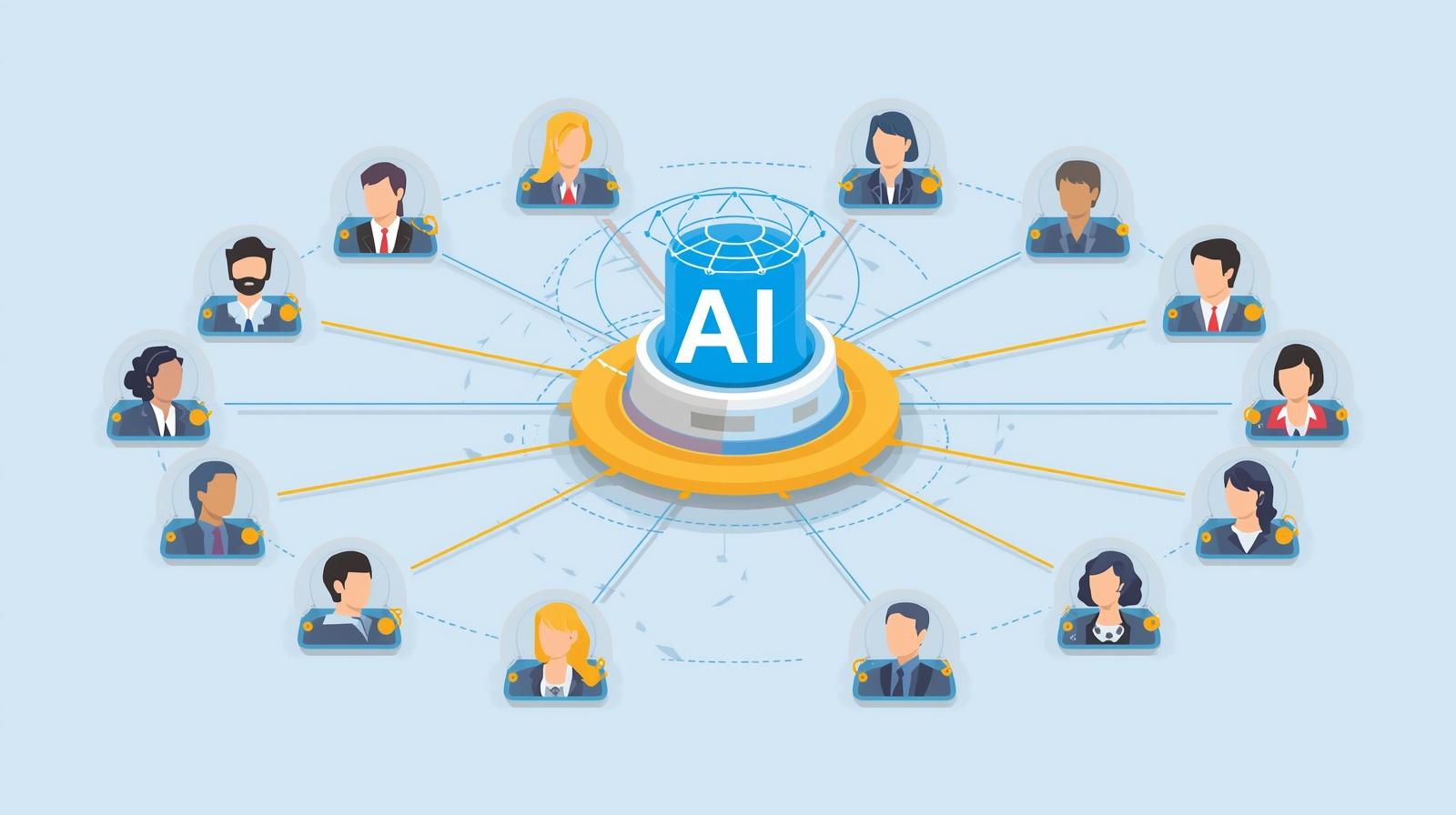
Consider two nonprofits. The first has a single AI champion: an enthusiastic program manager who has spent months learning about AI tools, building workflows, and trying to spread adoption. She runs training sessions, answers colleagues' questions, and advocates for better AI policies. She is genuinely skilled and deeply committed. And she is overwhelmed, pulled in every direction, serving as a one-woman support desk for an entire organization. When she went on leave for three weeks, AI adoption at her organization slowed to a near halt.
The second nonprofit took a different approach. Instead of relying on one person, they identified AI enthusiasts in each department, from fundraising to programs to finance to communications, and gave them time, resources, and a community to learn together. No single person became indispensable. AI knowledge spread horizontally through the organization. When individuals went on leave or changed roles, momentum continued. The organization's AI capability became structural, not personal.
The data makes the problem clear. Research consistently shows that the vast majority of nonprofits now use AI, but most see only marginal gains. The single AI champion model, which many organizations adopted as a first step, has produced awareness but not transformation. Individual AI use without documented workflows, shared practices, or cross-functional ownership produces efficiency for individuals but not capability for organizations. The challenge for 2026 is not adoption, it is depth.
This article provides a practical framework for building the next generation of AI leadership in your nonprofit, what this guide calls the AI Champions 2.0 model. It covers how to identify champions at different organizational levels, how to structure a champions network without creating bureaucracy, how to build genuine peer learning, how to prevent the burnout that kills champion programs, and how to measure whether the effort is actually working. The organizations that master this transition will develop a durable advantage in mission effectiveness that compounds over time.
Why the Single AI Champion Model Has Hit Its Limit
The early "single AI champion" model made intuitive sense. When AI adoption was new and uncertain, identifying one knowledgeable, enthusiastic person to lead the effort gave organizations a focused starting point. That person could experiment without risking broader disruption, build initial proof points, and gradually spread enthusiasm. For many organizations, the single champion was a necessary first stage.
But as AI adoption has matured and the number of relevant tools has exploded, the structural weaknesses of the single-champion model have become apparent. Organizations stuck at the "efficiency plateau" are treating AI as a side experiment individuals run in isolation. The problem is not enthusiasm but architecture.
The Bottleneck Problem
One person cannot scale across an entire organization. Every question becomes their question. Every workflow needs their approval. Every training session requires their presence. The champion becomes a single point of failure rather than a force multiplier. The capacity constraint is structural, not personal, and no amount of dedication can solve it.
The Expertise Trap
A champion from one department, however skilled, may not understand the workflows of other departments. A communications champion will not discover the AI applications that would transform finance operations. A programs champion will not identify the AI tools that are most relevant to development work. A single perspective narrows the diversity of use cases discovered and adopted.
The Succession Problem
When the champion leaves, burns out, or changes roles, momentum collapses. All the knowledge, relationships, and informal authority concentrated in one person must be rebuilt from scratch. Many nonprofits have experienced this cycle: an enthusiastic period of AI adoption followed by stagnation when the champion moves on.
The Peer Influence Gap
Research on AI adoption consistently finds that peer influence is more powerful than top-down directives or designated expert recommendations. An excited team member in the same department persuades colleagues far more effectively than a designated champion from another part of the organization. A frontline caseworker is more persuaded by another frontline caseworker's AI workflow than by an IT champion's demonstration.
The research from organizations that have studied AI adoption confirms this diagnosis. The most successful organizations embed AI champions at multiple levels simultaneously, not just one central person. Those stuck at early adoption stages, where many nonprofits remain, are precisely the organizations relying on individual champions without building the broader network.
The AI Champions 2.0 Framework: A Tiered Network Model
The AI Champions 2.0 model replaces the single champion with a deliberately tiered network that distributes AI leadership across the organization while maintaining coordination. The goal is not to create a large bureaucratic committee but to establish a self-reinforcing community where AI knowledge flows horizontally as well as vertically, and where no single person's departure threatens organizational momentum.
Etienne Wenger's Communities of Practice framework provides the theoretical grounding for this model. Communities of Practice are sustained learning partnerships among people who share a concern for something they do and learn how to do better as they interact regularly. Applied to AI champions networks, this means that the network needs three things to be sustainable: a shared domain of interest (effective AI use for mission impact), genuine community relationships rather than just reporting structures, and shared practice in the form of prompt libraries, workflow templates, and shared success stories.
Tier 1: AI Leadership Fellows (1-2 People Organization-Wide)
The AI Leadership Fellow is the evolved successor to the original AI champion. The critical difference is role definition: this person is a network coordinator and strategic connector, not a sole practitioner. They maintain the champion network, coordinate with organizational leadership, represent the organization in external peer networks, and ensure that AI learning is captured and shared systematically.
What this person does and does not do matters enormously. They do not answer every AI question from every staff member. They do not personally train every department. They do not own all AI tools or all AI decisions. Instead, they ensure that the people best positioned to answer those questions, the departmental champions and frontline enthusiasts, are supported and connected. They are coordinators, not universal experts.
- Facilitate monthly network meetings and learning sessions
- Maintain the organization's shared prompt library and AI workflow documentation
- Connect with external nonprofit AI networks and bring back relevant learning
- Report AI progress and challenges to executive leadership
Tier 2: Departmental AI Champions (One Per Major Function)
Departmental champions are embedded in specific functional areas: programs, fundraising, communications, finance, operations, and human resources. They drive AI adoption within their specific workflow context, represent their department's needs and discoveries in the broader network, and serve as the first point of contact for colleagues in their area who have AI questions or want to try new approaches.
The departmental focus is what makes this tier effective. A fundraising champion discovers AI applications that a programs champion would never encounter. A finance champion identifies automation opportunities invisible to communications staff. The diversity of domains covered by the champion network is how the organization discovers the full range of AI's potential relevance to its work.
- Run monthly department-level AI learning sessions or office hours
- Develop and maintain department-specific AI workflows and prompt collections
- Identify and onboard new AI tools relevant to departmental work
- Bring department-specific needs and wins to network meetings
Tier 3: AI Enthusiasts and Early Adopters (Distributed)
The third tier consists of staff members who are not formal champions but who actively experiment with AI tools, share what they learn informally, and model AI-augmented work for their immediate colleagues. These people are the network's most powerful persuaders because peer influence works most strongly within teams, not across organizational hierarchies. A case manager who shows her colleagues how she uses AI to draft documentation faster is more persuasive than any formal training program.
Tier 3 participants should be recognized, not just Tier 1 and 2. The informal encouragement and public acknowledgment of their contributions costs nothing and dramatically increases their motivation. Over time, the most active Tier 3 participants become the talent pipeline for Tier 2 as the network grows and evolves.
- Experiment freely with AI tools in their own work
- Share useful discoveries with immediate team members
- Contribute prompts and workflows to the shared library
- Provide ground-level feedback on what is and is not working
How to Identify Your Champions at Every Level
The most common mistake organizations make when building champion networks is selecting champions based on seniority or job title rather than on the characteristics that actually predict champion effectiveness. A junior program coordinator with intellectual curiosity and peer credibility will outperform a senior manager without those qualities every time.
Traits to Look For
Effective AI champions share a distinct set of characteristics that transcend departmental background or technical expertise. The most reliable predictors of champion effectiveness include genuine intellectual curiosity about how things work and how they might work better, peer credibility based on trust from colleagues rather than formal authority, a demonstrated pattern of experimenting with new approaches even at the risk of failure, the ability to communicate clearly across organizational levels, and resilience in the face of uncertainty and setbacks. These traits matter more than technical AI knowledge because technical knowledge can be developed, but the foundational traits are harder to cultivate in someone who does not already have them.
Notice that this list does not include "currently uses a lot of AI tools" or "has technical background." Many effective champions come from programs, fundraising, or communications with no prior technical experience. Their effectiveness comes from their peer relationships, their communication skills, and their willingness to try things. These qualities are present throughout your organization if you look for them rather than defaulting to the person who already knows the most about technology.
Finding Champions Through Observation
Rather than putting out a call for volunteers, which tends to attract people who are eager for additional responsibility regardless of fit, effective champion identification involves observation. Look at who in your organization is already experimenting informally, even modestly. Who asks questions about new tools in team meetings? Who has created workarounds or shortcuts that colleagues have adopted? Who do people tend to consult when they are trying to figure out a new process? These informal influencers are your natural champions. If your organization tracks learning management system completions for any AI courses, who has completed them? Who in the organization talks about AI in team meetings beyond the expected people?
Middle managers deserve particular attention as champion candidates. Research on AI adoption consistently finds that managers who actively model AI use and connect it to daily work are the most effective drivers of team-level adoption. Managers in their mid-career are often the most AI-enthusiastic cohort, bringing enough organizational knowledge to know what problems matter and enough flexibility to try new approaches. A departmental champion who is also a manager has built-in leverage because their team will observe and often mirror their practices.
Training, Supporting, and Sustaining Your Champions
A champions network without ongoing support is just a list of volunteers. The organizations that maintain effective champion programs over time invest in three things: relevant training, genuine community, and structural protection against burnout. These are not optional extras. They are the difference between a champion program that thrives and one that collapses after six months when the initial enthusiasm fades.
Role-Specific Training, Not Generic AI Education
Training that connects to real work is training that gets used
Generic "Introduction to AI" training is necessary but insufficient for champions. Champions need training that connects directly to their department's workflows, challenges, and responsibilities. A fundraising champion needs training focused on how AI applies to donor research, grant writing, stewardship communications, and campaign analysis. A programs champion needs training focused on service delivery documentation, client assessment, program evaluation, and case management. A finance champion needs training focused on budgeting, compliance reporting, grant tracking, and audit preparation.
Free foundational resources are available. Microsoft Learn offers an Introduction to AI Skills for Nonprofits path. Anthropic offers an AI Fluency for Nonprofits course. TechSoup has trained thousands of nonprofits through cohort-based courses. These can serve as starting points that champions supplement with role-specific learning as their knowledge develops.
- Give champions early or expanded access to AI tools so they can build real experience before teaching others
- Pair champions with technical mentors (IT staff, external advisors) for knowledge exchange on the technical side
- Teach champions how to build and maintain prompt libraries, not just use AI tools individually
- Teach champions to document what they learn in a format colleagues can actually use
Building Genuine Community, Not Just a Committee
Peer connections are the most powerful predictor of learning success
The most compelling evidence for the importance of peer community comes from a 2025 accelerator that brought together 22 nonprofits in a six-month learning cohort. Of all the outcomes measured, the strongest single finding was that 96 percent of participants said peer connections improved their work. Not the curriculum, not the coaching, not the tools, but the relationships with other people working on the same challenges. Teams' comfort with AI experimentation rose from 64 to 100 percent over the program period, and participants specifically cited reduced isolation as a key outcome.
Your champions network can create this peer community even without a formal accelerator program. The essential ingredients are regular touchpoints that are genuinely useful rather than bureaucratic, a shared space to ask questions without judgment, shared challenges that create real learning rather than just updates, and enough structure to maintain momentum without so much structure that meetings feel like obligations.
- Monthly cross-organizational champion meetings focused on specific use cases or challenges
- A shared Slack channel, Teams channel, or other platform for async question-answering and resource sharing
- Quarterly showcase sessions where departments share AI wins and workflows with the broader organization
- Connection to external nonprofit AI networks like AI for Nonprofits Network for broader peer learning
Preventing Champion Burnout: The Most Underaddressed Risk
Champion burnout is the most common reason AI champion programs fail. Nonprofit staff are already stretched. Adding champion responsibilities on top of full workloads, without corresponding relief from other duties, is a recipe for losing your most enthusiastic people. And because AI-savvy staff are increasingly valuable in the job market, a burned-out champion may leave the organization entirely rather than simply stepping back from the champion role.
The irony is that AI tools themselves can contribute to the problem. Research published in 2026 found that workers using AI to boost productivity often accomplish tasks faster but then take on additional work, a pattern that quietly snowballs into a heavier workload than before AI adoption. Champions, as the most active AI users in the organization, are particularly susceptible to this dynamic. Meanwhile, a 2025 Microsoft Work Trend Index found a significant rise in digital exhaustion, with high-AI users frequently lacking time for the learning and reflection that sustains their effectiveness.
Structural Protections Against Burnout
The first and most important protection is explicitly protecting champion time. If champion responsibilities are real, they require real time. A reasonable starting point is 2-3 hours per week for Tier 2 departmental champions, and proportionally more for Tier 1 leadership fellows. This time should be acknowledged and protected in workload planning conversations, not simply added to existing expectations.
Clear role boundaries are equally essential. Champions must not become de facto IT support desks. They are peer leaders and learning facilitators, not technical troubleshooters or tool administrators. When colleagues treat champions as the person to call for any AI-related problem, burnout follows quickly. The champion role should be defined explicitly, shared with the whole organization, and reinforced consistently by leadership.
Recognition matters significantly more than most leaders realize. Public acknowledgment of champions' contributions, in all-staff meetings, in newsletters, in board communications, builds their credibility and attracts more participants to the network. It also signals to potential future champions that the role is valued. Recognition costs nothing and returns significant dividends in champion motivation and network growth.
Finally, plan for evolution of champion roles over time. As champions develop their skills and the network matures, their responsibilities should evolve. Early-stage champions teach basic AI literacy. More mature champions focus on advanced workflows, policy development, and measurement. Champions who have been in their roles for a year or more should be transitioning toward mentoring newer champions rather than continuing to do foundational work. This evolution keeps roles interesting and creates natural pathways for the network to deepen without creating an unsustainable burden on any individual.
Measuring Whether Your Champion Program Is Actually Working
Champion programs that are not measured are champion programs that do not improve and are difficult to sustain with organizational resources. Measurement does not need to be elaborate, but it needs to be specific enough to show what is working and what is not, and concrete enough to communicate value to leadership and funders.
Program Health Metrics
- Participation rates in champion activities
- Training completion rates across the network
- Growth of the advocate network over time
- Champion-led events and workshops organized
Adoption Spread Metrics
- Percentage of eligible staff using AI tools weekly
- Number of documented AI workflows created
- Departments represented in active AI adoption
- Prompts contributed to shared organizational library
Business Value Metrics
- Time saved per specific task category
- Reduction in identified operational bottlenecks
- Cost savings or cost avoidance achieved
- Quality improvements in key outputs
Concrete before-and-after comparisons are more compelling to nonprofit leadership than abstract metrics. An organization that reduced interview guide preparation time from 60 minutes to 10 minutes using AI has a story that resonates. An organization that cut coaching costs by 25 percent through AI-supported group formats has a result that matters to a budget committee. Establish baselines before launching champion programs so that you have something concrete to measure against. The organizations that have tracked these specifics are better positioned to sustain leadership support and demonstrate value to funders who increasingly want to see evidence of AI impact.
Connecting Champions to Your Broader AI Strategy
A champions network is not a substitute for organizational AI strategy. It is the human infrastructure that makes strategy real. As you think about how your champions network connects to broader organizational goals, there are three relationships worth being explicit about.
First, champions need to be connected to organizational AI governance. If your organization has an AI policy or is developing one, champions should have input into that process and should be responsible for communicating policy to their departments. The organizations that have built effective AI governance structures recognize that governance without champions is compliance theater, while champions without governance creates a patchwork of individual practices that cannot scale. These two functions are designed to work together. Building on insights from work on establishing initial AI champions is a useful foundation before scaling to the 2.0 networked model.
Second, champions should be connected to your organization's AI strategic planning process. The ground-level knowledge that champions accumulate, about what is working, what is failing, where staff are excited, and where they are resistant, is precisely the information that makes strategic planning realistic rather than aspirational. Champions should have a formal channel to feed this ground-level intelligence upward to leaders who are setting direction.
Third, champions need to be connected to organizational knowledge management systems. The prompts, workflows, and lessons learned that champions generate are organizational assets. If they exist only in individual computers or in one person's memory, they disappear when that person leaves. A systematic approach to capturing and sharing champion-generated knowledge, through shared prompt libraries, documented workflows, and accessible case notes, is what transforms individual learning into organizational capability.
For organizations where staff are experiencing anxiety about AI and what it means for their roles, champions have a particularly important responsibility. They are often the trusted peers whose reassurance carries more weight than anything leadership says. A champion who can demonstrate how AI enhances their work rather than replacing it, who can show colleagues that AI makes difficult tasks easier without making their expertise irrelevant, is invaluable for addressing the resistance and anxiety that slow adoption.
Conclusion
The shift from single AI champion to distributed champions network represents a maturation in how nonprofits think about AI adoption. The single champion model was an appropriate first step for an early stage of adoption. The next stage requires something fundamentally different: AI knowledge that is distributed across the organization, embedded in department-specific workflows, sustained by genuine peer community, and protected by organizational structures that prevent burnout.
The data from organizations that have made this transition consistently shows the same pattern: when AI knowledge spreads from one enthusiastic person to a distributed network of informed practitioners, the organization moves from scattered efficiency gains for individuals to genuine capability improvements that serve the mission. Grant writing that used to take three days takes one. Donor research that required a specialist can be done by any development staff member. Program documentation that ate hours of caseworker time is handled in minutes. These are not marginal improvements. They are the kind of transformation that allows nonprofits to serve more people better with the resources they have.
Building this network takes time and intentional investment. But the alternative, leaving AI adoption to scattered individual effort without coordination, shared learning, or structural support, is a path to exactly the experience most nonprofits currently have: high adoption, low impact, and increasing frustration with why AI is not delivering on its promise. The organizations that invest in the human infrastructure of AI adoption, in the champions, communities, and systems that turn individual use into organizational capability, are the ones that will be thriving five years from now.
Ready to Build Your AI Champions Network?
Moving from a single AI champion to a distributed network of AI leaders is one of the highest-leverage investments your nonprofit can make. Let's discuss how to design the right approach for your organization's size, culture, and goals.