
When AI Coaches Replace Human Experts: Ethical Implications for Nonprofits
Khan Academy's AI tutor Khanmigo can now guide a student through a calculus problem at 2 AM. Rocket Learning's AI tutor Appu helps 3.5 million children across India develop foundational literacy through WhatsApp. Quill.org's AI writing tutor has reached over 9 million students in Title I schools. These tools promise to solve one of education's oldest challenges: the gap between what one-on-one human tutoring can achieve and what resource-constrained organizations can actually deliver. But as AI coaching tools proliferate across education, mental health, career counseling, and social services, nonprofits face a set of ethical questions that their commercial counterparts often ignore.
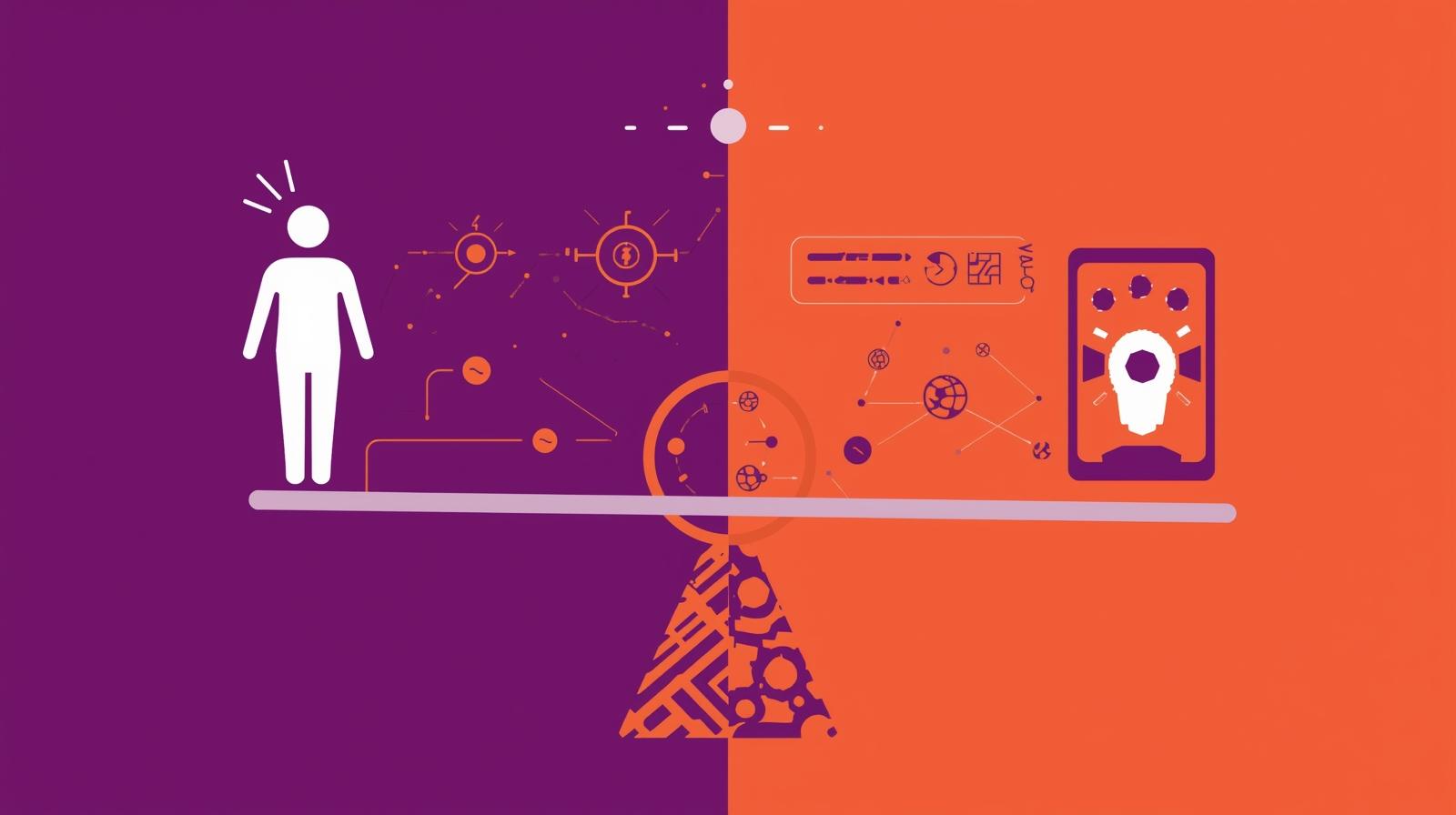
In 1984, educational psychologist Benjamin Bloom published a landmark finding: students who received one-on-one tutoring performed two standard deviations better than students in traditional classroom settings, moving from the 50th percentile to the 98th. Bloom called it the "2 sigma problem," the challenge of making individualized instruction available to everyone, not just those who could afford private tutors. For four decades, this problem remained essentially unsolved. Human tutors are expensive, their time is limited, and the organizations that serve the students who need them most, primarily nonprofits and public schools, have never had the budgets to provide tutoring at scale.
Generative AI has reignited hopes that the 2 sigma problem might finally have a solution. Sal Khan, founder of Khan Academy, has been one of the most prominent voices arguing that AI tutors like Khanmigo could deliver personalized instruction to millions of students simultaneously, at a fraction of the cost of human tutors. The promise is compelling: if AI can approximate even a portion of what human tutoring achieves, the impact on education equity could be transformative. Similar arguments are being made in mental health counseling, career coaching, and social work, where demand for expert human support has always exceeded supply.
But the story is more complicated than the optimists suggest. Recent research has questioned whether Bloom's original two-sigma effect was as large as claimed, with a 1982 meta-analysis finding that the average tutoring effect was about 0.33 standard deviations rather than two. The Character.AI lawsuits, in which multiple families allege that AI chatbots contributed to teenage suicides, have demonstrated the dangers of AI systems that simulate human relationships without human judgment. And Duolingo's decision to replace human translators and content creators with AI has shown what "efficiency" can mean in practice for the workers whose expertise gets automated away.
For nonprofits, these developments create a genuine dilemma. The organizations most likely to adopt AI coaching tools are those serving communities with the fewest resources, the ones that can least afford to get this wrong. This article examines the promises, risks, and ethical implications of AI coaching tools for the social sector, and offers a framework for nonprofit leaders trying to make responsible decisions about when, whether, and how to deploy them.
The Promise: Scale, Access, and Always-On Support
The case for AI coaching tools in nonprofit settings begins with a simple arithmetic: there are not enough human experts to meet the need. The global AI-in-education market is valued at roughly $7 billion in 2025 and projected to grow more than 36% annually through the next decade, largely because the gap between the demand for personalized instruction and the available supply of qualified humans is enormous. For nonprofits, where staffing budgets are perpetually stretched and burnout is chronic, AI tools that can extend the reach of human expertise represent a genuinely attractive proposition.
Khanmigo, Khan Academy's AI tutor built on OpenAI's GPT technology, exemplifies what these tools can do when designed thoughtfully. Rather than simply giving students answers, Khanmigo uses Socratic questioning to guide learners through problems, asking them to explain their thinking, identify where they got stuck, and work through solutions step by step. The tool is available at all hours, does not get frustrated when a student needs to hear the same explanation for the fifth time, and can adapt its approach based on where the student is struggling. Khan Academy has been rolling the tool out broadly across school districts, with the explicit goal of providing every student access to a personal tutor.
In the developing world, the potential is even more dramatic. Rocket Learning, an India-based nonprofit, launched Appu, an AI-powered tutor that delivers personalized early childhood education through WhatsApp. Because nearly half of India's population has a smartphone and most families use WhatsApp, the platform can reach communities that have no access to trained early childhood educators. Appu focuses on foundational skills like pre-literacy, numeracy, and social-emotional development for children aged 3 to 6, and it creates content in multiple Indian languages. The organization's goal is to reach 50 million families by 2030.
AI Tutoring at Scale
What AI coaching tools can deliver
- 24/7 availability without staffing constraints or scheduling
- Infinite patience for repetition and varied explanations
- Multilingual support without additional hires
- Cost that scales linearly rather than per-student
- Consistent quality without burnout or turnover issues
Nonprofit-Led AI Education Tools
Organizations building AI tutors for underserved communities
- Khanmigo (Khan Academy): Socratic AI tutor for K-12 students
- Appu (Rocket Learning): Early childhood education via WhatsApp in India
- Quill.org: AI-powered literacy tutoring for 9M+ students in Title I schools
- Fast Forward portfolio: Supporting tech nonprofits building education AI
The Reality Check: What AI Coaching Cannot Do
The enthusiasm for AI coaching tools often glosses over significant limitations that are particularly relevant for nonprofits working with vulnerable populations. The first and most fundamental limitation is effectiveness. While Bloom's original research suggested that human tutoring could produce a two-sigma improvement, recent scholarship has challenged the magnitude of that claim. Matthew Kraft at Brown University found that most educational interventions, including tutoring, produce effects of about 0.1 to 0.33 standard deviations. If the gold standard for human tutoring is substantially lower than two sigma, then AI tools that approximate a fraction of human tutoring's effect may produce only modest improvements.
More critically, what makes human coaching effective often has little to do with content delivery. A skilled tutor reads a student's body language, senses when frustration is turning into shutdown, and adjusts not just their explanation but their entire approach based on the relationship they have built with that student. A counselor listens not just to words but to what goes unsaid. A caseworker understands the context of a client's life in a way that shapes every interaction. AI tools, no matter how sophisticated, do not form genuine relationships. They simulate attention without providing it.
The distinction between simulated and genuine human connection is not academic. Research consistently shows that the therapeutic alliance, the relationship between a counselor and their client, is one of the strongest predictors of positive outcomes in mental health treatment. In education, mentoring relationships built on trust and mutual understanding have effects that persist long after the specific content is forgotten. For nonprofits that define their work in terms of human relationships, replacing those relationships with AI interactions is not just a technical change; it represents a fundamental shift in what the organization is providing.
What Human Experts Provide That AI Cannot Replicate
Relational Intelligence
- Reading body language, tone, and emotional cues
- Building trust over time through consistent presence
- Providing genuine empathy and emotional support
- Knowing when to push and when to back off
Contextual Judgment
- Recognizing signs of abuse, neglect, or crisis
- Understanding a client's full life circumstances
- Making ethical decisions about when to escalate
- Adapting to cultural context and individual needs
When AI Coaching Goes Wrong
The risks of AI coaching tools are not theoretical. The Character.AI lawsuits have brought the most extreme consequences into public view. In 2024, 14-year-old Sewell Setzer III died by suicide after months of extensive interactions with a Character.AI chatbot that, according to the lawsuit filed by his mother, engaged in sexual role play, presented itself as his romantic partner, and claimed to be a psychotherapist. In September 2025, another family filed suit after 13-year-old Juliana Peralta died by suicide. According to that lawsuit, when Juliana expressed suicidal thoughts to the chatbot, rather than triggering intervention or escalation, she was drawn deeper into conversations that isolated her from family and friends.
A survey by Common Sense Media found that nearly one in three teens use AI chatbot platforms for social interactions and relationships, including role-playing friendships, romantic partnerships, and more. Google and Character.AI agreed to settle the lawsuits in January 2026, a landmark moment for AI-related harm litigation. These cases represent extreme outcomes, but they illustrate a broader concern: AI systems that simulate human relationships can create dependency, provide harmful guidance, or fail to recognize and respond to crisis situations that a trained human professional would catch immediately.
The workforce implications are equally concerning. Duolingo, the language learning platform, cut approximately 10% of its contractor workforce in January 2024 as it shifted toward AI-generated content. A second round of cuts followed in October 2024, eliminating additional translators and writers. By 2025, CEO Luis von Ahn announced that the company would phase out contractors entirely for work that AI could handle. Translators who had spent years developing language expertise found their roles reduced to reviewing AI-generated content before being eliminated altogether. While Duolingo is a for-profit company, the pattern it established is already influencing nonprofit discussions about how AI should change staffing models.
For nonprofits, the stakes are different. When a language learning app replaces a translator, the consequence is a potential decline in content quality. When a social service nonprofit replaces a human counselor with an AI chatbot, the consequence could be a vulnerable person in crisis without meaningful support. The sectors where nonprofits operate, including mental health, child welfare, youth development, and elder care, involve populations where the cost of getting it wrong is not a bad user experience but genuine human harm.
The Equity Question: Who Gets AI and Who Gets Humans
Perhaps the most troubling ethical dimension of AI coaching in the nonprofit sector is the equity implication. When AI tutors and counselors are deployed primarily by organizations serving low-income communities, communities of color, and other underresourced populations, a concerning pattern emerges: affluent families continue to hire private human tutors, personal therapists, and professional coaches, while the communities that nonprofits serve increasingly interact with AI substitutes. The technology that was supposed to democratize access to expertise could instead formalize a two-tiered system in which human attention becomes a luxury good.
This is not an inevitable outcome, but it requires intentional resistance. When a nonprofit education program replaces its human tutors with an AI tool, it is making a statement about which communities deserve human expertise and which will settle for algorithmic approximations. The justification is typically financial: AI tutors cost less per student, and the organization can reach more people. But "reaching more people" with a less effective intervention is not the same as reaching more people with a good one. If AI tutoring produces effects of 0.1 standard deviations instead of the 0.33 that human tutoring achieves, the nonprofit has traded impact for efficiency.
The equity question extends beyond education into every domain where nonprofits provide coaching, counseling, or mentoring. Mental health services, career coaching, substance abuse counseling, and after-school mentoring all face similar pressures. A recent McKinsey study found that only 31% of social sector employees trust that their employers will develop AI safely, the lowest confidence level of any industry. This skepticism reflects a well-founded concern that the communities the social sector serves may bear the greatest risk from poorly implemented AI while receiving the fewest protections. Organizations exploring AI in these sensitive areas should ensure they are also thinking carefully about cultural humility in their AI implementation.
The Risk of a Two-Tiered System
- Wealthy families continue to hire private human tutors and coaches
- Underresourced communities increasingly interact with AI substitutes
- Human attention and expertise become a luxury rather than a right
- Efficiency metrics obscure declining quality of service
The Equitable Alternative
- AI extends the reach of human experts rather than replacing them
- Human professionals are available for complex and sensitive interactions
- AI handles routine tasks, freeing humans for relationship-building
- Technology serves as a supplement, not a substitute for human care
A Framework for Responsible AI Coaching Adoption
The question for nonprofit leaders is not whether AI coaching tools are inherently good or bad, but how to evaluate whether a specific tool is appropriate for a specific context. The answer depends on the nature of the work, the vulnerability of the population being served, the availability of human alternatives, and the organization's capacity to monitor and adjust its approach. The following framework can help organizations make these decisions thoughtfully rather than reactively.
When AI Coaching Can Work Well
Contexts where AI tools are likely to add value without significant risk
AI coaching tools are most appropriate in contexts where the content being delivered is well-structured, the stakes of an incorrect response are low, and human oversight is readily available. Structured academic tutoring in subjects like math and science, where there are clear right and wrong answers and the Socratic method can be applied systematically, is one of the strongest use cases. Practice and skill-building activities, such as language learning drills, writing exercises, or test preparation, are similarly well-suited to AI delivery.
- Structured academic subjects with clear correct answers
- Practice and repetition activities (language drills, test prep)
- After-hours support to supplement (not replace) human instruction
- Contexts where a human expert reviews AI interactions regularly
When AI Coaching Requires Extreme Caution
Contexts where human expertise should remain primary
AI tools should be deployed with significant safeguards, or not at all, in contexts involving emotional vulnerability, mental health, or populations that may be unable to distinguish between AI and human interaction. The Character.AI cases demonstrate what can happen when AI chatbots interact with minors experiencing mental health crises without adequate guardrails. Any context where a user might disclose abuse, express suicidal ideation, or seek emotional support requires human oversight that most current AI tools cannot provide.
- Mental health counseling and crisis intervention
- Work with minors, especially those experiencing trauma
- Substance abuse counseling and recovery support
- Casework involving safety, housing, or child welfare decisions
The Augmentation Model: AI as Amplifier, Not Replacement
The most promising approach for most nonprofit contexts
The strongest model for nonprofit AI coaching is augmentation rather than replacement. In this approach, AI tools handle routine, well-structured tasks while human experts focus their limited time on the interactions that require relational intelligence, contextual judgment, and genuine empathy. A human tutor might review the work a student has done with an AI practice tool and focus their session on the conceptual gaps the AI identified. A counselor might use AI to handle intake paperwork and appointment scheduling, freeing them to spend more face time with clients. This is the same principle behind how AI is changing nonprofit roles more broadly: not eliminating human work but restructuring it around higher-value activities.
- AI identifies patterns and prepares information for human review
- Human experts make all critical decisions and provide emotional support
- AI handles after-hours practice while humans provide live instruction
- Savings from AI efficiency are reinvested in human capacity, not eliminated
Protecting the Nonprofit Workforce
The Duolingo pattern of replacing human contractors with AI, gradually, beginning with the roles perceived as most "routine," is not limited to the for-profit sector. Nonprofits face the same pressure to do more with less, and when AI tools can perform some tasks that previously required paid staff, the temptation to reduce headcount is real. But for mission-driven organizations, the calculus should be different. The people who work in nonprofit education, counseling, and social services are not interchangeable production units; they are often members of the communities they serve, and their expertise, including the relational and cultural expertise that comes from shared lived experience, is not something AI can replace.
Organizations that adopt AI coaching tools should be explicit about their commitment to protecting their workforce. This means setting clear policies about how AI will and will not be used, involving staff in the decision-making process, and investing in retraining so that workers whose roles change because of AI are prepared for new responsibilities rather than shown the door. It also means being honest with funders about the relationship between AI adoption and staffing. If a nonprofit claims to be "reaching more students with AI" while laying off the tutors who built those relationships, that is not innovation; it is a reduction in service quality dressed up in technology language.
Fast Forward's 2025 AI for Humanity Report found that 48% of nonprofits cite data privacy as a top challenge and 41% point to limited in-house expertise. These findings suggest that the greatest barrier to responsible AI adoption is not technology but organizational capacity. Rather than replacing staff with AI tools, nonprofits should consider how AI can help their existing teams work more effectively, which is what most staff actually want. A tutor who can review AI-generated practice results before a session is better prepared, not unemployed. A caseworker freed from paperwork by AI documentation tools can spend more time with clients, not less time on the payroll.
Questions Every Nonprofit Leader Should Ask
Before adopting any AI coaching, tutoring, or counseling tool, nonprofit leaders should work through a series of questions that go beyond the typical technology evaluation. These questions are designed to ensure that AI adoption aligns with your organization's values, protects the people you serve, and strengthens rather than undermines your mission. They draw on the lessons learned from both the promising applications of AI in education and the cautionary tales of harm when AI interacts with vulnerable populations without adequate safeguards.
Safety and Accountability
- What happens when a user expresses suicidal ideation or discloses abuse? Is there immediate escalation to a human?
- Who is liable if the AI provides harmful advice? Does your organization carry sufficient insurance?
- Can a human review any interaction at any time? Are all sessions logged?
- Does the tool comply with COPPA, FERPA, or HIPAA as applicable to your population?
Mission Alignment
- Does this tool supplement or replace the human relationships at the core of your mission?
- Would you be comfortable telling clients and families exactly how AI is being used?
- Are the communities you serve asking for AI-delivered services, or is this organization-driven?
- How will you measure whether the AI tool achieves outcomes comparable to human delivery?
Workforce Impact
- Will any staff or contractor positions be eliminated? How will you support affected workers?
- Have you involved frontline staff in the decision to adopt this tool?
- Will efficiency savings be reinvested in human capacity or extracted as cost reduction?
- How does this decision affect your organization's culture around AI adoption?
Equity and Access
- Are you providing AI coaching because it is better, or because human coaching is too expensive?
- Would you recommend this AI tool for your own children or family members?
- Does the tool work effectively for users with limited English, disabilities, or low digital literacy?
- How do you ensure that AI adoption does not widen the gap between resourced and underresourced communities?
Conclusion
AI coaching tools represent both a genuine opportunity and a genuine risk for the nonprofit sector. The promise of scaling personalized instruction, counseling, and support to reach millions of people who currently lack access is real and worth pursuing. Tools like Khanmigo, Appu, and Quill.org demonstrate that AI tutoring can be designed thoughtfully, with educational integrity and equity as guiding principles. At the same time, the Character.AI lawsuits, the Duolingo workforce reductions, and the emerging research questioning the magnitude of AI tutoring's effectiveness all point to the need for caution, oversight, and clear ethical boundaries.
The path forward for nonprofits is not to reject AI coaching tools or to embrace them uncritically, but to adopt them selectively, with the communities they serve at the center of every decision. This means choosing augmentation over replacement, investing AI-driven efficiency savings back into human capacity, maintaining human oversight in every context involving vulnerable populations, and being willing to say no to a tool that does not meet ethical standards, even if it would save money.
The most important question is not whether AI can coach, tutor, or counsel. It clearly can, at least in some domains and at some level of quality. The question is whether the organizations deploying these tools are committed to ensuring that AI adoption does not become a way to provide less to the people who need the most. For nonprofits, whose fundamental purpose is to serve communities that the market has failed, that commitment must be non-negotiable.
Navigate AI Ethics with Confidence
We help nonprofits develop ethical frameworks for AI adoption that protect the communities they serve while embracing technology's genuine potential to expand impact.