
AI and the Dignity Question: Designing Automated Services That Don't Feel Automated
As nonprofits automate intake, eligibility screening, chatbots, and case support, a quieter question runs underneath every design decision: does the person on the other side of the screen still feel seen, respected, and in control? This guide explores what dignity means in service delivery, where automation quietly erodes it, and how to design AI systems that serve people well without making them feel processed.
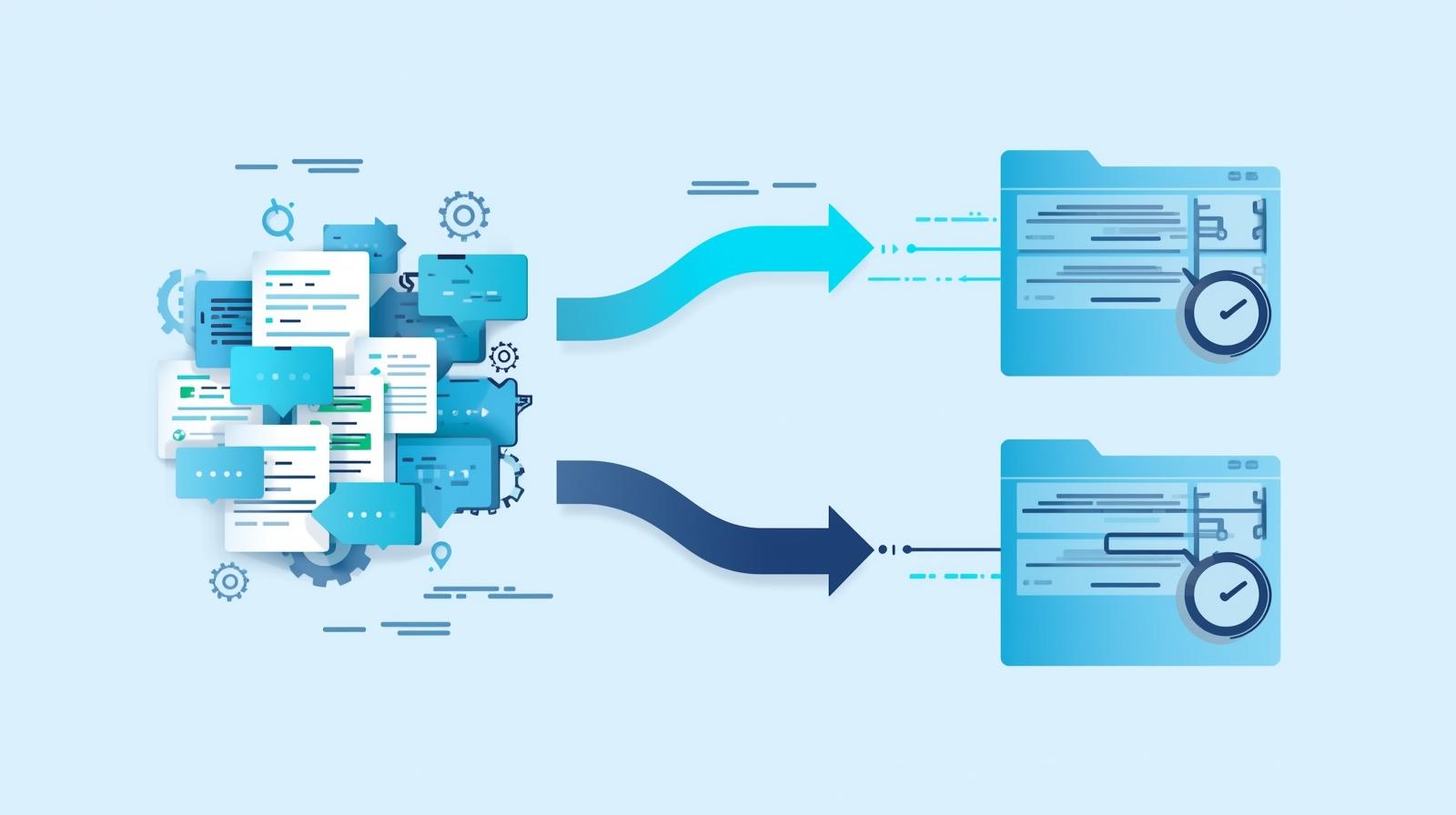
Every nonprofit that serves people directly is now weighing the same trade. Automated intake forms can shorten a waitlist. An eligibility engine can screen hundreds of applications overnight. A chatbot can answer questions at two in the morning when no caseworker is on shift. The efficiency case is real, and for organizations stretched thin it can feel almost irresponsible not to pursue it. Yet the people who walk through your door, or land on your website, are often at the most vulnerable point in their lives. How they are treated in that moment shapes not only whether they get help, but how they feel about themselves for needing it.
That is the dignity question. It is not whether AI works, but whether the systems we build honor the humanity of the people they touch. A benefits application that gets processed faster but leaves an applicant confused, surveilled, or unable to reach a human being has not necessarily made anyone's life better. Research on digital social protection has found that online channels can genuinely reduce the stigma of asking for help and expand uptake among marginalized groups. The same research warns that poorly designed automation can do the opposite, adding friction, opacity, and a sense of being handled by a machine that does not care.
This tension is not resolved by choosing sides. Automation is neither inherently dehumanizing nor inherently liberating. A chatbot can spare someone the shame of explaining a hard situation to a stranger, or it can trap them in a dead end while their rent is due. What determines the outcome is design: the choices you make about transparency, escalation, language, data collection, and who gets a human and who gets a machine. Those choices are made by people, usually well before any client ever interacts with the system.
This article is written for nonprofit leaders, program staff, and the people who make technology decisions on their behalf. It offers a working definition of dignity in service delivery, maps the specific places where automation tends to erode it, lays out concrete design principles that protect it, and argues that the question of who gets automated and who gets a human touch is itself a question of equity. The goal is practical: to help you automate in ways that free your staff for the work only humans can do, while making sure the people you serve never feel like a case number.
What Dignity Actually Means in Service Delivery
Dignity is one of those words that appears in every mission statement and rarely gets defined. Before you can design for it, you have to name what it is made of. In the context of human services, dignity is not a feeling of comfort or a pleasant user experience. It is a set of concrete conditions under which a person retains their standing as a full human being while receiving help. When any of those conditions breaks down, people notice, even if they cannot articulate why the interaction left them feeling diminished.
The first element is respect: being addressed as a competent adult rather than a problem to be sorted. The second is agency: retaining meaningful control over what happens, including the ability to ask questions, correct mistakes, and make choices. The third is being seen: having your specific situation understood rather than flattened into a category. The fourth is freedom from unnecessary exposure: not being forced to disclose more than the situation requires, and not being watched more than the service demands. These four conditions are the substance of dignity, and each one is directly affected by how automated systems are designed.
Automation interacts with each of these conditions in ways that are easy to overlook when you are focused on throughput. A system can be respectful in tone but strip away agency by offering no way to reach a person. It can be efficient but blind, unable to recognize when someone's situation does not fit the form. It can be helpful but invasive, collecting far more than it needs because collecting data is cheap. Designing for dignity means holding all four conditions in view at once, and recognizing that a gain in one does not excuse a loss in another.
The Four Conditions of Dignity
- Respect: addressed as a capable adult, not a problem to sort
- Agency: real control, the ability to ask, choose, and correct
- Being seen: your specific situation understood, not flattened
- Freedom from exposure: no needless disclosure or surveillance
Why It Matters Beyond the Interaction
- A dignified first contact increases whether people complete intake
- Feeling respected reduces the shame that keeps people from asking
- Trust built early makes later program engagement more likely
- How people are treated reflects your values back to your community
Where Automation Quietly Erodes Dignity
Most dignity failures in automated services are not the result of bad intentions. They happen because a design choice that made sense from an operational standpoint had a human cost that no one measured. Understanding the common failure patterns helps you spot them in your own systems before the people you serve experience them. Four patterns show up again and again in human services automation, and each one maps directly onto one of the conditions of dignity described above.
The dead-end chatbot is the most familiar. Someone arrives with an urgent, specific need and gets caught in a loop of scripted responses that never quite match their question, with no visible way to reach a person. The experience communicates that the organization would rather deflect them than talk to them. This is not a failure of the technology so much as a failure to build an exit. A chatbot that cannot say "let me connect you to someone" is a wall, not a door.
Opaque eligibility decisions are more insidious because they carry real consequences. When an automated system denies or deprioritizes someone without explaining why, it removes their ability to understand, contest, or fix the outcome. A person told they do not qualify, with no reason given and no one to ask, is left to assume the worst about themselves or the system. The academic literature on AI in human services is direct on this point: ethical risk is amplified precisely when AI touches eligibility, prioritization of scarce services, and risk scoring, because those decisions shape lives and are often made without input from the people affected.
Surveillance-heavy intake and forced disclosure to a machine round out the pattern. When a form demands a person's entire history to answer a simple question, or when someone must type out a painful situation to a bot before they can speak to a human, the system extracts exposure as the price of help. Collecting data is so cheap that organizations often collect everything by default, without asking whether each field is truly necessary. The result is a client who feels watched and mined rather than served, which is the opposite of the trust that effective human services depend on.
Common Dignity Failures to Watch For
Design patterns that erode dignity even when the underlying tool works as intended
- Chatbots with no visible path to a human being
- Eligibility denials delivered without a reason or a contact
- Risk scores applied to people who never consented or were told
- Intake forms demanding far more data than the service needs
- Forcing painful disclosure to a machine before reaching staff
- Robotic, jargon-heavy language that talks down to people
Design Principles for Dignity-Preserving AI
The good news is that dignity is designable. The same care you would bring to a face-to-face program can be built into an automated one, and much of it comes down to a handful of principles applied consistently. These are not abstract values. They translate into specific product decisions: a button that is always visible, a sentence written at a sixth-grade reading level, a form field removed because it was not necessary. Guidance from human services agencies converges on a similar set: plain-language content, clear escalation pathways, privacy safeguards, accessibility, language access, and governance that keeps humans accountable.
Transparency comes first because it underwrites everything else. People should always know when they are interacting with an automated system rather than a person, and they should understand, in plain terms, what the system is doing with what they share. A chatbot that pretends to be human, or an eligibility tool that hides its logic, trades short-term smoothness for long-term distrust. Being honest that a machine is helping is not a weakness. It respects the person's right to know who, or what, they are talking to.
Easy human escalation is the single most important safeguard. Every automated touchpoint should have a clear, low-friction way to reach a person, and that path should be visible from the start, not buried after three failed attempts. The point of automation in human services is not to replace human contact but to reserve it for where it matters most. A well-designed system handles the routine and hands off the hard, the ambiguous, and the emotionally charged to staff who can respond with judgment and care.
Choice, plain language, cultural sensitivity, and data minimization complete the set. People should be able to opt out of an automated path without losing access to help. Content should be written the way a kind, competent person would speak, free of jargon and available in the languages your community actually uses. Systems should account for cultural context rather than assuming one default. And data collection should follow the principle of asking only for what the service genuinely requires, communicated clearly, with real opt-in and opt-out choices. Collecting less is not only safer, it signals respect.
Transparency
- Disclose clearly when a person is talking to a machine
- Explain in plain terms how a decision was reached
- State what data is used and why it is needed
Escalation and Choice
- Keep a visible path to a human at every step
- Let people opt out without losing access to help
- Route hard and emotional cases to staff automatically
Plain and Inclusive Language
- Write the way a kind, competent person would speak
- Offer content in the languages your community uses
- Account for cultural context, not a single default
Data Minimization
- Ask only for data the service genuinely requires
- Provide real opt-in and opt-out for optional fields
- Delete what you no longer need and say so
These principles reinforce one another. A transparent system makes escalation feel natural rather than like an admission of failure. Data minimization makes plain language easier because there is less to explain. Cultural sensitivity makes transparency real for people who might otherwise be excluded by a default assumption. Applied together, they produce automated services that feel like an extension of your staff's care rather than a substitute for it. For organizations building the internal capacity to hold these standards, developing internal AI champions who understand both the technology and the mission can keep dignity at the center of every design conversation.
Explaining Decisions People Can Understand and Challenge
Of all the design principles, explainability deserves its own focus because it is where automation most directly touches a person's standing. When an automated system makes or shapes a decision about someone, whether they qualify, how they are prioritized, what services they are offered, that person has a legitimate interest in understanding why. An unexplained decision is not just an inconvenience. It strips away agency and leaves the person unable to correct an error that may be affecting their life in serious ways.
Explainability in a nonprofit context does not require exposing the technical internals of a model. It requires giving people a clear, human account of what mattered and what they can do about it. If an application was flagged as incomplete, say which fields are missing. If someone was deprioritized because a program has limited capacity, say so honestly and tell them what the waitlist looks like and what alternatives exist. The standard is simple: could the person, or a caseworker on their behalf, understand the outcome well enough to act on it?
Equally important is the right to a human review. Any consequential automated decision should be contestable, with a clear route to have a person look at the situation. This protects against the errors that automated systems inevitably make, and it protects against the subtler harm of a person feeling that a machine has passed judgment on their worth with no appeal. Naming who owns each decision and defining the path to challenge it is a governance practice, and it belongs in your AI policy alongside the tools themselves. This kind of accountability structure fits naturally within a broader strategic approach to AI adoption that treats ethics as a design input rather than an afterthought.
Who Gets a Human, Who Gets a Machine, and Why That Is an Equity Question
Once you accept that human contact is a limited resource, you have to decide how to allocate it. That decision is rarely made explicitly, but it is always made. When an organization automates its front door, the practical effect is that some people get routed to a machine while others reach a person. If that sorting tracks along lines of income, language, digital access, or the complexity of someone's situation, the organization has created a two-tier service, often without meaning to.
The equity risk is concrete. Research on chatbots in human services warns that vulnerable populations, those who are economically disadvantaged, geographically isolated, or in psychological distress, may bear disproportionate risk, because the people who cannot afford or access human alternatives are the ones most likely to be left with machine-only assistance. In other words, automation can quietly concentrate its downsides on exactly the people your mission exists to protect. A donor with a quick question and a client in crisis should not receive the same automated experience simply because both landed on the same chatbot.
The way through is to design the allocation deliberately rather than let it emerge by accident. Decide which interactions are genuinely well-suited to automation, typically simple, informational, low-stakes tasks, and which demand a human from the start, typically anything involving crisis, trauma, complex eligibility, or high consequence. Then build the system so that signals of vulnerability trigger a human handoff rather than a deeper automated loop. The goal is not to give everyone the same experience but to make sure the people who most need a human being are the most likely to reach one.
Allocating Human Contact With Intention
Questions to ask when deciding what to automate and what to keep human
Well Suited to Automation
- Answering common questions about hours, locations, and services
- Providing 24/7 access to basic information and referrals
- Collecting straightforward, non-sensitive intake details
Should Stay With a Human
- Crisis situations and anything involving safety or trauma
- Complex or high-consequence eligibility judgments
- Moments where being heard matters more than being processed
Designing With the Community, Not Just for Them
The single most reliable way to avoid dignity failures is to involve the people who will use a system in designing it. This sounds obvious, yet the literature is blunt that decisions about AI systems are frequently made by their creators without consulting the end users, which is precisely how harms slip through. A design team that has never experienced homelessness, food insecurity, or a benefits denial will make reasonable-seeming choices that land very differently for someone living through those realities. The people who know where a system will fail are usually the people it is meant to serve.
Meaningful community involvement goes beyond a consent form or a satisfaction survey after the fact. It means bringing service users into the design process while decisions are still open: shaping which features get built, reviewing chatbot language for tone and clarity, testing intake flows before they launch, and looking at outputs with community representatives before a system scales. It also means building durable feedback channels so people can flag harm or confusion once a system is live, and treating those signals as a reason to change the design rather than a complaint to manage.
Practically, this can take the form of a small advisory group of clients or community members who review new automated features, paired staff-and-participant testing sessions, and a cross-functional review that includes people with lived experience alongside program staff and whoever manages the technology. Staff buy-in matters here too, because frontline workers often see dignity problems first. Bringing them in early and addressing their concerns is part of the same work as involving the community, and it connects to the broader challenge of helping staff adopt AI in ways that strengthen rather than undermine the care they provide.
Measuring Dignity, Not Just Efficiency
Organizations manage what they measure, and most automation projects measure only efficiency: applications processed, response times, cost per interaction, deflection rates. These numbers are easy to collect and they tell a genuine story, but they are silent on the question this article is about. A system can score beautifully on every efficiency metric while quietly failing the people it touches. If dignity matters, it has to appear on the dashboard alongside throughput, or it will be optimized away by well-meaning teams chasing the numbers they can see.
Dignity is harder to measure than speed, but it is not immeasurable. You can track how often people successfully reach a human when they want one, and how long that takes. You can measure abandonment at each step of an automated flow and investigate where people give up, since a spike in drop-offs often marks a point of frustration or confusion. You can ask people directly, in short and respectful terms, whether they felt understood and treated with respect, and whether they knew how to get help from a person. You can review a sample of automated interactions the way you would review case notes, looking for tone and clarity rather than just resolution.
The context makes this measurement worth the effort. Adoption is nearly universal, with surveys reporting that the large majority of nonprofits now use AI in some form, yet only a small fraction say it has actually expanded what their teams can accomplish. That gap suggests many organizations are automating without measuring whether it is serving their mission well. Pairing efficiency metrics with dignity indicators is how you close that gap, ensuring that the time your staff save is reinvested in the human work that only people can do rather than lost to a system that processes people faster but serves them worse.
Dignity Indicators Worth Tracking
- How often and how fast people reach a human when they ask
- Abandonment points where users give up on a flow
- Whether people report feeling understood and respected
- Share of interactions escalated appropriately to staff
- Tone and clarity in reviewed samples of automated chats
- Whether marginalized groups experience worse outcomes
When Automation Increases Dignity
It would be a mistake to leave the impression that automation is a threat to be contained. Designed well, AI can expand dignity in ways a purely human system cannot. The clearest example is the reduction of shame. For many people, the hardest part of asking for help is the exposure of asking a person, of watching a stranger's face while they explain that they cannot make rent or feed their family. A well-designed digital front door can let someone begin that process privately, at their own pace, without the anticipated judgment. Research on digital social protection found exactly this: online channels can lessen the stigma of applying and encourage uptake among people who might otherwise stay away.
Availability is another genuine gain. Human staff work limited hours, but need does not keep a schedule. An automated system that provides accurate information and clear next steps at any hour respects the reality of people's lives, including those working multiple jobs or navigating a crisis at night. Language access is a third. AI translation and multilingual content can make services reachable for people who would otherwise be shut out entirely, turning a closed door into an open one. For organizations serving specific populations, thoughtful automation can be a powerful equalizer, as explored in the context of AI in senior services.
The lesson is not that automation is good or bad but that its effect on dignity is a design outcome, not a property of the technology. The same chatbot can shame or spare, exclude or include, depending on the choices made by the people who build it. Recognizing this is freeing rather than daunting. It means the dignity of the people you serve is within your control, and that thoughtful design is not a constraint on efficiency but the thing that makes efficiency worth pursuing. For leaders new to weighing these trade-offs, a broader guide to AI for nonprofit leaders offers a foundation for building this kind of judgment across the organization.
Building Services That Serve People, Not Just Process Them
The dignity question does not have a technical answer, but it has a practical one. Automation in human services will keep expanding, and pretending otherwise helps no one. The organizations that navigate this well will not be the ones that automate the most or the least. They will be the ones that automate with a clear-eyed understanding of what dignity requires: respect, agency, being seen, and freedom from unnecessary exposure, and that build those requirements into every intake form, chatbot, eligibility engine, and case support tool they deploy.
The design principles are concrete and within reach. Be transparent about what is automated and why. Make human escalation easy and always visible. Give people choice, plain language, and cultural respect. Collect only the data you truly need. Explain decisions well enough that people can understand and challenge them. Decide deliberately who gets a human and who gets a machine, and make sure the most vulnerable are the most likely to reach a person. Design with the community rather than merely for them. And measure dignity alongside efficiency so that the humane choice is the one your dashboard rewards.
None of this slows a mission down. It is what allows technology to serve a mission at all. When you build automated services that respect the people they touch, you free your staff for the irreplaceable human work while ensuring that no one who reaches out to you comes away feeling like a case number. That is the real promise of AI in human services: not doing more with less, but doing better with the same care you would offer face to face. Sustaining that care over time is part of the same responsible-adoption discipline covered in our work on knowledge management for nonprofits, where the systems you build carry your values forward as your organization grows.
Automate Without Losing the Human Touch
We help nonprofits design AI-powered services that respect the dignity of the people they serve, pairing operational efficiency with the transparency, escalation, and care that mission-driven work demands.