
What AI-Native Nonprofits Look Like: Lessons from Organizations Built on AI from Day One
A new generation of nonprofits is proving that building on AI from the ground up can dramatically increase impact, reduce per-beneficiary costs, and allow tiny teams to serve millions. Here is what their operating model looks like, why it works, and how established organizations can begin adopting their principles.
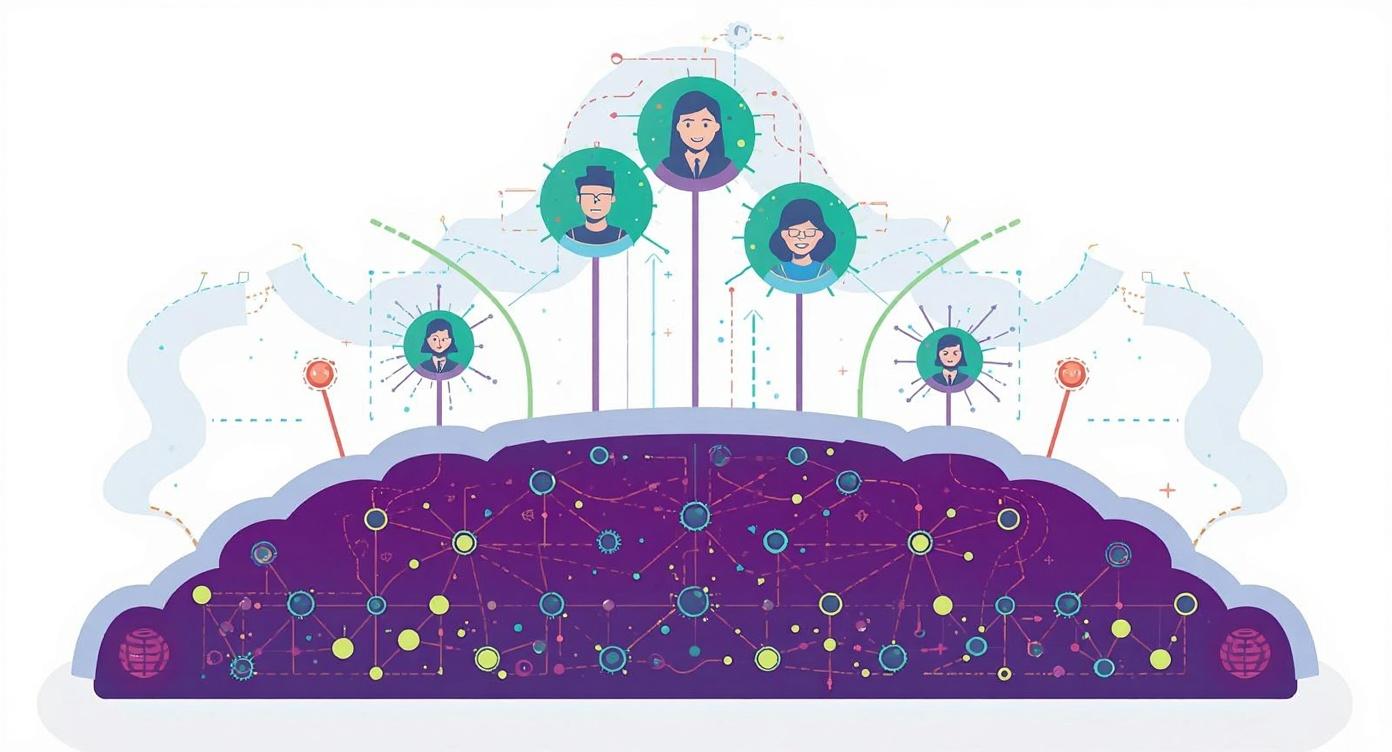
The nonprofit sector is experiencing a quiet revolution. While most organizations are still debating whether to adopt AI tools for email marketing or donor management, a small but growing number of nonprofits have been built from the ground up with artificial intelligence at their core. These "AI-native" organizations don't treat AI as an add-on or an efficiency booster. Instead, AI is woven into the very fabric of how they design programs, deliver services, measure outcomes, and scale their impact.
The results are striking. AI-native nonprofits routinely achieve 300-500% better cost-effectiveness compared to traditional organizations addressing similar challenges. They operate with teams of three to five people doing work that would historically require thirty or more. They scale geographically and linguistically in weeks rather than years. And they generate continuous feedback loops that allow them to improve their programs in real time rather than waiting for annual evaluation cycles.
This article explores what makes AI-native nonprofits fundamentally different from organizations that simply use AI tools. We will examine their operating models, look at how pioneering organizations have achieved outsized impact, identify the core characteristics that define this approach, and provide a practical roadmap for existing nonprofits that want to adopt AI-native principles. Whether you lead a small community organization or a large international NGO, understanding this model is essential for strategic planning in the AI era.
It is worth noting that becoming AI-native does not mean replacing human connection with technology. The most effective AI-native nonprofits are deeply human in their mission and values. They simply use AI to remove the bottlenecks that have historically limited how many people a nonprofit can serve, how quickly it can respond, and how effectively it can allocate scarce resources.
The AI-Native Operating Model
Traditional nonprofits follow a familiar pattern: identify a need, hire staff, build programs, deliver services through human labor, and measure results periodically. Growth means hiring more people, opening more offices, and raising more money to fund all of that infrastructure. This model has served the sector well for decades, but it carries inherent limitations. Scaling is expensive, slow, and geographically constrained. Quality control becomes harder as organizations grow. And the gap between program delivery and outcome measurement can stretch to months or even years.
AI-native nonprofits operate on a fundamentally different logic. Rather than starting with human-delivered programs and then looking for ways to make them more efficient, they begin by asking: "What is the most effective intervention for this problem, and how can we deliver it to the maximum number of people using AI as the primary delivery mechanism?" Human team members focus on strategy, relationship-building, quality oversight, and the kinds of complex judgment calls that AI cannot make well. Everything else, from initial intake to service delivery to outcome tracking, is designed for AI-first execution.
This approach mirrors how the best technology companies think about scale. A software company does not hire a new employee for each new customer. Instead, it builds systems that can serve one customer or one million customers with roughly the same team size. AI-native nonprofits apply this same principle to social impact. They identify a proven intervention, adapt it for AI-powered delivery, launch with minimal human oversight requirements, and then scale rapidly by adding compute resources rather than headcount.
The result is a team structure that looks radically different from traditional nonprofits. Where a conventional maternal health organization might need dozens of community health workers, supervisors, data entry clerks, and program managers, an AI-native organization achieves similar or greater reach with a small team of engineers, subject-matter experts, and partnership managers. The AI handles the high-volume, repetitive interactions while humans focus on the cases that genuinely require human judgment, empathy, or creativity.
Real-World Examples of AI-Native Impact
The most compelling evidence for the AI-native model comes from organizations that have already achieved remarkable scale with remarkably small teams. These examples illustrate what becomes possible when AI is treated as a foundational capability rather than a supplementary tool.
Consider the challenge of language access for refugees. Traditional translation services depend on finding, training, scheduling, and paying human interpreters for each conversation. This creates an inherent bottleneck: you can only serve as many refugees as you have available interpreters in the right language pairs at the right times. Tarjimly, a nonprofit focused on refugee language access, took a different approach by building a machine learning platform that could scale translation services dramatically. By creating custom training datasets drawn from thousands of real volunteer interpreter conversations, they built AI models that understand the specific vocabulary, cultural context, and emotional nuances of refugee interactions. The result was a tenfold increase in the number of people served with the same resources, scaling from hundreds to tens of thousands of conversations per month. Human interpreters remain available for sensitive or complex situations, but the AI handles the vast majority of routine translation needs.
Maternal and infant health presents another powerful example. Jacaranda Health developed a platform called PROMPTS that uses AI to provide health information and triage support to mothers across Sub-Saharan Africa via SMS. The system handles more than 7,000 daily text conversations, providing personalized health guidance, identifying high-risk situations that require immediate human clinical attention, and tracking health outcomes over time. At a cost of approximately $0.74 per mother, the platform has reached 3.8 million mothers. The AI does not replace clinical expertise. Instead, it extends the reach of a small clinical team by handling the information delivery, screening, and follow-up that would otherwise require thousands of community health workers.
Across these and similar organizations, a consistent pattern emerges. Per-person costs tend to run approximately 70% lower than traditional service delivery models. Success rates, measured by outcomes like health improvements, successful refugee resettlement, or educational attainment, tend to be around 40% higher. These gains come not from cutting corners but from the AI's ability to provide consistent, personalized, always-available service at a scale that human-only teams simply cannot match. For nonprofit leaders thinking about getting started with AI, these examples demonstrate what is achievable when AI is integrated at the foundational level.
Core Characteristics of AI-Native Organizations
While every AI-native nonprofit is unique in its mission and approach, they share a set of defining characteristics that distinguish them from organizations that merely use AI as a tool. Understanding these characteristics is essential for any nonprofit leader considering a deeper integration of AI into their operations.
AI-First Program Design
Programs are designed around AI capabilities from the start
AI-native organizations do not build programs and then ask how AI can help. They design programs with AI as the primary delivery mechanism. This means thinking about data inputs, decision trees, escalation protocols, and feedback loops from the very first design conversation. The program architecture assumes AI will handle the majority of interactions, with human involvement reserved for specific, well-defined situations.
- Service delivery designed for AI-first execution
- Human touchpoints intentionally placed where they matter most
- Scalability considered from the initial program concept
Data Infrastructure as Foundation
Robust data systems underpin every function
AI-native nonprofits invest heavily in data infrastructure and knowledge management from day one. They understand that AI is only as good as the data it learns from and operates on. This means building clean data pipelines, establishing data governance frameworks, creating feedback mechanisms that continuously improve model performance, and maintaining data quality as a core organizational competency rather than an afterthought.
- Centralized, well-structured data from all program activities
- Automated data quality checks and validation
- Privacy-first data architecture with clear consent protocols
Human-AI Collaboration Model
Clear division between human and AI responsibilities
The most effective AI-native organizations are explicit about what humans do and what AI does. Humans handle relationship-building, strategic decision-making, ethical oversight, creative problem-solving, and complex emotional situations. AI handles high-volume interactions, data processing, pattern recognition, routine communications, and real-time monitoring. This clarity prevents both the underutilization and the overextension of AI capabilities.
- Documented escalation protocols from AI to human staff
- Human oversight of AI decisions with real consequences
- Regular audits of AI performance and bias
Built for Scale from Inception
Architecture designed to grow without proportional cost increases
Traditional nonprofits often struggle to scale because growth requires proportional increases in staff, facilities, and overhead. AI-native organizations design their systems so that serving 10,000 people costs only marginally more than serving 1,000. This does not happen by accident. It requires deliberate architectural choices: cloud-based infrastructure, modular program components, automated quality assurance, and partnerships that extend reach without adding complexity.
- Near-zero marginal cost per additional beneficiary
- Multi-language and multi-region capability built in
- Infrastructure that handles demand spikes without degradation
Continuous Learning and Iteration
Every interaction generates data that improves future performance
Perhaps the most powerful characteristic of AI-native organizations is their ability to learn and improve continuously. Every interaction, whether it is a translated conversation, a health screening, or a donor engagement, generates data that feeds back into the AI models. This creates a virtuous cycle: the more people the organization serves, the better its AI becomes at serving them. Traditional program improvement cycles might operate on quarterly or annual timelines. AI-native organizations can detect patterns, identify problems, and adjust their approach in days or even hours. This rapid iteration means programs get more effective over time without requiring additional investment in evaluation consultants or lengthy review processes.
- Real-time performance monitoring and anomaly detection
- A/B testing of different intervention approaches
- Model retraining on new data to maintain accuracy and relevance
- Outcome tracking that connects service delivery to long-term impact
The Gap Between Interest and Readiness
If AI-native nonprofits are achieving such impressive results, why are not more organizations following their lead? The answer lies in a significant gap between interest and readiness. Surveys consistently show that approximately 65% of nonprofit leaders are interested in using AI to improve their organizations. Yet only about 9% feel genuinely ready to do so. And a striking 76% of nonprofits report having no AI strategy at all. This gap is not primarily about technology. It is about organizational culture, leadership understanding, workforce skills, and institutional inertia.
It helps to think about nonprofit AI adoption as a maturity spectrum. At one end are the "AI-curious" organizations, those that recognize AI's potential but have not yet taken meaningful steps. They might have experimented with ChatGPT for writing grant proposals or used an AI-powered scheduling tool, but these are isolated experiments rather than strategic initiatives. In the middle are "AI-adopting" organizations that have integrated AI into one or two functional areas, perhaps using AI for donor segmentation or automated reporting. They have seen positive results but have not fundamentally rethought their operating model. At the far end are the AI-native organizations we have been discussing, those built on AI from the ground up.
Most existing nonprofits will not become fully AI-native, and that is perfectly fine. The goal is not to replicate the AI-native model exactly but to learn from it and adopt the principles that are most relevant to your organization's mission, size, and context. Even moving from AI-curious to AI-adopting can yield significant improvements in efficiency, reach, and impact. The key is to approach this journey strategically rather than haphazardly, which is why having a thoughtful AI integration plan matters so much.
One common barrier is the perception that AI adoption requires massive upfront investment. While building custom AI models does require significant resources, many AI-native principles can be adopted incrementally using existing tools and platforms. The most important investments are often not in technology but in building AI champions within your organization who understand both the technology's potential and its limitations.
How Existing Nonprofits Can Adopt AI-Native Principles
You do not need to start a new organization to benefit from AI-native thinking. Established nonprofits can begin incorporating these principles into their existing operations through a deliberate, phased approach. The key is to think of this as a transformation journey rather than a one-time technology purchase.
Start with One Program Area
Rather than trying to transform your entire organization at once, select a single program area where AI could have the greatest impact. Look for programs that involve high-volume, repetitive interactions, that depend on information delivery rather than complex human relationships, or that are currently constrained by staff capacity. This focused approach lets you learn, iterate, and build internal expertise before expanding to other areas. It also creates a tangible proof of concept that can build organizational buy-in for broader AI adoption.
- Choose a program with clear, measurable outcomes
- Prioritize areas where staff are overwhelmed by volume
- Set a 90-day timeline for initial pilot results
Build Data Infrastructure First
Before implementing any AI tools, invest in getting your data house in order. AI-native organizations succeed because they have clean, structured, comprehensive data. For existing nonprofits, this often means consolidating data from multiple systems, standardizing data formats, establishing data governance policies, and training staff on consistent data entry practices. This is not glamorous work, but it is the single most important prerequisite for effective AI adoption. Organizations that skip this step inevitably end up with AI tools that produce unreliable results.
- Audit existing data sources and identify gaps
- Consolidate data into a unified, accessible system
- Establish clear data governance and privacy policies
Redesign Workflows, Not Just Add AI
The biggest mistake organizations make is layering AI on top of existing workflows without rethinking those workflows. If your current intake process involves a paper form that gets manually entered into a spreadsheet, simply digitizing the form and using AI to read it captures only a fraction of the potential value. Instead, redesign the entire intake process from scratch: What information do you actually need? How can beneficiaries provide it in the way that is most convenient for them? How can AI handle initial screening and routing? Where does a human need to be involved? This kind of fundamental redesign is what separates organizations that get modest efficiency gains from those that achieve transformational improvements.
Invest in AI Literacy Across the Organization
AI-native principles cannot take root in an organization where only the IT team understands AI. Every staff member, from the executive director to frontline program staff, needs a working understanding of what AI can and cannot do. This does not mean everyone needs to become a data scientist. It means everyone should understand how to evaluate AI outputs, when to trust AI recommendations versus applying human judgment, and how their daily work connects to the organization's AI strategy. Addressing resistance to AI adoption early and building widespread literacy creates the cultural foundation for sustainable transformation.
- Provide role-specific AI training for all staff levels
- Create safe spaces for experimentation and learning
- Celebrate early wins to build momentum and confidence
Partner Strategically with Technology Providers
Most nonprofits do not have the resources to build custom AI systems from scratch, and they do not need to. The AI-native principle of leveraging technology for maximum impact can be achieved through strategic partnerships with technology providers, pro bono tech volunteers, university research labs, and nonprofit technology intermediaries. The key is choosing partners who understand your mission, are willing to invest in long-term relationships rather than one-off projects, and can help you build internal capacity rather than creating dependency. Look for partners who will teach your team to fish rather than simply giving you fish.
- Evaluate partners based on nonprofit sector experience
- Negotiate agreements that include knowledge transfer
- Ensure you retain ownership of your data and models
Challenges and Considerations
The AI-native model is powerful, but it is not without significant challenges. Any nonprofit leader considering this direction should go in with clear eyes about the obstacles they will face and the trade-offs they will need to navigate.
Funding and Sustainability
AI-native organizations often require substantial upfront investment in technology before they can demonstrate impact. Traditional philanthropic funding models, which favor proven programs and established organizations, can make it difficult for AI-native nonprofits to secure early-stage funding. Additionally, ongoing costs for cloud computing, model maintenance, and technical talent can be significant. Organizations need to build compelling narratives about long-term cost-effectiveness and plan for sustainable revenue models that go beyond grant funding.
The Digital Divide
AI-powered services often depend on beneficiaries having access to smartphones, internet connectivity, or at minimum basic mobile phones with SMS capability. In many of the communities nonprofits serve, this access is not guaranteed. AI-native organizations must design for the lowest common denominator of technology access and ensure that their programs do not inadvertently exclude the most vulnerable populations. This might mean offering SMS-based services alongside app-based ones, maintaining offline alternatives, or investing in digital access as part of their programming.
Ethical Guardrails
When AI is making or influencing decisions that affect vulnerable populations, the ethical stakes are high. Bias in training data can lead to discriminatory outcomes. Privacy breaches can endanger people who are already at risk. Automated decisions can lack the nuance and contextual understanding that human service providers bring. AI-native nonprofits must invest seriously in ethical frameworks, bias testing, transparency, and accountability mechanisms. This is not optional. It is a fundamental responsibility that comes with the power of AI-driven service delivery.
Staff Transition and Morale
For existing nonprofits moving toward AI-native principles, the transition affects people who have built their careers around traditional service delivery models. Staff may fear that AI will replace their jobs, devalue their expertise, or fundamentally change the work they love. Effective leaders address these concerns honestly and proactively, investing in retraining, redefining roles to emphasize uniquely human contributions, and involving staff in the design of AI-enhanced workflows. The goal should be to elevate human work, not eliminate it.
Perhaps the most important consideration is maintaining genuine human connection. Nonprofits exist because of a fundamental belief in human dignity, community, and mutual support. AI can extend the reach of that belief, but it cannot replace it. The best AI-native organizations understand this intuitively. They use AI to remove administrative burden and scale information delivery, freeing human staff to focus on the moments that matter most: the refugee who needs reassurance, the mother facing a difficult health decision, the donor who wants to understand the impact of their gift. Technology should serve the mission, never the other way around.
Looking Forward: The Future of AI-Native Impact
AI-native nonprofits represent more than a technological trend. They represent a fundamental rethinking of how social impact organizations can operate, scale, and sustain themselves. The organizations leading this charge have demonstrated that it is possible to serve millions of people with tiny teams, to reduce per-beneficiary costs by 70% or more, and to continuously improve program effectiveness through data-driven iteration.
For most existing nonprofits, the path forward is not about becoming fully AI-native overnight. It is about learning from these pioneering organizations and thoughtfully incorporating their principles into your own work. Start by understanding the AI-native operating model. Identify which principles are most relevant to your mission and context. Build your data foundation. Redesign workflows rather than simply automating existing ones. Invest in your people. And always keep your mission, not the technology, at the center of every decision.
The gap between nonprofit interest in AI and readiness to adopt it is real, but it is closing. As AI tools become more accessible, as success stories multiply, and as funders increasingly expect technology-enabled efficiency, organizations that begin their AI journey now will be best positioned to thrive. The question is no longer whether AI will transform the nonprofit sector. It is whether your organization will be ready to lead that transformation or be left catching up.
Ready to Bring AI-Native Thinking to Your Nonprofit?
Whether you are just beginning to explore AI or ready to fundamentally rethink your operating model, we can help you develop a strategic approach that fits your mission, capacity, and goals.