
AI4LAM and Fantastic Futures 2026: How Cultural Heritage Nonprofits Are Coordinating on AI
Libraries, archives, and museums are facing the same set of artificial intelligence questions at the same moment, and most of them are trying to answer those questions alone. A growing international community called AI4LAM exists to change that, giving cultural heritage organizations a shared place to compare notes, develop standards, and avoid each reinventing the same policies in isolation. This guide explains what AI4LAM is, why its annual Fantastic Futures conference matters, what the 2026 gathering is focused on, and how a small cultural nonprofit can plug into the work even without a technology budget or a research staff.
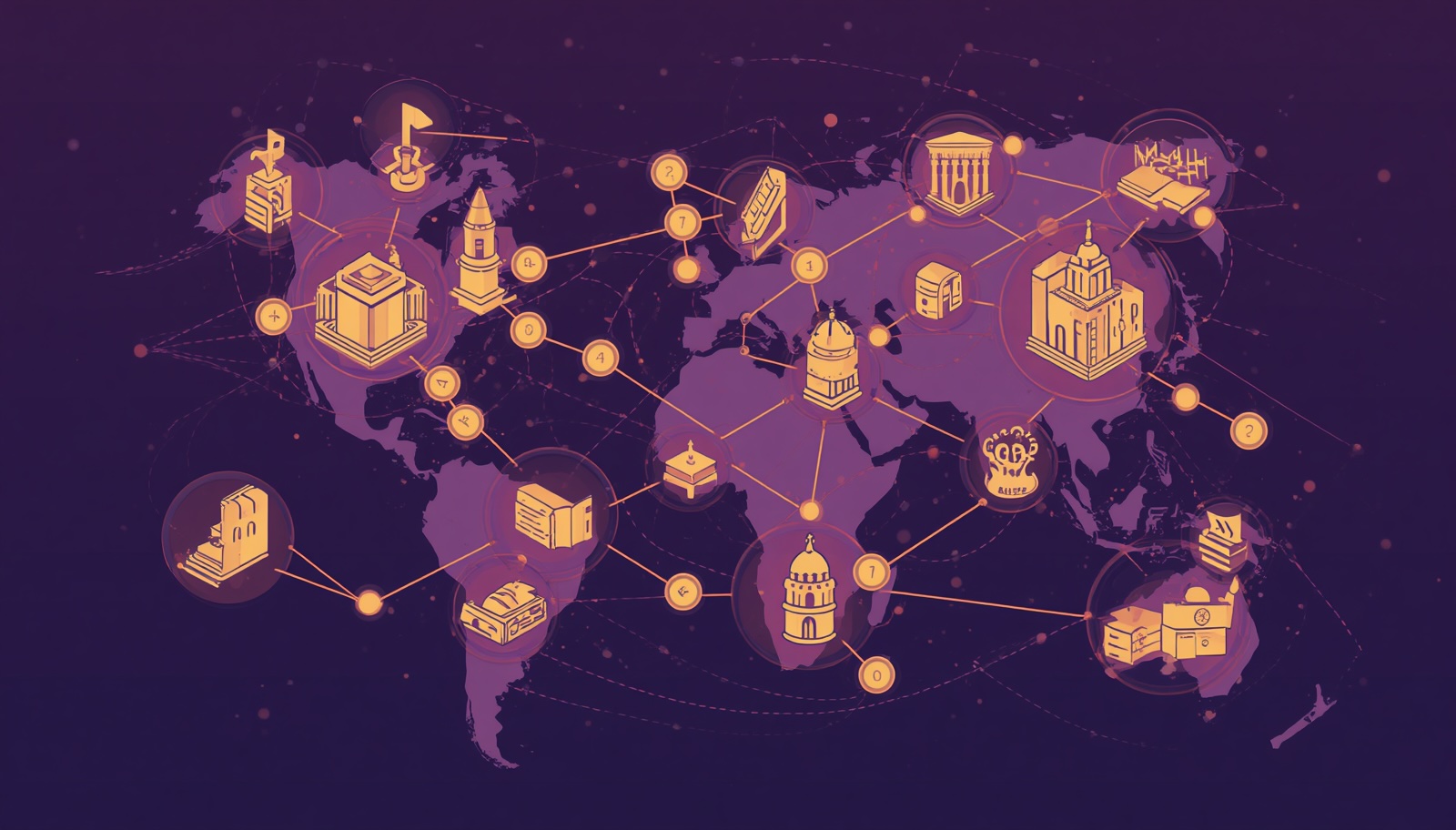
A small county historical society, a university special collections department, and a community museum on the other side of the world have very little in common on the surface. Yet in 2026 they are all wrestling with nearly identical questions about artificial intelligence. Should we let an AI tool generate catalog records for a backlog we will never clear by hand? How do we disclose to visitors when content has been reconstructed? What do we do when a vendor promises to "transform" our collection with AI but cannot explain how the model was trained or where our data goes? These are not idiosyncratic local problems. They are sector-wide problems, and answering them one organization at a time is slow, expensive, and prone to repeating the same mistakes.
This is the gap that AI4LAM, short for Artificial Intelligence for Libraries, Archives and Museums, was created to close. What began as a partnership in 2018 between the National Library of Norway and Stanford University Libraries has grown into an international community that convenes professionals across the cultural heritage sector to share knowledge and advance responsible AI use. In 2025 it formalized as an official membership organization hosted by the National Library of Norway, a sign that the coordination it offers has moved from an informal experiment to durable infrastructure the field can rely on.
For a nonprofit, the appeal of this kind of coordination is practical rather than abstract. When dozens of institutions openly discuss what worked and what failed, a small organization can adopt a tested approach instead of guessing. When the community develops shared vocabulary and standards, a museum can hold a vendor to recognized expectations rather than negotiating from scratch. And when peers publish their AI policies, a library that lacks the staff to draft one from a blank page can adapt a credible model. Collective effort turns scarce expertise into something every member can draw on.
This article walks through what AI4LAM actually does, the role its annual Fantastic Futures conference plays in setting the sector's agenda, the focus of the 2026 gathering, and the concrete ways a resource-constrained cultural nonprofit can participate. It is written for the director, archivist, or librarian who senses that AI is arriving whether they are ready or not, and who would rather face it as part of a community than alone.
What AI4LAM Is and Why It Exists
AI4LAM is an international network of libraries, archives, museums, and the professionals who work in them, organized around a single shared purpose: advancing the responsible use of artificial intelligence in cultural heritage institutions. It is not a vendor, a product, or a funding body. It is a community of practice, a place where people doing similar work in different institutions pool what they are learning so that the whole field moves faster and more safely than any one organization could on its own.
The network grew out of a 2018 collaboration between the National Library of Norway and Stanford University Libraries, and a small group of major institutions soon formed a secretariat to steward it, including the Bibliothèque nationale de France, the Smithsonian Institution, and the British Library. That founding group matters less for its prestige than for what it signals: the largest, best-resourced memory institutions in the world concluded that AI was too big and too fast-moving to handle in isolation, and built a structure for working it out together. Smaller organizations inherit the benefit of that decision.
Over time AI4LAM has added the connective tissue that turns a loose group into a functioning community. It runs regular community calls where practitioners share work in progress, hosts working groups that dig into specific problems, and maintains channels where members trade questions and answers between events. The 2025 step of forming as a membership organization hosted in Oslo gave that activity a stable institutional home, with leadership and a secretariat to keep the work going rather than letting it depend on the energy of a few volunteers. For a sector where AI literacy is still uneven, having a dependable place to turn is itself a meaningful resource.
A Community of Practice, Not a Product
AI4LAM convenes people rather than selling software. Its value is the shared knowledge, vocabulary, and tested approaches that members develop together, which any institution can draw on regardless of its size or budget.
Working Groups and Community Calls
Regular calls and topic-focused working groups let practitioners surface real problems and compare solutions throughout the year, so coordination does not depend on a single annual event.
An International Membership Organization
Hosted by the National Library of Norway, the formalized organization gives the community a durable home with leadership and structure, so the work continues steadily rather than depending on volunteer energy alone.
Fantastic Futures: The Conference That Sets the Agenda
Fantastic Futures is the annual conference AI4LAM has hosted since 2018, and it functions as the sector's flagship gathering at the intersection of AI and cultural heritage. It brings together librarians, archivists, museum professionals, technologists building cultural heritage applications, digital humanists, researchers, and students, and it is where much of the field's emerging thinking is first presented and debated. For an organization trying to understand where the sector is heading, the conference program is one of the clearest signals available.
What makes the event useful is its grounding in real institutional constraints rather than vendor marketing. The presentations tend to come from practitioners describing what they actually attempted, including the limited budgets, legacy systems, messy data, and obligations to staff and communities that shape what is possible. A small nonprofit listening in hears people who share its limitations, not just well-funded labs showing off capabilities that assume resources the nonprofit will never have. That makes the lessons far more transferable.
The conference also serves a standard-setting function. As practitioners present approaches to recurring problems such as cataloging, transcription, disclosure, and rights, certain patterns gain credibility and others fall away. Over successive years this builds a shared sense of what good practice looks like, which is exactly what a field needs when the underlying technology is changing faster than any single institution can track. Even an organization that never attends benefits when these norms diffuse outward into the policies, tools, and grant expectations that touch everyone.
Why the Conference Matters for Smaller Nonprofits
- Presentations come from practitioners working within real budget and staffing limits, so the lessons transfer to small organizations
- The program reveals where the sector is heading, helping a nonprofit prioritize what to learn next
- Recurring approaches become recognized good practice that members can cite with vendors and funders
- A hybrid format and published materials extend access well beyond those who can travel
Fantastic Futures 2026: "Trust in the Loop"
The 2026 edition of Fantastic Futures will be held in Washington, DC, and online in September 2026, co-hosted by the Library of Congress, the National Gallery of Art, and the Smithsonian Institution. Its theme, Trust in the Loop, deliberately extends the familiar idea of keeping a human in the loop. The organizers frame it around the work cultural institutions must do to ensure that AI-enabled services are built on trust, authenticity, and accountability, not just technical performance. For a sector whose entire authority rests on being believed, that framing is exactly the right one.
The choice of theme tells nonprofits something important about where the conversation has matured. The early years of AI in cultural heritage were dominated by questions of capability, what the tools could do to a scanned image or a finding aid. The 2026 focus on trust signals that the field has moved past pure novelty toward the harder questions of responsibility: how to be honest with the public about AI use, how to preserve authenticity when content can be synthesized, and how to keep humans meaningfully accountable for what an institution publishes. These are governance questions as much as technical ones.
The conference invites the community to share how AI tools are being implemented in libraries, archives, and museums while supporting ethical and responsible practices within real constraints, including limited resources, legacy systems, complex data, and responsibilities to staff, users, and communities. That explicit acknowledgment of constraints is what keeps the event relevant to nonprofits rather than only to large institutions. The pressing questions a small museum faces about disclosure and accountability are precisely the ones the 2026 program is built around, which means its outputs are likely to be directly useful even to organizations that only follow along from a distance.
Hybrid and Co-Hosted
Held in Washington, DC, and online in September 2026, co-hosted by the Library of Congress, the National Gallery of Art, and the Smithsonian Institution. The hybrid format widens access for nonprofits that cannot fund travel.
Trust, Authenticity, Accountability
The Trust in the Loop theme centers the responsibility questions that matter most to mission-driven institutions, moving the conversation beyond what AI can do toward how it should be used and disclosed.
Grounded in Real Constraints
The program explicitly addresses limited resources, legacy systems, and complex data, keeping the discussion relevant to small and mid-sized cultural nonprofits rather than only the largest institutions.
What Coordination Actually Produces for the Sector
It is fair to ask what tangible value a community of practice delivers beyond conversation. The answer is that coordination produces shared resources no single institution would create on its own, and those resources lower the cost of doing AI responsibly for everyone in the field. The most valuable of these is shared vocabulary and standards. When the sector agrees on what terms like provenance, disclosure, and authenticity mean in a cultural heritage context, a small museum can write a policy, evaluate a vendor, or apply for a grant using language that funders and partners already recognize.
Coordination also produces transferable practice. Because members openly describe their cataloging experiments, transcription pipelines, and disclosure approaches, an organization facing one of those problems can start from a tested method rather than a blank page. This dramatically compresses the learning curve. A nonprofit that would otherwise spend a year discovering the pitfalls of AI-generated metadata can instead adopt the hard-won lessons of peers who already made those mistakes, a benefit explored further in our look at AI cataloging for backlogged archives.
Finally, coordination produces collective leverage. A single small archive has almost no influence over how AI vendors build their products or how standards bodies define content authenticity. A coordinated sector speaking with something closer to one voice has considerably more. When cultural heritage institutions collectively insist on transparency about training data, clear provenance signals, and respect for community rights, vendors and standards organizations have a reason to listen. That leverage is one of the strongest arguments for a small nonprofit to align itself with the broader community rather than negotiating alone.
Shared Vocabulary and Standards
Agreed meanings for terms like provenance, disclosure, and authenticity give small institutions language that funders, partners, and vendors already understand and respect.
Transferable, Tested Practice
Openly shared experiments let a nonprofit adopt a method that already works instead of discovering every pitfall on its own, compressing months of trial and error.
Collective Leverage With Vendors
A coordinated sector can press AI vendors and standards bodies for transparency and community respect in ways a single small organization never could on its own.
How a Small Cultural Nonprofit Can Participate
The most common reason small organizations stay outside this kind of community is the assumption that it is meant for large, well-funded institutions with dedicated AI staff. That assumption is mistaken. Much of what AI4LAM offers is openly accessible, and the participation that matters most for a small nonprofit costs time and attention rather than money. The goal is not to become a leading voice in the field overnight but to stop facing AI decisions in isolation and start drawing on what the community already knows.
A sensible first step is simply to follow the work. Community calls, published conference materials, and the hybrid format of Fantastic Futures mean that an archivist or director can absorb a great deal without travel budgets or membership commitments. Listening in on how peers describe their projects builds the literacy and vocabulary that make every subsequent AI decision easier, from writing a policy to reading a vendor contract. Even a few hours a month spent this way compounds quickly.
As confidence grows, participation can deepen. An organization can join a working group aligned with its priorities, contribute its own experience so that others benefit in turn, or formalize membership to support the infrastructure it relies on. The reciprocity is the point: a small nonprofit that shares an honest account of what worked and what did not is exactly the kind of grounded, constraint-aware contribution the community values most. Before stepping into any of this, it helps to have an internal foundation, which our guide to AI for cultural organizations can help you build.
Practical Ways to Engage
- Follow community calls and read published conference materials to build literacy without travel costs
- Attend Fantastic Futures online when the hybrid format allows remote participation
- Join a working group focused on a problem your organization actually faces
- Share your own results, including failures, so the community's shared knowledge keeps growing
- Adopt the sector's emerging vocabulary in your policies, grant applications, and vendor conversations
Turning Sector Coordination Into Local Action
Belonging to a community is only valuable if it changes what an organization actually does. The risk for any nonprofit is treating participation as a substitute for action, attending the calls and reading the reports while the institution's own AI practice drifts along unchanged. The point of coordination is to accelerate local decisions, not to defer them. An organization should come away from each engagement with something it can apply, whether that is a disclosure line for its labels, a clause for its next vendor contract, or a category to add to its catalog records.
The translation works best when sector practice is paired with internal discipline. The community can supply a tested approach to AI-generated metadata, but only the organization can decide which of its collections to apply it to and how to review the output. The field can establish that disclosure matters, but only the museum can write the specific language its visitors will read. Many of these local choices are concrete and well-documented, from the workflow in our guide to AI handwriting transcription to the authenticity practices in our overview of content authenticity and C2PA.
Provenance and disclosure deserve particular attention because they are where the 2026 emphasis on trust becomes operational. A cultural nonprofit that adopts the sector's thinking here, documenting how content is made and being honest with the public about AI use, is doing exactly what the broader community is converging on. Our guidance on provenance tracking for AI-generated exhibits shows how to turn that shared principle into a local practice that protects the institution's credibility while still letting it use powerful new tools.
Conclusion
The questions artificial intelligence poses to cultural heritage institutions are too large, too fast-moving, and too consequential for any single organization to answer alone, and the sector has recognized as much. AI4LAM and its Fantastic Futures conference exist precisely so that libraries, archives, and museums can face those questions together, building shared vocabulary, transferable practice, and collective leverage that no individual institution could produce. The 2025 move to a formal membership organization and the 2026 conference theme of trust both signal a field that is maturing from experimentation toward responsibility.
For a small nonprofit, the lesson is not that it must travel to Washington in September or pay for a membership it cannot afford. It is that the coordination already exists, much of it is accessible, and choosing to draw on it is far wiser than reinventing every policy in isolation. The literacy, the standards, and the tested approaches the community offers turn an intimidating and lonely problem into a manageable and shared one. The cost of entry is mostly attention.
Cultural heritage organizations have always understood that they are custodians of something larger than themselves, holding the public's trust in what is true and real. Artificial intelligence tests that trust in new ways, but it does not have to erode it. By coordinating through communities like AI4LAM and translating shared principles into honest local practice, even the smallest cultural nonprofit can adopt powerful tools while keeping faith with the people it serves.
Ready to Bring Responsible AI to Your Cultural Nonprofit?
We help libraries, archives, museums, and historical societies adopt AI thoughtfully, translating sector-wide standards into the policies, workflows, and disclosure practices that fit your collection and your budget. Let us help you find the right place to start.