
CrewAI and LangChain: How Agent Orchestration Frameworks Can Power Nonprofit Operations
Most nonprofits use AI as a single-prompt tool: type a question, get an answer. But the most impactful AI applications in 2026 work differently. They coordinate multiple AI agents, each with a specialized role, working together to handle multi-step tasks that a single prompt could never manage. CrewAI and LangChain are the two most widely adopted frameworks for building these systems, and understanding what they do, when they're worth pursuing, and what they require is increasingly relevant for nonprofit technology leaders.
Think about a grant report. Completing one well requires pulling program data, analyzing outcomes against funder deliverables, reviewing the funder's specific language preferences from past submissions, drafting the narrative sections, checking for compliance with reporting requirements, and sending to a staff member for review before submission. Each of those steps is distinct, requires different information, and produces an output that feeds the next step.
Asking a single AI prompt to do all of that at once produces mediocre results. The context is too complex, the steps too interdependent, and the required information too varied for a single conversation to handle well. This is exactly the problem that agent orchestration frameworks like CrewAI and LangChain were designed to solve.
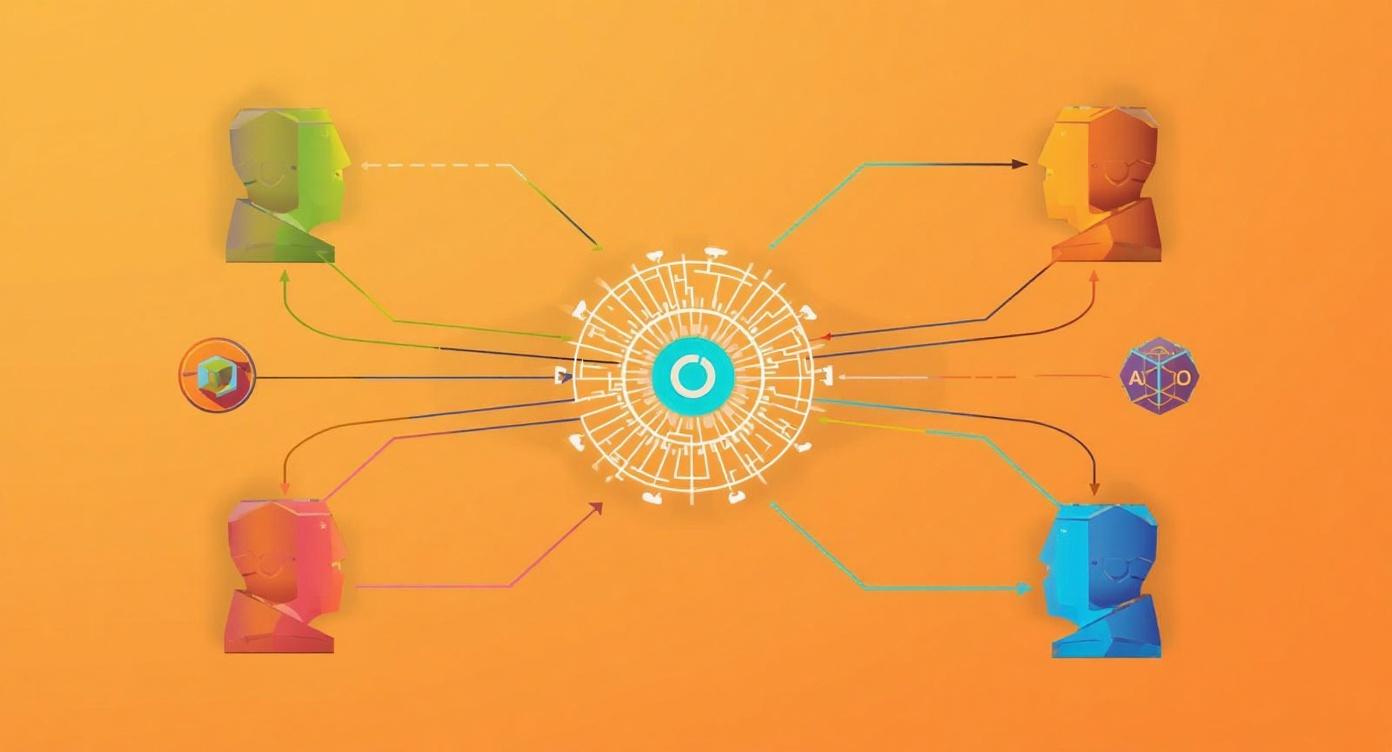
Rather than one AI doing everything, these frameworks let you define a team of specialized AI agents, each focused on a specific part of the workflow. A Data Agent pulls and structures your program metrics. An Analysis Agent compares those metrics against grant requirements. A Writer Agent drafts the narrative. A Reviewer Agent checks for funder compliance. Each agent does what it's good at, passes its output to the next, and the combined result is significantly better than what any single prompt could produce.
This is powerful, but it comes with honest trade-offs: these tools currently require Python programming skills, careful setup, and thoughtful governance to use responsibly. This article explains what CrewAI and LangChain actually are, what they can do for nonprofits, what they realistically require, and how to think about whether they belong in your organization's technology roadmap.
Understanding CrewAI and LangChain
These two frameworks are related but serve different primary purposes. Understanding the distinction helps you know which is more relevant for a given use case.
CrewAI: Coordinating Teams of AI Agents
The leading open-source framework for multi-agent coordination, with 39,000+ GitHub stars and 12 million+ daily workflow executions
CrewAI is built around a simple but powerful metaphor: a crew of workers with defined roles, each assigned specific tasks, collaborating to complete a larger project. You define each agent's role (Researcher, Writer, Reviewer), give it a goal and a backstory that shapes how it approaches its work, and then assign it specific tasks. The agents work through those tasks either sequentially or in parallel, passing outputs to one another as needed.
The framework supports two core organizational structures. Crews are teams of agents working together on a defined project. Flows are the broader orchestration layer that controls how Crews are sequenced, what logic governs transitions between steps, and how state is managed across a complex multi-phase workflow. As of 2026, Flows execute over 12 million times per day across industries, which reflects the framework's maturity beyond academic experimentation.
CrewAI has notable features for nonprofit use: built-in human-in-the-loop capabilities that pause agent execution and wait for human approval before continuing, support for all major LLM providers including Claude, GPT, and Gemini, and a growing library of pre-built tools for web search, document reading, and API connections.
- Best for: Complex multi-step tasks with clear role divisions, grant reporting, donor research pipelines, communications workflows
- Cost: Free open-source; paid Enterprise platform from $99/month; primary ongoing cost is LLM API usage
- Requires: Python programming skills (intermediate level)
LangChain: Building AI Applications Around Your Own Data
The most widely adopted framework for connecting LLMs to documents, databases, and APIs
LangChain is a broader framework for building applications powered by large language models. Where CrewAI specializes in coordinating multiple agents, LangChain excels at connecting AI models to your own data, existing systems, and external tools. Its strongest capability is Retrieval Augmented Generation (RAG): building systems that can search through an organization's documents and use what they find to generate accurate, grounded responses.
In 2026, LangChain has shifted its strategic focus from the "chains" of its original name toward agents. LangGraph, now the primary component of the LangChain ecosystem for production applications, supports stateful multi-agent workflows with branching logic, persistence across sessions, and real-time streaming. LangSmith, its companion observability platform, provides monitoring, testing, and evaluation tools that help teams understand what their agents are actually doing.
For nonprofits, LangChain's RAG capability is particularly relevant. Indexing your grant guidelines, program documentation, annual reports, policy manuals, and past submissions into a searchable knowledge base, and then allowing AI to query that knowledge base when generating content, is enormously valuable. It means the AI works from your actual institutional knowledge rather than its general training data, dramatically improving relevance and accuracy.
- Best for: Document-grounded AI applications, organizational knowledge bases, complex single-agent systems with deep tool use
- Cost: Free open-source; LangSmith from $39/month per seat; primary ongoing cost is LLM API usage
- Requires: Python programming skills; vector database concepts for RAG applications
How They Work Together
CrewAI and LangChain are complementary, not competing. CrewAI was historically built on top of LangChain but is now fully independent. Many teams use both: LangChain's RAG pipeline gives a CrewAI agent access to an organizational knowledge base, while CrewAI's role-based coordination handles the multi-step workflow logic. LangChain tools can be integrated directly into CrewAI agents via the LangChainTool wrapper.
A practical pattern: use LangChain to index your grant portfolio into a searchable knowledge base. Use CrewAI to build a grant reporting workflow where a Research Agent queries that knowledge base, a Data Agent pulls current program metrics, and a Writer Agent drafts the report narrative. The combination produces output grounded in both your institutional knowledge and your current data.
What "Agent Orchestration" Actually Means
Agent orchestration is the coordination layer that manages multiple AI agents working on a shared goal. It determines which agent does what, in what order, what information gets passed between agents, and when a human needs to be involved before the workflow continues.
The value of orchestration becomes clear when you compare it to alternatives. Without orchestration, each AI interaction is isolated: you prompt, you get a response, you use that response in your next prompt. This works for simple tasks but breaks down for complex ones where intermediate outputs need to be reliable, where multiple sources of information need to be integrated, and where different steps require different capabilities or levels of specialization.
Orchestration solves this by creating a structured pipeline. The outputs of one agent become the verified inputs for the next. Human approval gates can be inserted at critical decision points. The overall workflow can branch based on conditional logic (if the Data Agent finds a gap between program outcomes and grant deliverables, route to a Strategy Agent before the Writer Agent continues). This level of structure is what makes complex, multi-step AI workflows reliable enough to use in professional settings.
The 2026 Market Context
Deloitte has identified agent orchestration as the defining enterprise AI capability of the current period. The autonomous AI agent market is on a significant growth trajectory. However, Deloitte also notes that more than 40 percent of agentic AI projects are at risk of cancellation due to unanticipated cost, complexity, or unexpected risks. This is an important counterweight to the enthusiasm: these tools are powerful but require careful, well-scoped implementation to succeed.
For nonprofits, the practical implication is: start with narrow, well-defined use cases where the inputs and outputs are clear, the ROI is measurable, and the risk of getting something wrong is limited. Do not begin with a system that autonomously manages donor communications or makes allocation decisions about program resources.
Where Multi-Agent Workflows Deliver Value for Nonprofits
The most compelling nonprofit applications for CrewAI and LangChain share common characteristics: they involve multi-step processes with defined inputs and outputs, they currently require significant staff time, and they have a natural human review gate before the output matters externally. Grant management tops this list, but several other areas are equally strong candidates.
Grant Management and Reporting
Grant reporting is one of the most clearly structured multi-step processes in nonprofit operations, which makes it an ideal candidate for agent orchestration. A well-designed grant reporting crew might include: a Data Collection Agent that pulls program metrics from your database or spreadsheets, an Analysis Agent that compares those outcomes against the specific deliverables outlined in the grant agreement, a Research Agent that retrieves the funder's previous reporting requirements and preferred language from your indexed document library, a Writer Agent that drafts the narrative sections using the gathered information, and a Compliance Reviewer Agent that checks the draft against funder word limits, required sections, and specific terminology.
The workflow pauses at a human review gate before anything is submitted. The staff member sees a well-structured, data-grounded draft that needs review and editing, not a blank page that needs to be filled from scratch. This shifts the human role from labor-intensive drafting to quality oversight and relationship judgment, which is where human attention is most valuable in grant relationships.
LangChain's RAG capability is particularly valuable here. If your past grant submissions, funder guidelines, and reporting templates are indexed into a knowledge base, the Research Agent can pull relevant context from your actual institutional history rather than generating generic grant language. This is the difference between a draft that sounds like your organization and one that sounds like a generic nonprofit.
Donor Research and Prospect Development
Major donor prospect research is time-consuming, repetitive in structure but unique in content for each prospect. A multi-agent workflow can handle the systematic parts: a Prospect Research Agent searches public information for wealth indicators, philanthropic history, and organizational connections; a Connection Mapper Agent identifies relationships between prospects and existing donors or board members; a Segmentation Agent categorizes prospects by giving capacity and interest alignment with your programs; and a Personalization Agent drafts individualized outreach messages based on each prospect's profile.
This approach addresses one of the most persistent capacity gaps in nonprofit development: major gifts programs that cannot sustain the research and personalization depth needed to cultivate prospects at scale because staff time is finite. A well-designed CrewAI workflow can produce research briefs and draft outreach for a queue of prospects, leaving the relationship-building and conversation work to development staff.
The critical governance requirement: these workflows must access only appropriate public information and handle donor data with proper security protocols. Agent systems that touch CRM data should have read-only access, and all outreach drafts should pass through human review before sending. This is an area where the AI governance frameworks your organization has established become directly relevant.
Program Evaluation and Impact Reporting
Program evaluation often involves processing large volumes of unstructured information: case notes, survey responses, intake forms, and service records that exist in various formats and locations. LangChain's document processing capabilities can index all of this into a searchable structure, and a multi-agent workflow can then analyze patterns across that data at a scale no human team could match manually.
A program evaluation crew might include: a Data Extraction Agent that processes unstructured program notes into structured data, a Pattern Recognition Agent that identifies trends in outcomes across client segments over time, a Benchmark Comparison Agent that retrieves relevant sector benchmarks from indexed research papers and external databases, and a Report Writer Agent that synthesizes these findings into an evaluation narrative. The result is a data-grounded evaluation draft that program staff can review and refine rather than produce from scratch.
This is particularly valuable for organizations with limited evaluation capacity. Many nonprofits conduct program evaluation inconsistently because the process is time-intensive and competes with direct service delivery for staff attention. Multi-agent workflows can make continuous quality improvement feasible for organizations that currently treat evaluation as an annual event. For more on AI-enhanced impact measurement, see our article on AI knowledge management systems.
Communications Content Production
At small and mid-size nonprofits, one person often manages the entire communications function: content strategy, writing, editing, social media, email, and web updates. A multi-agent content workflow can make this load more manageable by handling the systematic parts of production.
A content production crew might include: a Content Strategist Agent that reviews your editorial calendar and recent program updates to identify story opportunities, a Researcher Agent that searches for relevant sector news or data points to anchor each piece, a Writer Agent that drafts blog posts, email newsletters, or social content, a Brand Reviewer Agent that checks tone and messaging consistency against your established guidelines, and an SEO Agent that optimizes content for search or email performance.
The communications staff member shifts from producing first drafts to reviewing, editing, and publishing. For organizations managing a high-frequency content calendar with limited staff, this kind of workflow can meaningfully reduce the production burden without reducing output quality.
What These Tools Actually Require
Honest assessment of what CrewAI and LangChain require is essential before deciding whether to pursue them. The answer is less convenient than many technology vendors suggest.
The Developer Requirement Is Real
Both CrewAI and LangChain are code-first frameworks that require Python programming skills. Setting up the development environment, managing API keys and dependencies, writing agent role definitions, building custom tools, and debugging agent behavior when things go wrong all require someone who can write and understand Python code.
CrewAI has made progress toward accessibility through YAML configuration files that define agents and tasks without Python classes, and through its Enterprise Studio's no-code visual builder. But the no-code option requires the paid Enterprise platform ($99/month minimum), and even with YAML configuration, deployment, monitoring, and customization still require developer skills. If your organization does not have internal Python capabilities, accessing these frameworks requires either hiring, engaging a technology consultant, or connecting with a skilled technology volunteer.
Skills Needed to Build
- Python programming (intermediate level minimum)
- REST API familiarity and environment variable management
- LLM concepts: context windows, tokens, temperature settings
- Vector databases and embedding concepts (for LangChain RAG)
- Basic cloud infrastructure or Docker for deployment
Skills Needed to Use
- Understanding of what agents can and cannot do
- Ability to spot hallucinations and errors in AI-generated content
- Judgment about when to override agent outputs
- Clear communication about what the workflow needs to produce
Understanding the Costs
The frameworks themselves are free to use. CrewAI's open-source Python package and LangChain's core libraries have no licensing fees. The ongoing costs come from three sources.
First, LLM API usage. Every agent call in a workflow consumes tokens from the underlying language model, whether that's Claude, GPT, or Gemini. For a nonprofit running modest automation workflows, monthly LLM API costs typically range from $20 to $200, depending on workflow complexity and volume. This is manageable but needs monitoring, since costs can spike unexpectedly if agents enter processing loops or handle more data than anticipated.
Second, optional platform costs. CrewAI's paid Enterprise platform ($99/month and above) adds hosted deployment, monitoring dashboards, and team collaboration features. LangSmith, LangChain's observability platform, starts at $39/month per seat. These are not required for functional workflows but become important at scale or when production reliability matters.
Third, development time. Building a reliable multi-agent workflow requires iterative development, testing, and refinement. A simple grant reporting workflow might take a developer 20 to 40 hours to build and test properly. More complex systems take longer. Organizations that don't have internal developer capacity should factor in consultant fees or volunteer time when assessing whether this investment makes sense.
How CrewAI and LangChain Compare to Simpler Tools
CrewAI and LangChain are not the right starting point for every nonprofit. Understanding where they fit on the spectrum of AI automation tools helps you make a better decision about where to invest your limited capacity.
| Tool | Technical Bar | Best For | Pricing |
|---|---|---|---|
| Zapier | No code | Simple app-to-app automation, SaaS connections | $19-$799/month; free tier limited |
| Make (Integromat) | Low code | Visual, complex multi-step automations | $9-$65/month; free tier |
| n8n | Low-to-medium | Technical teams wanting flexibility with AI nodes | Free self-hosted; $20-$50/month cloud |
| CrewAI | Python developer | Multi-agent reasoning, autonomous research, complex AI workflows | Free + LLM API costs; Enterprise from $99/mo |
| LangChain | Python developer | RAG pipelines, document-grounded AI, LLM applications | Free + LLM API costs; LangSmith from $39/seat |
The key distinction is that Zapier, Make, and n8n are primarily workflow automation tools that can include AI steps. They connect existing apps and automate defined processes. CrewAI and LangChain are AI-first frameworks where the AI is doing complex reasoning, not just executing predefined steps.
For most nonprofits without developer capacity, n8n is the most practical next step from Zapier if you want to add AI reasoning to your automation workflows. n8n has nearly 70 dedicated AI nodes, including LangChain integration, and provides a visual interface that doesn't require Python. We covered n8n in depth in our article on n8n for nonprofits.
For organizations that do have developer capacity or access to skilled technology volunteers, CrewAI and LangChain offer a level of flexibility and power that no visual tool can match. Custom tool development, complex branching logic, integration with proprietary databases, and fine-grained control over how agents reason and communicate are only possible at the code level.
Risks and Governance Requirements
Multi-agent AI systems introduce risks that don't exist with simpler AI tools. Responsible implementation requires addressing these risks explicitly, not treating them as edge cases to deal with later.
Cascading Hallucinations
When one agent produces an error and passes it to the next agent as established fact, the error compounds through the workflow. A statistic that a Research Agent hallucinated can end up in a grant report drafted by a Writer Agent, reviewed by a Compliance Agent that doesn't fact-check claims, and submitted by the workflow before a human catches it. Human review at appropriate checkpoints is essential.
Data Privacy and Security
Agent systems that access donor data, client records, or financial information introduce data security risks. Prompt injection attacks (where malicious content in documents causes agents to behave unexpectedly) are a real threat. Agents should have read-only access to sensitive data, minimum-necessary data access principles should be enforced, and all data handling should comply with applicable privacy regulations.
Cost Unpredictability
LLM API costs can spike unexpectedly if agents enter loops, make excessive tool calls, or process larger data volumes than anticipated. Always implement maximum iteration limits on agents, token usage monitoring, and cost alerts from the start. Set a hard spending cap per workflow run during development and testing.
Grant Compliance Risk
Some funders have policies about AI use in grant applications or reports. Submitting AI-drafted content without human review or without checking the funder's AI policies creates relationship and compliance risk. Human oversight of all externally submitted content is non-negotiable, and it's worth checking funder guidelines before deploying AI-assisted grant workflows.
Essential Governance Practices
- Human approval gates: Use CrewAI's built-in human_input parameter for any task whose output will be sent externally or affect real decisions.
- Read-only data access: Agents should have read access to databases and CRM data; write access should require explicit human action.
- Version control for agent configurations: Treat agent role definitions and task prompts like code, stored in version control and reviewed before changes are deployed.
- Output monitoring: Review agent outputs weekly against expected quality standards. Document deviations and feed them back into prompt improvements.
- Scope limits: Never give agents authority to send communications, submit grant applications, or modify financial records autonomously.
A Realistic Path to Getting Started
For nonprofits interested in exploring CrewAI and LangChain, the path forward depends heavily on your current technical capacity. Here are three realistic starting points based on different situations.
If You Have No Internal Developer Capacity
Start with n8n or Zapier for automation and AI integration. These tools give you meaningful capability without the Python requirement. Connect with technology volunteer organizations like Catchafire, Taproot Plus, or the Technology Association of Grantmakers' TechSpark program, which can connect you with skilled developers willing to build pro-bono CrewAI or LangChain workflows. Use this time to identify your highest-value, best-defined use cases so you're ready when developer support arrives.
- Enroll in Google for Nonprofits and Microsoft for Nonprofits for discounted AI access
- List a project on Catchafire or Taproot Plus for technology volunteer support
- Document your current grant reporting or donor research process in detail as preparation
If You Have a Tech-Savvy Staff Member
An interested staff member with some technical background can learn CrewAI basics through available courses. CrewAI's certification program is free and has certified over 100,000 developers. DeepLearning.AI offers short, free courses on multi-agent systems taught by leading AI researchers. The realistic learning path is: basic Python fluency, then the DeepLearning.AI multi-agent systems course, then CrewAI's official quickstart documentation, then building a simple, internal-only workflow as a first project.
- Invest in dedicated learning time, not just self-study on the margins of other work
- First project should be internal-facing and low-stakes (staff briefing, internal report draft)
- Budget 3-6 months for meaningful fluency with a real, working workflow
If You Have Internal Technical Capacity
With a developer or technical team member available, the path is to start with a well-scoped pilot: one workflow, clear inputs and outputs, measurable success criteria, and a defined human review process. Grant report drafting or donor prospect research briefing are both strong choices. Build in verbose logging from the start so you understand what each agent is doing and why. Measure the time saved against the development investment to validate the ROI before expanding.
- Choose one high-value use case and build it properly rather than multiple workflows rushed
- Test with sample data before connecting to live systems
- Track staff time saved per workflow run to build the business case for further investment
For broader context on AI adoption strategy, see our articles on AI strategic planning for nonprofits and on managing AI change within nonprofit teams. Building the organizational foundation for AI adoption is as important as the technical implementation.
Conclusion
CrewAI and LangChain represent the technical frontier of AI automation for nonprofits, moving beyond single-prompt interactions into coordinated systems that handle multi-step, multi-source, judgment-intensive workflows. The capabilities are real, the ecosystem is mature, and the most compelling use cases, particularly grant management, donor research, and program evaluation, align naturally with where nonprofits experience the greatest capacity constraints.
The honest constraint is access to developer talent. These tools require Python skills that most nonprofit staff don't have, and the learning curve is substantial. Organizations that lack internal technical capacity are not locked out of these capabilities, but they need a plan: technology volunteers, consultants, or a staff member willing to invest meaningful time in building new skills.
The broader lesson is one of sequencing. Start with the no-code and low-code tools that are accessible today. Build internal comfort with AI-assisted workflows and develop a clear understanding of where the bottlenecks are that agent orchestration would address. By the time you have developer access and a well-defined use case, you'll be positioned to build something that actually works rather than something ambitious that gets abandoned.
For organizations that do make the investment, the potential is substantial. The same staff hours that currently go into manually pulling data, drafting reports, and producing first drafts of communications can be redirected toward relationship building, strategic thinking, and direct mission work. That shift in how staff time is spent, from administrative production toward human-centered mission delivery, is ultimately what makes agent orchestration worth pursuing.
Ready to Explore Advanced AI Workflows for Your Nonprofit?
Our team helps nonprofits identify the right AI automation approaches for their capacity, goals, and technical context. Whether you're starting with basic automation or ready to explore multi-agent systems, we can help you build a practical roadmap.