
How to Build AI Literacy Across Generational Divides in Your Team
Today's nonprofit workforce spans four generations, each with distinct relationships to technology and different learning styles. While Gen Z staff may embrace AI instinctively, Baby Boomer colleagues might approach it with skepticism—and Millennials and Gen X fall somewhere in between. This diversity of perspectives is actually an asset, but only if you can bridge the generational divides and build AI literacy across your entire team. This guide explores how to design inclusive AI training that meets each generation where they are, leverages their unique strengths, and creates a culture where intergenerational knowledge-sharing accelerates AI adoption for everyone.
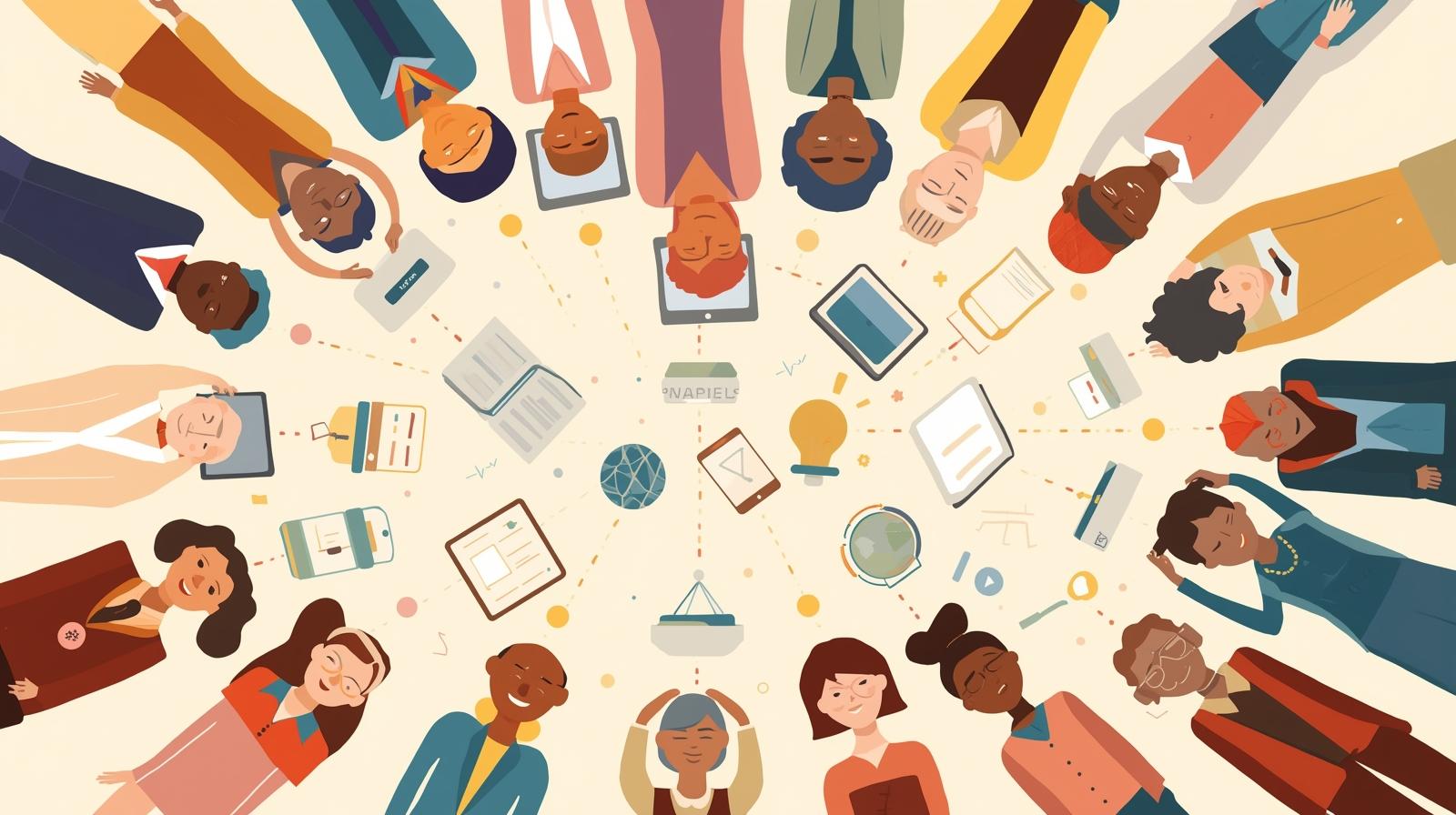
The generational divide in AI adoption is stark. Research from 2026 shows that 70% of Gen Z workers use generative AI weekly, compared to just 29% of Baby Boomers who have ever used tools like ChatGPT. Among Millennials, 62% report high AI expertise—actually higher than Gen Z's 50%—while only 22% of workers over 65 say the same. These aren't just statistics; they represent real dynamics playing out in nonprofit teams every day, where a younger staff member might casually use AI for tasks that a more experienced colleague finds bewildering or threatening.
These differences create both challenges and opportunities. The challenge is obvious: when some team members embrace AI enthusiastically while others resist or avoid it, organizations struggle to implement AI consistently and effectively. Projects stall, frustrations mount, and the gap between AI adopters and non-adopters widens. The less obvious opportunity is that generational diversity—when properly leveraged—can actually strengthen AI implementation. Younger staff bring digital fluency and openness to experimentation. Older staff bring institutional knowledge, professional judgment, and healthy skepticism that catches problems AI enthusiasts might miss. The goal isn't to make everyone the same; it's to build a team where different generations complement each other's strengths.
Nonprofits face particular challenges in bridging generational AI divides. Limited training budgets, competing priorities, and the emotional intensity of mission-driven work can make structured AI education feel like a luxury. Meanwhile, the stakes are high: organizations that fail to build AI literacy across their teams will struggle to compete for grants, attract talent, and deliver services efficiently. The question isn't whether to invest in multigenerational AI training—it's how to do so effectively with the resources available.
This guide provides a practical framework for building AI literacy that works for everyone on your team. We'll explore how different generations approach AI differently (and why), examine training strategies that accommodate diverse learning needs, and introduce reverse mentoring approaches that turn generational diversity from a problem into an asset. The goal is creating an AI-literate organization where every team member—regardless of when they were born or how they first encountered technology—can contribute to and benefit from AI adoption.
Understanding How Generations Approach AI
Before designing training programs, it's worth understanding why different generations relate to AI differently. These aren't arbitrary preferences but reflect formative experiences with technology that shape how people learn, trust, and adopt new tools. Understanding these patterns helps you design training that meets people where they are rather than where you wish they were.
Gen Z (born 1997-2012) grew up with smartphones, social media, and on-demand information. They're often called "digital natives," though a better description might be "AI natives"—they encountered machine learning through recommendation algorithms long before ChatGPT existed. For Gen Z, AI isn't a new technology to learn but an enhancement to tools they already use. However, Gen Z's comfort with AI doesn't always translate to expertise. They may be quick to adopt tools without fully understanding their limitations, and their familiarity can breed overconfidence. Interestingly, despite high adoption rates, 63% of Gen Z workers worry that AI may eliminate jobs—suggesting they understand AI's transformative potential even as they embrace it.
Millennials (born 1981-1996) occupy a unique position as the generation that came of age during the internet's transformation from curiosity to necessity. Many Millennials remember life before smartphones but have spent their entire careers adapting to technological change. Research shows Millennials actually demonstrate the highest AI expertise of any generation—62% report high familiarity, compared to 50% of Gen Z. This may reflect Millennials' experience learning technology intentionally rather than absorbing it unconsciously, making them particularly effective at both using AI and teaching others to use it.
Gen X (born 1965-1980) and Baby Boomers (born 1946-1964) often receive less attention in AI discussions, but they bring crucial perspectives. These generations developed professional expertise in a pre-digital world and have witnessed multiple waves of technology promise and disappointment. Their skepticism about AI isn't technophobia—it's informed caution born of experience. When a Baby Boomer asks "but what if the AI is wrong?" they're raising a question that enthusiastic early adopters often overlook. Research shows 50% of Boomers don't use AI at all in the workplace, and 71% have never used ChatGPT. But "don't use" doesn't mean "can't use." Often, older workers simply haven't seen compelling reasons to change established practices that work well enough.
Younger Generations (Gen Z & Millennials)
Strengths:
- • Comfortable experimenting with new tools
- • Quick to adopt and iterate
- • Understand AI's potential applications
- • Comfortable with ambiguity in tech
- • Natural at sharing knowledge informally
Challenges:
- • May overlook AI limitations and risks
- • Can lack patience with structured training
- • Less experience evaluating information quality
- • May undervalue institutional knowledge
Older Generations (Gen X & Boomers)
Strengths:
- • Deep institutional and professional knowledge
- • Critical thinking about technology claims
- • Strong judgment about appropriate use
- • Relationship-building expertise
- • Context for what's actually new vs. repackaged
Challenges:
- • May feel threatened by new technology
- • Prefer mastery before use
- • Less tolerance for imperfect tools
- • May dismiss AI without fair evaluation
Recognizing these patterns helps you avoid common training mistakes. Don't assume younger staff have nothing to learn about AI—their comfort can mask competency gaps. Don't assume older staff resist AI because they can't learn—they often resist because training doesn't address their real concerns. And don't treat generational differences as problems to solve rather than diversity to leverage. The most effective AI implementations draw on all generations' strengths while designing around their specific challenges. For more on building AI capability across your organization, see our guide on building AI literacy from scratch.
Designing Inclusive AI Training
Effective multigenerational AI training isn't about creating separate programs for each age group—it's about designing learning experiences flexible enough to meet diverse needs while building shared organizational capability. The following principles help create training that works across generational divides without patronizing any group or leaving anyone behind.
Start with purpose, not technology. The biggest barrier to AI adoption for many older workers isn't inability to learn new tools—it's lack of compelling reason to try. Leading with "here's how to use ChatGPT" triggers resistance; leading with "here's how to accomplish your most frustrating task more easily" creates motivation. Before any training, identify specific pain points that AI can address for each role. When a case manager sees AI as a way to reduce documentation burden so they can spend more time with clients, they're motivated to learn. When they see it as another technology they're required to master, they're not. Frame AI training around mission and job improvement, not technology adoption for its own sake.
Provide multiple learning pathways. Different generations often prefer different learning modalities, though individual variation matters more than generational stereotypes. Some people learn best through hands-on experimentation; others prefer watching demonstrations first; still others want written documentation they can reference. Effective training programs offer multiple pathways to the same competencies. This might mean providing video tutorials for those who prefer visual learning, step-by-step written guides for those who prefer text, facilitated practice sessions for those who prefer learning with others, and self-directed exploration time for those who prefer figuring things out independently. The goal is reaching the same destination through different routes.
Create psychological safety for learning. Research shows that 45% of Gen Z feel their employer has provided adequate AI training, compared to only 42% of Boomers. But adequacy isn't just about training availability—it's about whether people feel safe admitting what they don't know and making mistakes while learning. Older workers may feel embarrassed to ask questions that seem basic, while younger workers may feel pressure to appear more expert than they are. Create learning environments where questions are welcomed, mistakes are expected, and no one is made to feel foolish for their starting point. For more on creating supportive learning cultures around AI, see our article on creating AI training when you're not technical yourself.
Inclusive Training Design Checklist
Elements that help AI training work across generational divides
- Role-relevant applications: Show how AI applies to specific job functions rather than teaching tools in the abstract
- Mixed learning formats: Combine live training, video tutorials, written guides, and hands-on practice to accommodate different learning preferences
- Self-paced options: Allow people to progress at their own speed, with resources available for review and reinforcement
- Peer learning opportunities: Create structured times for colleagues to learn from each other, not just from trainers
- Limitations and risks: Address concerns about AI accuracy, bias, and appropriate use—don't just sell benefits
- Practice time with support: Give people supervised time to experiment without pressure to be productive immediately
- Clear use guidelines: Provide policies about when and how AI should (and shouldn't) be used, reducing uncertainty
- Ongoing support resources: Make help available after initial training through documentation, help desks, or designated experts
Pace training appropriately. Younger workers often learn technology through rapid experimentation—trying things, failing fast, and iterating. Older workers often prefer understanding concepts before application—they want to know why something works, not just what buttons to push. Effective training programs accommodate both approaches: providing enough structure and explanation for those who need it while allowing faster learners to advance. Consider offering foundational sessions that everyone attends, followed by optional deep-dive sessions for those wanting more context or advanced sessions for those ready to move faster.
Address skepticism directly rather than dismissing it. When experienced staff raise concerns about AI—whether about accuracy, bias, job displacement, or appropriate use—don't treat these as resistance to overcome. Often, they're raising legitimate issues that deserve engagement. Create space for critical discussion about AI limitations and risks alongside training on capabilities. This respects the expertise and judgment that older workers bring while helping them engage with AI constructively rather than dismissively. An organization where concerns can be voiced openly is more likely to catch AI problems before they become crises than one where skeptics are silenced.
Reverse Mentoring: Learning in Both Directions
Reverse mentoring—where junior employees mentor senior colleagues on emerging skills—is one of the most powerful approaches for building AI literacy across generational divides. The concept was pioneered at General Electric in the 1990s to help senior leaders understand the internet, and it's experiencing renewed relevance as organizations grapple with AI adoption. Unlike traditional top-down training, reverse mentoring creates bidirectional knowledge flow that benefits everyone involved.
The basic structure pairs younger, digitally fluent employees with older, more experienced colleagues. The younger mentor teaches AI tools, digital workflows, and emerging technologies. But true reverse mentoring isn't one-directional—the relationship also allows knowledge to flow the other way. The senior "mentee" shares institutional knowledge, professional judgment, stakeholder relationships, and strategic perspective that the younger mentor lacks. Both parties learn; both parties teach. This mutual exchange transforms what could be a condescending exercise into a genuine professional development opportunity for everyone.
For AI training specifically, reverse mentoring works because it addresses barriers that formal training often misses. A junior employee can help a senior colleague overcome specific obstacles as they arise, answer questions that feel too basic to ask in a group setting, and demonstrate how AI actually integrates into daily work. Meanwhile, the senior colleague's questions and concerns often surface important issues—privacy, accuracy, appropriateness—that the junior mentor may not have considered. Research shows these programs can dramatically improve digital literacy among older workers while developing leadership and communication skills in younger ones.
Implementing Reverse Mentoring for AI
Key elements of successful reverse mentoring programs
Thoughtful Pairing: Match mentors and mentees based on personality compatibility as well as skill gaps. Not every younger employee is well-suited to teaching, and not every older employee is open to learning from junior colleagues. Look for junior staff who communicate patiently and senior staff who demonstrate learning orientation.
Clear Structure: Set expectations for meeting frequency (monthly works well), session duration, and topics to cover. Provide suggested agendas or learning goals to guide conversations. Without structure, meetings often drift or fizzle out.
Leadership Modeling: Have senior leaders participate visibly and talk openly about what they're learning. When a CEO or Executive Director shares that they learned something from a junior colleague, it signals that learning across generations is valued, not embarrassing.
Bidirectional Framing: Frame the program as mutual learning, not remedial training. The junior mentor should have explicit opportunities to learn from the senior mentee—about organizational history, stakeholder relationships, strategic thinking, professional skills, or domain expertise.
Training for Mentors: Prepare junior employees for the mentoring role. They need guidance on teaching effectively, communicating across generations, and receiving feedback from senior colleagues who may be used to being the experts.
Celebration of Learning: Recognize both mentors and mentees for their participation. Share success stories (with permission) that normalize intergenerational learning and demonstrate its value.
Successful reverse mentoring requires navigating potential awkwardness around hierarchy and age. Some senior staff feel uncomfortable being taught by people they could supervise; some junior staff feel anxious about correcting or instructing people with more experience. Address these dynamics openly. Emphasize that expertise is domain-specific—being newer to an organization or younger in age doesn't mean having less to offer, just as being senior doesn't mean having nothing to learn. Organizations that successfully navigate these dynamics often find that reverse mentoring strengthens relationships across levels and generations in ways that extend far beyond AI literacy.
Companies like Cisco, Procter & Gamble, and Schneider Electric have successfully used reverse mentoring to accelerate technology adoption. What makes these programs work is treating them as genuine professional development rather than compliance exercises. When done well, reverse mentoring creates ongoing relationships where knowledge flows naturally in both directions, building organizational resilience and accelerating learning. For nonprofits with limited training budgets, reverse mentoring is also cost-effective—it leverages internal expertise rather than requiring external trainers or expensive programs.
Overcoming Common Barriers
Even well-designed training programs encounter resistance. Understanding the specific barriers each generation faces—and addressing them directly—increases the likelihood of building AI literacy across your entire team rather than just the subset already inclined to adopt.
For older workers, the most common barrier isn't capability but perceived relevance. "I've done this job successfully for 20 years without AI—why do I need it now?" This isn't resistance to learning; it's a reasonable question that deserves a reasonable answer. Address it by identifying specific ways AI makes their particular work easier, faster, or more effective. Show, don't tell—demonstrations are more persuasive than explanations. And acknowledge what's true in their concern: they probably don't need AI for everything they do. The goal is selective adoption where AI adds value, not wholesale transformation of work that's already going well.
Fear of job displacement is real across generations, but manifests differently. Research shows 63% of Gen Z workers worry AI may eliminate jobs—they've heard the warnings throughout their education and early careers. Older workers may worry less about job loss and more about skill obsolescence—becoming outdated while still employed. Address these fears honestly. AI is changing nonprofit work, and some tasks will indeed be automated. But most roles will be augmented rather than eliminated, and AI-literate workers will be more valuable, not less. Focus on AI as a tool that makes people more effective rather than a replacement for human work. For perspectives on managing these concerns, see our article on overcoming staff resistance to AI.
Barriers for Older Workers
- Perceived irrelevance: Address by showing specific job-relevant applications, not generic capabilities
- Skill obsolescence fears: Frame AI as augmentation of expertise, not replacement
- Learning style mismatch: Provide structured, documented training alongside experiential options
- Privacy and ethics concerns: Address these as legitimate issues, not resistance
- Embarrassment about gaps: Create safe learning spaces and normalize questions
Barriers for Younger Workers
- Overconfidence: Build in assessment of AI output quality, not just production
- Job security anxiety: Emphasize how AI literacy increases career value
- Impatience with structured training: Offer advanced tracks for faster learners
- Pressure to appear expert: Create culture where asking questions is valued
- Undervaluing institutional knowledge: Structure opportunities to learn from experienced colleagues
Time constraints affect everyone, but may hit differently across generations. Younger workers are often handling entry-level positions with high task loads; older workers may have accumulated responsibilities that fill every available moment. When people say they don't have time for AI training, they're usually telling the truth. Address this by integrating AI learning into existing work rather than adding separate training obligations. Encourage learning by doing—using AI for real tasks rather than artificial exercises. And be realistic about the time investment required. Promising that AI training will "only take a few minutes" and then demanding hours of engagement destroys credibility.
Finally, address technology access and comfort honestly. Not everyone has equal access to AI tools, either at work or for personal experimentation. Some people are using older devices or limited internet connections. Some have disabilities that make certain interfaces challenging. Some have privacy concerns about using AI tools for personal practice. Identify and address practical barriers to access, including providing appropriate hardware, accommodating different abilities, and creating safe environments for practice that respect personal boundaries around technology use.
Creating a Culture of Continuous Learning
One-time training programs can introduce AI concepts, but building lasting AI literacy requires a culture where continuous learning is normal, expected, and supported. This is particularly important for AI, which evolves rapidly—what people learn today may be outdated in months. Creating a learning culture means establishing practices, norms, and structures that support ongoing skill development across all generations.
Make learning visible and celebrated. When someone learns a new AI application, shares a successful prompt, or finds a creative use for AI tools, recognize it publicly. Share learning moments in team meetings, internal newsletters, or Slack channels. When leaders talk openly about what they're learning—including struggles and failures—it normalizes the learning process for everyone. Conversely, if learning happens privately and only successes are discussed, people conclude that admitting gaps or struggles is risky.
Build learning into work rhythms rather than treating it as separate from "real work." This might mean dedicating a portion of team meetings to sharing AI discoveries, establishing regular "learning labs" where people experiment with new tools together, or creating documentation practices where insights are captured and shared. Some organizations designate "AI ambassadors" in each department—people who stay current on developments and help colleagues adopt new capabilities. These ambassadors can come from any generation; what matters is their combination of AI interest and communication skills. For more on supporting ongoing AI learning, see our article on building AI champions in your organization.
Building Learning Culture Practices
- Regular learning time: Protect dedicated time for skill development, even if it's just 30 minutes weekly
- Peer knowledge sharing: Create forums (meetings, channels, documentation) where people share what they've learned
- Failure celebration: Acknowledge and learn from AI experiments that don't work—failure is data
- Cross-generational projects: Assign work that requires collaboration across age groups with different strengths
- External learning resources: Provide access to courses, communities, and events that extend internal training
- Recognition systems: Include learning and teaching in performance evaluations and recognition programs
Create intergenerational teams for AI projects. When generations work together on real challenges—rather than just training exercises—they naturally share knowledge in both directions. Younger staff contribute digital fluency and tool familiarity; older staff contribute professional judgment and organizational context. These collaborations often produce better outcomes than homogeneous teams while building relationships and understanding across generational lines. Structure project teams deliberately to mix generations rather than letting people self-select into age-similar groups.
Finally, approach AI literacy as a marathon, not a sprint. The goal isn't to get everyone to a certain skill level by a deadline—it's to establish practices that enable continuous improvement over time. Some people will advance quickly; others will progress more slowly. What matters is that everyone is moving forward and that the organization's collective capability is growing. Celebrate progress without creating pressure that turns learning into anxiety. Build systems that support ongoing development, and trust that consistent investment in learning will compound into significant capability over time.
Conclusion
Generational diversity in AI adoption isn't a problem to solve—it's a reality to navigate thoughtfully. Each generation brings distinct strengths to AI implementation: younger workers contribute digital fluency, comfort with experimentation, and openness to new tools; older workers contribute professional judgment, institutional knowledge, and healthy skepticism that catches problems enthusiasts might miss. Organizations that successfully bridge generational AI divides don't eliminate these differences—they leverage them, creating environments where different perspectives strengthen rather than fragment AI adoption.
The strategies outlined in this guide—inclusive training design, reverse mentoring programs, barrier-specific interventions, and learning culture development—share a common thread: they treat people as capable adults with diverse starting points rather than problems to be fixed. Training that meets people where they are, respects their concerns, and demonstrates genuine relevance to their work is far more effective than training that assumes everyone should learn the same way or care about the same things. And structures that enable knowledge to flow in multiple directions—from young to old, from experienced to new, across departments and roles—build organizational resilience that no one-time training program can match.
The nonprofit sector faces particular urgency in building AI literacy. Organizations that fail to develop AI capability across their teams will struggle to compete for funding, attract talent, and deliver services efficiently. But the same resource constraints that create urgency also limit what's possible. The good news is that the most effective approaches—reverse mentoring, peer learning, integrated skill development—are also among the most affordable. They leverage internal expertise rather than requiring expensive external training. They build relationships and culture alongside skills. And they recognize that the goal isn't AI adoption for its own sake but AI-enabled impact in service of mission. When generational divides become bridges for learning rather than barriers to adoption, the entire organization becomes more capable—and better positioned to fulfill its mission in a rapidly changing world.
Ready to Build AI Literacy Across Your Team?
Every generation on your team has something to contribute to AI adoption—and something to learn. We can help you design training and culture strategies that bridge generational divides and build organization-wide AI capability.