
Moving Beyond Single-Purpose AI Tools to Integrated Workflow Systems
Your nonprofit probably started with one AI tool for writing, another for images, a third for data analysis, and now you have a dozen subscriptions that don't talk to each other. This fragmentation creates inefficiency, security gaps, and cognitive overload. Learn why leading nonprofits are consolidating around integrated AI workflow platforms and how to make the strategic shift from scattered point solutions to unified systems that actually multiply your impact.
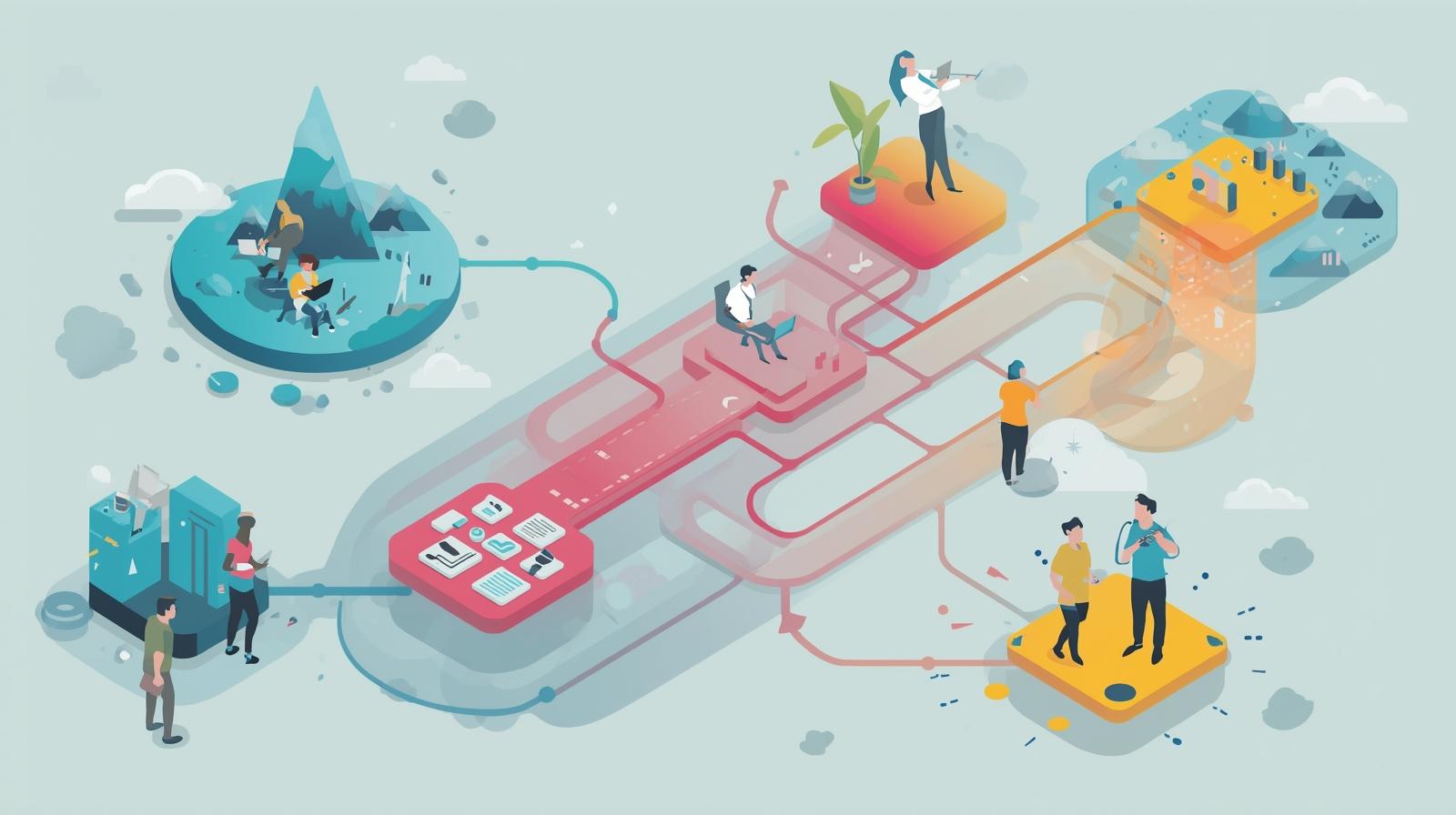
Your development director uses ChatGPT Plus for writing appeals. Your communications manager subscribes to Jasper for social media content. Your program coordinator pays for Claude Pro to summarize case notes. Your executive director has a Copilot subscription for meeting notes. Each tool costs $20-30 per month. None of them integrate with your donor database, case management system, or communication platform.
Welcome to the world of AI tool sprawl, the nonprofit equivalent of death by a thousand subscriptions. According to research, some professionals were spending over $120 monthly on AI subscriptions and wasting nearly 90 minutes every day just switching between platforms. More critically, this fragmentation creates data silos, inconsistent outputs, security vulnerabilities, and staff frustration.
The pattern is predictable. You start with one AI tool because it solves a specific problem. It works well enough that someone else tries a different AI tool for their function. Before long, you have a proliferation of overlapping subscriptions, no organizational memory of what works where, and staff manually copying and pasting between disconnected systems. The average knowledge worker now switches between applications 1,200 times per day, and every switch carries a cognitive cost.
There's a better approach emerging: integrated AI workflow systems. These platforms combine multiple AI capabilities, connect to your existing tools, provide unified governance, and create seamless workflows that span your entire organization. The shift from fragmented point solutions to integrated platforms represents a fundamental evolution in how nonprofits can leverage AI, not just for individual tasks but for comprehensive organizational transformation.
This article explores why single-purpose AI tools create problems as organizations scale, what integrated workflow systems offer instead, how to evaluate whether consolidation makes sense for your nonprofit, and practical strategies for transitioning from scattered tools to unified platforms. Whether you're drowning in AI subscriptions or planning your first AI implementation, understanding this shift will help you build more sustainable, effective, and scalable AI capacity.
The Hidden Costs of Tool Sprawl
Single-purpose AI tools seem efficient when you first adopt them. You identify a problem, find an AI tool that solves it, subscribe, and move on. The problem emerges gradually as these solutions accumulate. What starts as pragmatic problem-solving becomes organizational debt.
Financial Drain Through Redundancy
The direct subscription costs are obvious but understated. If five staff members each subscribe to three AI tools at $25 per month, that's $3,750 annually. But the real cost includes redundant capabilities. Many staff subscribe to tools with overlapping features because they don't know what colleagues are using or because each tool requires its own login, payment, and learning curve.
According to research on integrated AI workspaces versus single tools, users can save $30-40 monthly by switching from multiple single AI model subscriptions to integrated platforms. For an organization with 20 staff using AI tools, this consolidation could save $7,200 to $9,600 annually, resources that could fund training, better data infrastructure, or additional program capacity.
Productivity Loss from Context Switching
The cognitive cost of tool sprawl far exceeds subscription fees. When a staff member writes a donor appeal in ChatGPT, then moves to Canva for graphics, then copies text into Mailchimp, then switches to their CRM to log the interaction, they're not just moving between tools. They're rebuilding context each time, remembering where they left off, and losing the thread of their work.
Research shows point AI solutions force employees to waste time toggling between bots, copy-pasting data, and manually stitching together workflows, which destroys productivity. The nonprofit that thinks it's saving money by using free or low-cost individual tools is actually losing far more in staff time and mental energy.
Data Fragmentation and Lost Intelligence
Perhaps the most insidious cost of tool sprawl is data fragmentation. When your donor research lives in one AI tool, program reports in another, and communications in a third, you lose the ability to generate cross-functional insights. Each system operates in isolation, unaware of context that exists elsewhere in your organization.
This fragmentation means AI can't help you identify patterns that span functions. The connection between a donor's giving history and their program interests remains invisible because that data exists in disconnected systems. The insight that certain communication approaches correlate with volunteer retention stays hidden because messaging and volunteer data don't interact.
Fragmented digital tools hurt enterprise efficiency and AI readiness by creating data silos that make it nearly impossible to deploy AI implementations that could generate genuine intelligence across organizational functions.
Security and Compliance Nightmares
Every AI tool your staff uses is a potential security vulnerability. Different tools have different data handling policies, privacy standards, and security protocols. When staff paste sensitive donor information into various AI assistants without understanding which tools are GDPR-compliant or which retain training data, you create compliance risks that legal teams struggle to assess and manage.
Tool sprawl makes governance impossible. How do you enforce appropriate use policies when staff are using a dozen different AI platforms? How do you audit what data has been shared with which systems? How do you ensure consistent ethical standards across multiple vendors with different approaches to AI safety and bias?
For more on developing AI governance approaches, see our article on creating AI policies without a legal team.
Training and Support Burden
Each new AI tool requires onboarding, training, and ongoing support. When you have ten different AI tools, you need to maintain expertise in ten different interfaces, prompt strategies, and capability sets. New staff need training on multiple platforms. When tools update, everyone needs to relearn changed features.
This burden falls disproportionately on staff who become informal AI support for colleagues. Instead of doing their actual jobs, they spend time troubleshooting why someone's AI tool isn't working, explaining the differences between tools, or researching whether a particular task is possible with the tools you have.
What Integrated AI Workflow Systems Offer
Integrated AI workflow systems represent a fundamentally different approach. Instead of point solutions for individual tasks, these platforms provide comprehensive AI capabilities that work together, connect to your existing systems, and enable workflows that span multiple functions and tools.
According to research on enterprise AI integration, platforms are evolving beyond point solutions into comprehensive AI operating systems that combine search, copilots, automation, and agentic execution with governance built in. For nonprofits, this means moving from "we have some AI tools" to "we have an AI infrastructure."
Unified Workflow Orchestration
Seamless processes across functions
Integrated systems enable workflows that span multiple AI capabilities and external tools without manual intervention. A donor stewardship workflow might automatically research giving capacity, draft personalized communications, schedule follow-up tasks, and log everything in your CRM, all triggered by a single event.
According to analysis of AI workflow builders, these systems have evolved from simple rule-based automation into intelligent orchestration platforms that can reason, adapt, and act across complex systems, serving as core infrastructure for organizations.
Contextual Intelligence
AI that knows your organization
When AI tools operate within a unified platform, they can access organizational context that single-purpose tools can't. The AI helping you write a grant proposal knows your program outcomes, understands your organizational voice, and can reference past successful applications, all because this knowledge exists within the same integrated system.
This contextual awareness transforms AI from a generic assistant into a knowledgeable colleague who understands your organization's specific situation, challenges, and goals. For strategies on building this organizational knowledge, see our article on AI-powered knowledge management.
Centralized Governance
Consistent security and compliance
Integrated platforms enable unified governance policies. You can set organization-wide rules about what data can be processed, how AI outputs should be reviewed, who has access to which capabilities, and how to audit AI usage, all enforced consistently across all AI interactions rather than managed separately for each tool.
Research notes that unlike standalone AI tools, integrated AI platforms are workflow-native, enterprise-ready, and built with responsible AI governance at their core, making compliance and security manageable rather than aspirational.
Compounding Intelligence
Systems that get smarter over time
In integrated systems, every interaction contributes to organizational intelligence. When staff interact with AI for program reports, fundraising research, or communications, that activity creates patterns and insights that benefit everyone. The system learns your organizational terminology, understands your processes, and accumulates knowledge that single-purpose tools can't capture.
According to analysis, companies with unified data platforms deploy AI initiatives 60% faster than those with fragmented ecosystems, iterate more quickly because data scientists spend time building models instead of cleaning data, and scale more effectively.
Leading Integrated Platforms for Nonprofit Workflows
The integrated AI workflow platform market has matured significantly in 2026. While options vary in complexity and cost, several platforms have emerged as particularly relevant for nonprofit use cases, balancing capability with accessibility.
No-Code Workflow Automation Platforms
These platforms democratize AI workflow creation, allowing non-technical staff to build sophisticated automations. Zapier, for instance, now unlocks transformative AI capabilities with over 8,000 integrations, enabling nonprofits to connect AI reasoning to existing tools like donor databases, communication platforms, and case management systems without writing code.
Similarly, n8n uniquely combines AI capabilities with business process automation, giving technical teams the flexibility of code with the speed of no-code approaches. For resource-constrained nonprofits, n8n's open-source nature means you can self-host to reduce costs while maintaining full control over data.
According to analysis of 2026 no-code trends, these platforms are enabling business users, often called "citizen developers," to create and deploy complex workflows without writing a single line of code. This democratization is particularly valuable for nonprofits with limited technical resources.
Centralized AI Model Platforms
Some platforms focus on providing access to multiple AI models through a single interface. Platforms like Prompts.ai centralize 35+ AI models with enterprise security, enabling staff to choose the best AI for each task without managing separate subscriptions and logins for each model.
This approach addresses a specific pain point: different AI models excel at different tasks. Claude might be better for long-form content, GPT-4 for creative writing, Gemini for data analysis. Instead of subscribing to each separately, centralized platforms provide access to all models through one interface, often at lower total cost than individual subscriptions.
Enterprise-Grade Orchestration Systems
Larger nonprofits with complex operations and technical capacity might consider enterprise platforms like ServiceNow, which specifically mentions helping nonprofit organizations do more with less while making organizations more agile and effective. These systems provide comprehensive workflow orchestration, deep integration capabilities, and sophisticated governance tools, though they typically require dedicated IT support and represent significant investment.
Platforms like Workato offer middle-ground options, providing over 1,200 pre-built connectors and advanced workflow capabilities with a no-code interface that's more accessible than full enterprise systems but more powerful than basic automation tools.
Choosing the Right Platform Tier
The appropriate platform depends on your organization's size, technical capacity, and AI maturity. Small nonprofits with under $1 million budgets and limited IT capacity typically benefit most from no-code platforms like Zapier or Make, which provide power without requiring technical expertise. Mid-sized organizations ($1M-$10M) with some technical staff might leverage platforms like n8n or Workato that offer more customization while remaining manageable. Large nonprofits with dedicated IT teams and complex operations could justify enterprise platforms like ServiceNow.
For detailed guidance on selecting appropriate AI infrastructure for your organization size, see our article on budget-friendly AI tools for nonprofits.
Making the Transition: From Scattered Tools to Unified Platform
Moving from fragmented AI tools to an integrated platform isn't an overnight switch. It requires thoughtful planning, phased implementation, and attention to change management. The organizations that succeed approach consolidation as a strategic initiative, not just a procurement decision.
Audit Your Current AI Tool Landscape
Start by understanding what you actually have. Create a comprehensive inventory of all AI tools currently in use across your organization, including:
- Official organizational subscriptions
- Individual staff subscriptions that should be organizational
- Free tools staff are using without formal approval
- AI capabilities embedded in other platforms (CRM, email, etc.)
For each tool, document what staff use it for, how frequently, whether it's critical to operations, and what alternatives might exist. This audit often reveals surprising redundancy: three people using different tools for essentially the same purpose, or expensive subscriptions that barely get used.
Identify Your Critical Workflows
Rather than trying to consolidate everything at once, identify the workflows that would benefit most from integration. Look for processes where:
- Staff currently use multiple tools in sequence with manual data transfer
- Context gets lost as work moves between systems
- Cross-functional collaboration is hampered by disconnected tools
- Volume is high enough that automation would save significant time
Common high-value integration opportunities for nonprofits include donor stewardship workflows (research, communication drafting, relationship tracking), program reporting cycles (data collection, analysis, report generation), and constituent communications (message personalization, multi-channel coordination, response management).
Run a Focused Pilot
Don't try to consolidate your entire AI infrastructure at once. Select one critical workflow and one integrated platform to pilot. This focused approach allows you to:
- Prove value before significant investment
- Learn what works in your organizational context
- Identify integration challenges before they affect everyone
- Build internal champions and expertise
- Generate success stories that drive broader adoption
Set clear success metrics for your pilot: time saved, quality improvements, cost reduction, or staff satisfaction. Measure these rigorously. The data from a successful pilot becomes your business case for broader consolidation. For guidance on structuring effective AI pilots, see our article on creating AI pilot programs that get leadership buy-in.
Address the Change Management Challenge
Staff who have learned individual AI tools will resist switching to a new platform, even if that platform is objectively better. This resistance is human and predictable. Your communications need to acknowledge this honestly:
- Recognize the investment people have made in learning current tools
- Explain the organizational benefits clearly: cost savings, better results, less context switching
- Provide comprehensive training and support during the transition
- Give people time to adapt; don't force immediate cutover
- Celebrate early wins and share success stories
For strategies on managing AI-related organizational change, see our article on overcoming staff resistance to AI.
Plan Your Data Migration Strategy
One of the most complex aspects of platform consolidation is moving organizational knowledge from scattered tools into your new integrated system. This isn't just technical migration; it's knowledge consolidation.
You'll need to decide what historical data is worth migrating versus what can be archived. For data you do migrate, determine how to structure it so the new platform can actually use it effectively. Some considerations:
- Custom prompts and templates staff have developed in various tools
- Organizational terminology and style guidance
- Historical AI interactions that demonstrate successful approaches
- Connections between AI tools and other systems that need to be recreated
This knowledge consolidation is an opportunity to improve organization. Don't just dump everything into the new system. Curate, organize, and structure knowledge so your integrated platform can leverage it effectively.
Establish Governance for the New Platform
An integrated platform enables centralized governance, but you need to define what that governance looks like. This is easier than governing scattered tools, but it still requires intentionality:
- What data can be processed through the platform versus what's prohibited?
- Who has access to which capabilities and workflows?
- How should AI-generated content be reviewed before external use?
- What audit trails and logging are required for compliance?
- How will you monitor usage, costs, and results?
Document these governance decisions and make them accessible. One advantage of integrated platforms is that governance can be enforced systematically rather than relying on staff to remember policies across multiple tools.
When Not to Consolidate: Recognizing the Limits
Platform consolidation isn't always the right answer. Some situations warrant maintaining specialized tools alongside an integrated platform, or deferring consolidation until your organization is ready.
You're Still Exploring What AI Can Do
If your organization is in early AI experimentation mode, committing to a comprehensive integrated platform might be premature. During exploration, having staff experiment with different tools helps you discover use cases, understand capabilities, and build enthusiasm. Once you know what works, consolidate. But trying to standardize before you understand your needs can stifle valuable learning.
Specialized Tools Offer Unique Capabilities
Some specialized AI tools provide capabilities that general platforms don't match. A tool built specifically for nonprofit grant research might offer foundation databases and compliance features that general AI platforms lack. Specialized accessibility tools, industry-specific solutions, or tools with unique integrations might warrant keeping alongside a main integrated platform.
The key question isn't "can we consolidate everything?" but rather "what's the minimum number of tools that gives us the capabilities we need?" The goal is to reduce unnecessary sprawl while maintaining access to truly differentiated capabilities.
Your Organization Lacks Integration Capacity
Integrated platforms often require technical implementation: connecting to your existing systems, configuring workflows, managing data schemas. If your organization lacks this technical capacity and budget to hire it, the complexity of an integrated platform might exceed your ability to implement it effectively.
In this case, thoughtfully chosen individual tools with minimal integration might be more practical. As your AI capability matures, you can revisit consolidation when you have the resources to do it well.
Current Tools Are Working Well
If your current tools aren't creating problems, consolidation might be a solution in search of a problem. Evaluate honestly: Is tool sprawl actually causing pain, or does it just seem theoretically inefficient? If staff are productive, costs are manageable, and there are no security concerns, forcing consolidation might create more disruption than benefit.
However, be aware that tool sprawl problems often emerge gradually. What works fine with three staff using two tools might become unmanageable at scale. Consider consolidation before sprawl becomes a crisis, not after.
The Strategic Advantage of Integrated AI Infrastructure
The shift from scattered AI tools to integrated workflow platforms isn't just about operational efficiency, though efficiency gains are substantial. It's about building AI capacity that compounds over time rather than remaining fragmented and limited.
Organizations with integrated AI infrastructure can deploy new capabilities faster because they're building on established foundations rather than starting from scratch each time. They can leverage organizational knowledge systematically rather than having expertise siloed in individual tools. They can govern AI use coherently rather than chasing compliance across a proliferation of platforms.
According to research, by 2027, Gartner predicts one-third of enterprise AI implementations will combine autonomous agents with different skills to manage complex tasks. The organizations positioned to leverage these agentic AI capabilities will be those with integrated infrastructure, not those managing dozens of disconnected point solutions.
For nonprofits, this matters profoundly. Your mission doesn't have time for inefficiency. Your budgets don't allow waste. Your staff deserve tools that amplify their impact rather than fragmenting their attention. Moving beyond single-purpose AI tools to integrated workflow systems isn't just about better technology. It's about building the infrastructure that enables your organization to leverage AI as a genuine multiplier of mission impact.
The nonprofits that will lead their sectors in the AI era won't be those with the most AI tools. They'll be those with the most integrated, coherent, and purposeful AI systems, built intentionally to serve their missions rather than accumulated haphazardly through individual subscriptions.
Conclusion
The proliferation of single-purpose AI tools represents the first wave of nonprofit AI adoption: experimental, opportunistic, and valuable for learning. But as AI capabilities mature and organizational needs become clearer, this fragmented approach increasingly creates more problems than it solves.
Integrated AI workflow systems offer a more sustainable path: unified capabilities that work together, contextual intelligence that improves over time, centralized governance that's actually manageable, and workflow orchestration that spans functions and systems. The transition from scattered tools to integrated platforms requires planning, investment, and change management, but the organizations making this shift are building AI infrastructure that compounds rather than fractures.
This doesn't mean every nonprofit needs an enterprise AI platform tomorrow. It means being intentional about how your AI capabilities develop. Ask whether each new tool adds unique value or just fragmentary capability. Consider how tools connect, or don't. Plan for consolidation before sprawl becomes unmanageable. Invest in integrated platforms when you have workflows that genuinely benefit from orchestration.
The future of nonprofit AI isn't about having the newest tools or the most subscriptions. It's about having integrated systems that make your organization more effective, your staff more impactful, and your mission more achievable. Moving beyond single-purpose AI tools to integrated workflow systems is how you build that future systematically rather than stumbling into it through accumulated point solutions that never quite come together.
Ready to Build Integrated AI Infrastructure?
One Hundred Nights helps nonprofits transition from fragmented AI tools to unified workflow systems. We can assess your current AI landscape, identify high-value integration opportunities, design cohesive platform strategies, and support implementation that delivers real operational improvements. Let's build AI infrastructure that multiplies your mission impact.