
Job Training Transformation: AI for Skills Assessment and Employer Matching
Workforce development nonprofits face mounting pressure to demonstrate outcomes while serving more participants with limited resources. By 2033, America is projected to be short six million workers, with 74% of employers struggling to find qualified candidates. Meanwhile, nonprofit job training programs serve participants who often face barriers like limited technology exposure, gaps in foundational skills, and inconsistent access to quality training. AI is transforming this landscape by enabling precise skills assessment, personalized learning pathways, and intelligent employer matching that connects participants to meaningful employment opportunities. This article explores how workforce development organizations can leverage AI to bridge the growing skills gap, improve placement outcomes, and scale their impact without sacrificing the human connection that makes their work transformative.
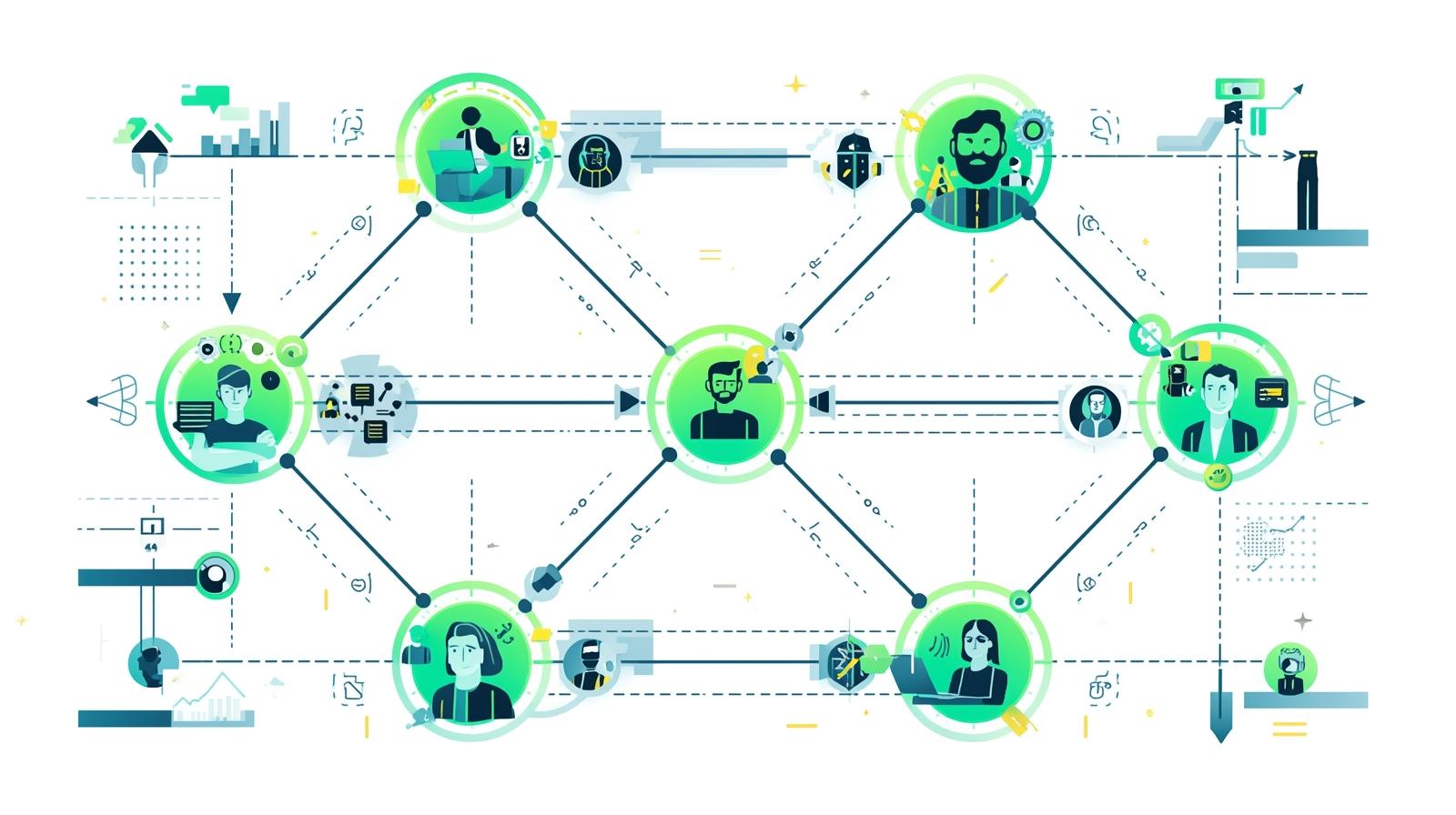
The workforce development landscape is undergoing a fundamental transformation. Traditional job training programs have long relied on standardized curricula, manual skills assessments, and relationship-based employer connections. While these approaches have helped millions of people access economic opportunity, they struggle to keep pace with rapidly evolving labor market demands, personalized learning needs, and the sheer scale of workforce challenges ahead.
Nonprofit workforce development organizations operate at the intersection of education, employment, and economic mobility. Programs like NPower, Per Scholas, and Year Up United have demonstrated that intensive training combined with wraparound support can move people from poverty to the middle class through quality job placement. However, these outcomes depend on accurately assessing participants' starting skills, tailoring training to individual needs and learning styles, tracking progress in real-time, and matching graduates with employers seeking specific competencies.
AI technologies are now making it possible to deliver these capabilities at scale. Skills assessment tools can evaluate technical and soft skills more comprehensively than traditional tests. Adaptive learning platforms can personalize training pathways based on individual progress and career goals. Predictive analytics can identify participants at risk of dropping out before they disengage. And intelligent matching systems can connect graduates with employers based on verified skills rather than just resumes and referrals.
This shift arrives at a critical moment. The move toward skills-based hiring is accelerating, with 65% of organizations now evaluating candidates based on specific competencies rather than traditional credentials. More than 90% of employers prefer candidates with microcredentials that demonstrate current, relevant skills. For workforce development nonprofits, this creates both opportunity and urgency: opportunity to help participants demonstrate their capabilities in ways employers value, and urgency to adapt programs to this new reality before participants get left behind.
Yet implementing AI in workforce development programs isn't simply about adopting new tools. It requires rethinking how you identify skills gaps, design learning experiences, measure progress, and facilitate employment connections. It demands careful attention to equity, ensuring AI doesn't inadvertently exclude the very populations your programs exist to serve. And it necessitates maintaining the human relationships and wraparound supports that distinguish effective workforce development from mere job training. This article provides a comprehensive framework for leveraging AI to transform your job training programs while preserving what makes them effective.
Understanding the Skills Gap and Assessment Challenge
Before exploring how AI can improve skills assessment, it's essential to understand why traditional approaches struggle to meet current needs. The modern labor market demands a workforce that is adaptable, digitally literate, and equipped with both technical and soft skills like communication, problem-solving, and customer service. However, at-risk individuals often struggle with limited exposure to technology, gaps in foundational job skills, and minimal professional networks.
Traditional skills assessment typically relies on intake interviews, basic computer literacy tests, and self-reported experience. These methods provide a starting point but often miss critical nuances. A participant might score well on a typing test but struggle with collaborative software tools. Another might have strong technical skills but lack the soft skills employers prioritize. Self-assessment is notoriously unreliable—people tend to overestimate abilities in areas where they're confident and underestimate skills they don't recognize as valuable.
The challenge extends beyond initial assessment. As participants progress through training, traditional programs often lack mechanisms for continuous skills validation. Instructors observe classroom performance, but this provides limited insight into how participants will perform in actual work environments. Many programs discover skills gaps only when participants struggle in job placements—far too late to address them effectively.
Employer matching compounds these challenges. Most nonprofit job training programs rely on relationships with hiring managers, job boards, and manual resume screening. While relationships remain invaluable, this approach limits scale and can perpetuate bias. A program director might connect participants with the same handful of employers they've worked with for years, missing opportunities that would be better fits. Manual resume review focuses on credentials and experience that many participants lack, overlooking the competencies they've actually developed through training.
The Current State of Skills Assessment
Traditional skills assessment methods face significant limitations in today's workforce development landscape:
- Limited depth: Basic tests measure surface-level competencies but miss nuanced skills that employers actually need
- Point-in-time snapshots: Intake assessments don't track skill development throughout training programs
- Self-reporting bias: Participants consistently overestimate or underestimate their own capabilities
- Resource constraints: Comprehensive assessment requires staff time that many programs can't afford
- Disconnect from labor market: Assessments often measure academic skills rather than workplace competencies employers seek
- Soft skills gap: Communication, teamwork, and problem-solving abilities are critical for employment but difficult to measure objectively
How AI Transforms Skills Assessment
AI-powered skills assessment represents a fundamental shift from static tests to dynamic, comprehensive evaluation that happens continuously throughout a participant's journey. Rather than relying on self-reported experience or one-time tests, AI systems can observe actual performance, identify patterns, and provide objective data about both strengths and development areas.
Modern skills assessment platforms use multiple data sources to build comprehensive competency profiles. When a participant works through online learning modules, the system tracks not just correct answers but how they approach problems, where they struggle, and how quickly they master new concepts. When they complete projects or exercises, AI can evaluate the quality of their work against industry standards. Some platforms even use natural language processing to assess soft skills through written communication and simulated workplace scenarios.
This approach provides several advantages over traditional methods. First, it's continuous rather than episodic. Instead of a single assessment at intake, the system builds an evolving picture of each participant's capabilities as they progress through training. Second, it's multidimensional, evaluating technical skills, soft skills, learning velocity, and work readiness simultaneously. Third, it's objective, reducing bias that can creep into human evaluation while still allowing instructors to add context and nuance.
The real power emerges when assessment data informs program design and participant support. If multiple participants struggle with the same concept, that signals a need to revise instructional materials. If someone shows strong technical skills but weak collaboration abilities, staff can provide targeted support. If a participant's engagement drops suddenly, the system can flag them for proactive intervention before they drop out. This creates a feedback loop where assessment drives continuous improvement at both individual and program levels.
Technical Skills Assessment
Evaluating job-specific competencies and digital literacy
- Hands-on simulations that mirror actual workplace tasks and tools
- Automated code review and project evaluation for technical training programs
- Digital literacy assessments that measure practical software proficiency
- Industry-recognized certifications with embedded AI-powered practice environments
- Adaptive testing that adjusts difficulty based on demonstrated competency
Soft Skills Evaluation
Measuring communication, collaboration, and workplace readiness
- Natural language analysis of written communication quality and professionalism
- Scenario-based simulations that evaluate problem-solving and critical thinking
- Collaboration analytics from group projects and peer interactions
- Time management and reliability tracking through assignment completion patterns
- Customer service simulations with AI-powered feedback on communication approach
Real-World Implementation: FutureFit AI
FutureFit AI demonstrates how comprehensive skills intelligence can transform workforce development programs. Their platform utilizes automated skills intelligence and recommendation systems for smarter, data-driven matches between people, programs, and jobs. The system analyzes real-time labor market intelligence at the skills level—not just job titles—to understand what competencies employers actually need.
For workforce development nonprofits, this means they can assess participants against current market demand rather than outdated occupation categories. The platform creates detailed competency profiles that track both demonstrated skills and learning velocity, helping program staff understand not just where participants are today but how quickly they're developing new capabilities. This data informs decisions about training focus, support interventions, and employer matching.
The platform also addresses a critical challenge in workforce development: helping participants understand their own skills in market-relevant terms. Many people can perform tasks but struggle to articulate their capabilities in ways employers recognize. AI-powered skills translation converts experience and training into language that appears in job descriptions, bridging the communication gap between participants and hiring managers.
Personalized Learning Pathways That Adapt to Individual Needs
Once you understand each participant's skills and learning style, AI enables true personalization—not just differentiated instruction, but learning pathways that continuously adapt based on individual progress, goals, and labor market opportunities. This represents a significant departure from cohort-based training models where everyone moves through the same sequence at the same pace.
Adaptive learning platforms adjust content difficulty, pacing, and instructional approach based on how each person learns best. If someone masters a concept quickly, the system moves them forward rather than making them wait for classmates. If someone struggles with a particular skill, the platform provides additional practice, alternative explanations, or supplementary resources. This ensures participants spend time on what they need to learn rather than reviewing what they already know or rushing through material they haven't mastered.
Career pathway recommendations add another dimension of personalization. Based on initial skills assessment, learning velocity, and labor market data, AI can suggest specific career paths that match each participant's capabilities and growth potential. Someone with strong attention to detail might be guided toward quality assurance roles. Another participant with excellent communication skills could be steered toward customer success positions. These recommendations aren't static—they evolve as the system learns more about each person's interests, strengths, and how local labor market demand shifts.
The nonprofit CareerVillage.org built exactly this kind of system with their Coach platform—an AI career coach designed for workforce programs, online learning platforms, and colleges. Coach helps individuals identify viable paths to advancement while preserving the human connection that supports confident career decisions. Rather than replacing career counselors, it extends their capacity by handling routine questions, providing 24/7 availability, and surfacing insights that inform counselor interactions.
Building Effective Adaptive Learning Systems
Key components of AI-powered personalized training
Skills Gap Analysis
Compare current competencies against target job requirements to create individualized learning plans. The system identifies not just missing skills but the optimal sequence for developing them, considering prerequisites and how different competencies build on each other.
- Real-time labor market analysis showing which skills are most in-demand locally
- Competency-based roadmaps that break large skill gaps into achievable milestones
- Alternative pathway recommendations when participants struggle with primary approaches
Adaptive Content Delivery
Adjust instructional materials, examples, and practice exercises based on how each participant learns best. The system recognizes different learning styles and presents information in formats that maximize comprehension and retention for each individual.
- Multiple content formats (video, text, interactive exercises) tailored to learning preferences
- Difficulty adjustment that challenges without overwhelming participants
- Just-in-time support resources that appear when learners show signs of struggle
Progress Monitoring and Intervention
Track engagement patterns and mastery indicators to identify participants who need additional support before they fall behind. Early warning systems enable proactive intervention rather than reactive remediation.
- Engagement tracking that flags sudden drops in activity or completion rates
- Mastery dashboards showing skills development over time with predicted completion dates
- Automated alerts to instructors when participants need human support and guidance
Implementing adaptive learning requires balancing technology with human expertise. While AI can personalize content delivery and track progress, instructors provide context, motivation, and support that machines cannot replicate. The most effective programs use AI to extend instructor capacity—handling routine assessment and content delivery so staff can focus on relationship-building, mentoring, and addressing individual challenges that require human judgment and empathy.
Consider how the Building Blocks Mentoring Program approached this challenge. Based in Memphis and Washington D.C., they partnered with GoSkills LMS to develop a flexible, engaging, and accessible learning program that helped learners gain critical job skills, improve digital proficiency, and transition into the workforce successfully. The platform provided structure and content delivery while staff focused on mentoring relationships and connecting learning to career aspirations. This hybrid model leverages technology for efficiency while maintaining the human connection that drives successful workforce development.
Intelligent Employer Matching: Connecting Skills to Opportunities
The ultimate measure of workforce development program success is meaningful employment. Yet traditional employer matching often relies on personal relationships, manual resume screening, and broad job categories that miss nuanced fit between candidate capabilities and employer needs. AI-powered matching systems transform this process by analyzing verified skills, cultural fit indicators, and labor market patterns to suggest opportunities where participants are most likely to succeed.
Modern matching platforms operate differently than job boards. Rather than asking participants to search through listings and guess which roles they're qualified for, the system proactively recommends positions based on demonstrated competencies. It considers not just current skills but learning velocity and growth potential. It analyzes job descriptions to identify core requirements versus nice-to-have qualifications, preventing participants from self-selecting out of opportunities they're actually qualified for.
The shift toward skills-based hiring makes this approach increasingly effective. Sixty-five percent of organizations now evaluate candidates based on specific competencies rather than traditional credentials like degrees or years of experience. More than 90% of employers prefer candidates with microcredentials demonstrating current, relevant skills. This creates opportunity for workforce development participants who may lack traditional credentials but have developed verified competencies through training programs.
However, implementing effective employer matching requires more than installing software. It demands building systems that capture verified skills data throughout training, maintaining relationships with employers who embrace skills-based hiring, and helping participants understand how to present their capabilities in ways hiring managers recognize and value.
Skills-First Matching
Move beyond resume keywords to verified competency matching:
- Job requirement parsing that identifies must-have skills versus preferred qualifications
- Competency mapping between training outcomes and employer needs
- Skills gap identification showing what additional training would unlock new opportunities
- Alternative job title recommendations for participants with transferable skills
Predictive Success Factors
Analyze patterns from past placements to improve future matching:
- Cultural fit indicators based on work environment preferences and company values
- Commute distance and transportation access factored into opportunity recommendations
- Career growth potential analysis showing advancement opportunities within roles
- Retention prediction modeling to prioritize placements likely to result in long-term employment
The Digital Credentials Revolution
Digital credentials and microcredentials are transforming how participants demonstrate their skills to employers. These portable, verifiable proof-of-competency credentials enable learners to match their abilities with job requirements more effectively than traditional resumes.
Using standards like CLR (Comprehensive Learner Record) and OpenBadges to issue microcredentials provides several advantages. First, they're instantly verifiable—employers can confirm that skills are real rather than self-reported. Second, they're granular, showing specific competencies rather than broad degree titles. Third, they're portable, allowing participants to aggregate credentials from multiple training sources into a comprehensive skills profile.
For workforce development programs, implementing digital credentials requires integration with your learning management system and skills assessment tools. Each time participants demonstrate mastery of a specific competency, they earn a verifiable badge that becomes part of their digital credential portfolio. These credentials then interface with employer matching systems, allowing automated identification of candidates whose verified skills match job requirements.
The impact can be significant: more than 90% of employers prefer candidates with microcredentials on their CVs. This creates powerful motivation for participants to complete training modules and demonstrate competency, while providing programs with clear evidence of outcomes that funders increasingly demand.
Opportunity@Work's partnership with SkyHive demonstrates the power of AI-driven employer matching at scale. Their Skills Mapping Academy uses real-time labor market intelligence and ethical AI to analyze labor markets at the skill level, moving beyond traditional job categories to understand what competencies actually drive employment. This enables workforce development programs to align training with market demand and connect participants to opportunities based on verified capabilities rather than credentials.
The system also addresses geographic and economic barriers. By analyzing remote work opportunities alongside local positions, AI matching can expand the range of suitable jobs available to participants. For rural workforce development programs or participants with limited mobility, this dramatically increases placement potential. The technology doesn't replace the value of local employer relationships—it extends them by identifying opportunities that might not come through traditional referral networks.
Implementation Roadmap: Building Your AI-Enhanced Workforce Development System
Implementing AI in workforce development programs requires a phased approach that builds capabilities progressively while maintaining program quality and participant support. Start with pilot initiatives that demonstrate value, then scale based on what works. This approach reduces risk, enables learning from early implementation, and builds staff confidence in new systems.
The following roadmap provides a framework for implementation, though specific timing and priorities should align with your program's unique needs, resources, and participant population. Consider this a starting point for planning rather than a rigid prescription.
Phase 1: Assessment and Planning (2-3 Months)
Document Current State
Map your existing skills assessment processes, learning pathways, and employer matching approaches. Identify pain points, bottlenecks, and areas where staff spend time on tasks that could be automated. Survey instructors and career counselors about what would help them serve participants more effectively.
Define Success Metrics
Establish baseline measurements for key outcomes: skills assessment accuracy, time to job placement, placement retention rates, participant satisfaction, and staff efficiency. These baselines enable you to measure AI impact objectively rather than relying on anecdotal impressions.
Evaluate Platform Options
Research solutions designed specifically for workforce development: FutureFit AI for skills matching, Coach for career guidance, platforms like GoSkills for adaptive learning. Prioritize systems with strong track records in nonprofits and clear pricing models. Request demonstrations focused on your specific use cases rather than generic features.
Build Internal Capacity
Identify AI champions among program staff who will lead implementation. Ensure they understand both the technology capabilities and the workforce development context. Involve frontline staff in planning to surface practical concerns and build buy-in.
Phase 2: Pilot Implementation (3-6 Months)
Start with Skills Assessment
Begin with one cohort using AI-powered skills assessment alongside your existing intake process. Compare results to understand where AI provides additional insight versus confirming what staff already knew. Use this phase to refine assessment parameters and identify integration challenges.
Test Adaptive Learning Pathways
Introduce personalized learning for a subset of technical skills training where content is most standardized. Monitor participant engagement, mastery rates, and feedback. Compare outcomes between traditional cohort-based instruction and adaptive pathways to quantify impact.
Gather Continuous Feedback
Schedule weekly check-ins with staff using new systems and monthly feedback sessions with participants. Surface usability issues, technical problems, and opportunities for improvement quickly. This rapid iteration prevents small issues from becoming major obstacles.
Document Early Wins
Capture specific examples where AI improved outcomes: a skills gap identified that would have been missed, a participant who engaged better with adaptive learning, time saved on routine tasks. These stories are essential for building support for broader implementation and demonstrating value to funders.
Phase 3: Scale and Integration (6-12 Months)
Expand to All Participants
Roll out AI-powered skills assessment and adaptive learning across all cohorts. Update intake procedures, staff training materials, and participant orientation to reflect new processes. Ensure all instructors understand how to interpret AI-generated insights and incorporate them into their teaching.
Implement Employer Matching
Introduce intelligent job matching for participants nearing program completion. Start with roles from existing employer partners who understand your program model. Gradually expand to new employers as you refine matching accuracy and build confidence in recommendations.
Integrate Systems
Connect skills assessment, learning management, and employer matching platforms to eliminate duplicate data entry and enable seamless data flow. Implement digital credential systems so participants automatically earn verified badges as they demonstrate competencies. Build dashboards that give staff holistic views of participant progress.
Establish Continuous Improvement Processes
Create regular review cycles for analyzing outcome data, refining algorithms, and updating training content based on labor market changes. Monitor for bias in assessment or matching that could disadvantage certain participant populations. Build feedback loops where employer hiring outcomes inform skills assessment priorities.
Phase 4: Optimization and Innovation (Ongoing)
Leverage Advanced Analytics
Use accumulated data to build predictive models: which participants are at risk of dropping out, which skill combinations lead to highest placement rates, which employers provide best long-term career advancement. These insights inform program design, resource allocation, and strategic planning.
Explore Emerging Capabilities
Stay current with new AI developments relevant to workforce development: voice-based skill practice for customer service roles, VR simulations for workplace scenarios, AI-powered interview preparation. Pilot emerging tools that could enhance participant outcomes or program efficiency.
Share Learning with the Field
Document your implementation journey, outcomes achieved, and lessons learned. Present at conferences, publish case studies, and contribute to sector-wide knowledge about effective AI use in workforce development. Consider joining consortiums where programs share best practices and potentially resources.
Advocate for Policy Support
Engage with policymakers about how AI can improve workforce development outcomes at scale. Support initiatives like AI Workforce Centers of Excellence that could provide infrastructure and technical assistance to programs. Use your data to demonstrate the impact of technology-enhanced workforce development on employment outcomes and economic mobility.
Addressing Common Challenges and Concerns
Implementing AI in workforce development programs raises legitimate concerns that deserve thoughtful attention. Addressing these challenges proactively—rather than dismissing or minimizing them—builds trust with staff, participants, and community partners while ensuring your AI implementation genuinely serves program mission.
Digital Divide and Technology Access
Many workforce development participants have limited technology access or digital literacy. AI-enhanced programs risk excluding the very people who need services most if technology becomes a prerequisite rather than a tool.
Solutions:
- Provide devices and internet access as part of program enrollment rather than assuming participants have them
- Build digital literacy training into curriculum rather than treating it as a prerequisite
- Maintain in-person support options for participants who struggle with online-only interactions
- Design interfaces with accessibility in mind: simple navigation, clear language, mobile-friendly layouts
- Partner with libraries, community centers, and other locations offering free technology access
Algorithmic Bias and Fairness
AI systems can perpetuate or amplify existing biases if training data reflects historical discrimination or if algorithms optimize for patterns that disadvantage certain populations. This is particularly concerning in workforce development serving communities that have faced systemic barriers.
Safeguards:
- Choose platforms designed with fairness in mind, like FutureFit AI's ethical AI approach
- Regularly audit assessment and matching outcomes by demographic groups to identify disparate impact
- Maintain human review of AI recommendations, especially for high-stakes decisions
- Use skills-based assessment rather than proxies like educational credentials that correlate with privilege
- Involve diverse stakeholders in system design and evaluation to surface issues you might miss
Staff Concerns About Job Security
Instructors and career counselors may worry that AI will replace them or diminish their professional value. These concerns can lead to resistance that undermines implementation success.
Addressing Concerns:
- Frame AI as augmentation, not replacement—technology handles routine tasks so staff can focus on higher-value interactions
- Demonstrate how AI extends staff capacity rather than reducing headcount—serve more participants with same team
- Involve staff in implementation from the beginning, soliciting input and addressing concerns transparently
- Provide training that builds staff confidence using new tools rather than assuming they'll figure it out
- Celebrate staff expertise in interpreting AI insights and applying them to individual participant needs
Cost and Resource Constraints
Many workforce development nonprofits operate with tight budgets and limited technical capacity. AI implementation can seem prohibitively expensive or complex, especially when working with limited budgets.
Practical Approaches:
- Start small with focused pilot projects that demonstrate ROI before major investment
- Seek nonprofit pricing from vendors—many offer significant discounts for workforce development organizations
- Explore pro bono support from corporate tech partners through programs like Google's AI Works for America
- Consider consortiums where multiple programs share technology costs and implementation learning
- Frame AI investment in terms of cost per successful placement rather than just technology spend
Data Privacy and Security
Workforce development programs collect sensitive personal information about participants. AI systems that process this data raise legitimate privacy and security concerns, particularly for vulnerable populations.
Protective Measures:
- Vet vendors carefully for security practices, certifications, and track records with sensitive data
- Implement data minimization—only collect and process information actually needed for program purposes
- Establish clear data governance policies about who can access what information and for what purposes
- Ensure participants understand what data is collected, how it's used, and their rights to access or deletion
- Never share participant data with employers without explicit consent and clear purpose
Measuring Impact: Demonstrating Value to Stakeholders
Funders, board members, and community partners need evidence that AI implementation improves outcomes rather than just adding technology for its own sake. Measuring impact systematically—from baseline through implementation and beyond—enables you to demonstrate value, justify investment, and continuously improve your approach.
Effective measurement tracks multiple dimensions: participant outcomes, program efficiency, staff effectiveness, and cost-effectiveness. Together, these metrics tell a comprehensive story about how AI transforms workforce development without losing sight of mission.
Participant Outcome Metrics
- Skills mastery rates: Percentage of participants achieving competency in targeted skills
- Placement rates: Percentage of graduates securing employment within 90 days
- Placement quality: Starting wages, benefits, and career advancement potential
- Retention rates: Percentage still employed after 6 and 12 months
- Completion rates: Percentage of enrollees completing full training program
- Time to employment: Average days from program completion to job start
Program Efficiency Metrics
- Participant-to-staff ratio: Number of participants served per staff member
- Administrative time savings: Hours saved on routine tasks like assessment scoring
- Personalization at scale: Ability to tailor learning while serving more participants
- Early intervention effectiveness: Success rate of proactive support for at-risk participants
- Matching efficiency: Percentage of matched opportunities resulting in interviews
- Data quality: Completeness and accuracy of participant records and outcomes tracking
Telling Your Impact Story
Raw metrics tell part of the story, but qualitative evidence brings data to life for funders, board members, and community partners. Combine quantitative outcomes with participant testimonials, staff observations, and employer feedback to create compelling narratives about AI impact.
Document specific examples where AI made a measurable difference: "Sarah's skills assessment revealed strong analytical abilities she hadn't recognized. The system recommended a data analysis career path she hadn't considered. Six months after completing training, she's employed as a junior data analyst earning $55,000—$25,000 more than her previous retail position."
Compare your outcomes to sector benchmarks when possible. If traditional workforce programs place 65% of graduates in jobs within 90 days and your AI-enhanced program achieves 82%, that differential demonstrates technology impact. If retention at 12 months improves from 70% to 85%, that suggests better job matching.
Be honest about challenges and learning as well as successes. Stakeholders appreciate transparency about implementation difficulties, unexpected issues, and how you adapted. This credibility strengthens the overall narrative and demonstrates thoughtful, iterative improvement rather than unrealistic claims of perfect implementation.
The Future of AI-Enhanced Workforce Development
AI capabilities in workforce development are evolving rapidly. Voice-based AI systems like those from Viamo are enabling skills training in communities without reliable internet or smartphones. Virtual reality simulations are creating immersive workplace training environments. Multi-agent AI systems are beginning to coordinate complex processes from intake through placement with minimal human intervention.
Policy support is expanding as well. Initiatives like Google's AI Works for America demonstrate corporate commitment to workforce development technology. Congressional proposals for AI Workforce Centers of Excellence would create regional hubs providing infrastructure and technical assistance to programs. The Department of Labor's focus on AI literacy acknowledges that workforce development itself is becoming an AI-enabled field.
Yet technology advancement alone won't determine success. The most effective workforce development programs will be those that leverage AI to extend human capability rather than replace it—using technology to handle routine tasks, provide data-driven insights, and operate at scale while preserving the relationships, mentoring, and wraparound support that enable true economic mobility.
The labor market transformation toward skills-based hiring creates unprecedented opportunity for workforce development nonprofits. As employers move away from requiring traditional credentials toward valuing verified competencies, the participants you serve—often excluded by credential requirements—can compete on more equal footing. Digital badges and microcredentials provide portable proof of skills that participants can carry throughout their careers.
This shift requires workforce development programs to evolve from providing one-time training to enabling continuous learning and skill validation. AI makes this possible by creating personalized learning pathways that adapt as labor markets change, tracking skills development over time, and facilitating ongoing connections between workers and opportunities throughout their careers rather than just at program completion.
Conclusion: Technology in Service of Economic Mobility
AI is transforming workforce development from a resource-constrained sector struggling to keep pace with demand into a field capable of delivering personalized, effective training at scale. Skills assessment technologies provide objective, comprehensive evaluation of participant capabilities. Adaptive learning platforms tailor training to individual needs and learning styles. Intelligent matching systems connect graduates with employers based on verified competencies rather than credentials many participants lack.
Yet technology alone is insufficient. The power of AI in workforce development lies in how it extends the capacity of skilled professionals to serve more participants more effectively. Assessment data only creates value when instructors use it to personalize support. Adaptive learning only succeeds when combined with mentoring relationships that motivate persistence. Employer matching only results in sustainable employment when wrapped in career counseling and workplace readiness development.
Implementation requires thoughtful planning, phased rollout, continuous refinement, and unwavering attention to equity. The goal isn't adopting AI because it's new or impressive—it's leveraging technology to help more people access economic opportunity, develop marketable skills, and build sustainable careers that move them and their families toward financial stability.
As the workforce development field continues evolving, programs that successfully integrate AI while preserving human connection will be best positioned to meet the scale of need ahead. With six million workers needed by 2033 and employers struggling to find qualified candidates, technology-enhanced workforce development isn't optional—it's essential infrastructure for economic mobility and community prosperity. The question isn't whether to adopt AI, but how to implement it in ways that genuinely serve the mission of creating pathways from poverty to opportunity for everyone who needs them.
Ready to Transform Your Workforce Development Program?
One Hundred Nights helps workforce development nonprofits implement AI-powered skills assessment, adaptive learning, and intelligent employer matching that improves outcomes while preserving the human connection that makes your work transformative. We understand the unique challenges of serving participants with barriers to employment and design solutions that create equity rather than perpetuate disadvantage.