
Perplexity Computer: When AI Agents Run Other AI Agents and What It Means for Nonprofits
In February 2026, Perplexity AI launched a product that fundamentally reframes what software can do. Rather than a smarter chatbot, Perplexity Computer is an orchestration platform that coordinates 19 specialized AI models through autonomous sub-agents. Understanding this architecture is not just a technology exercise. It signals the direction the entire AI industry is heading, and nonprofit leaders who grasp it now will be positioned to use it before their peers have finished reading the press release.
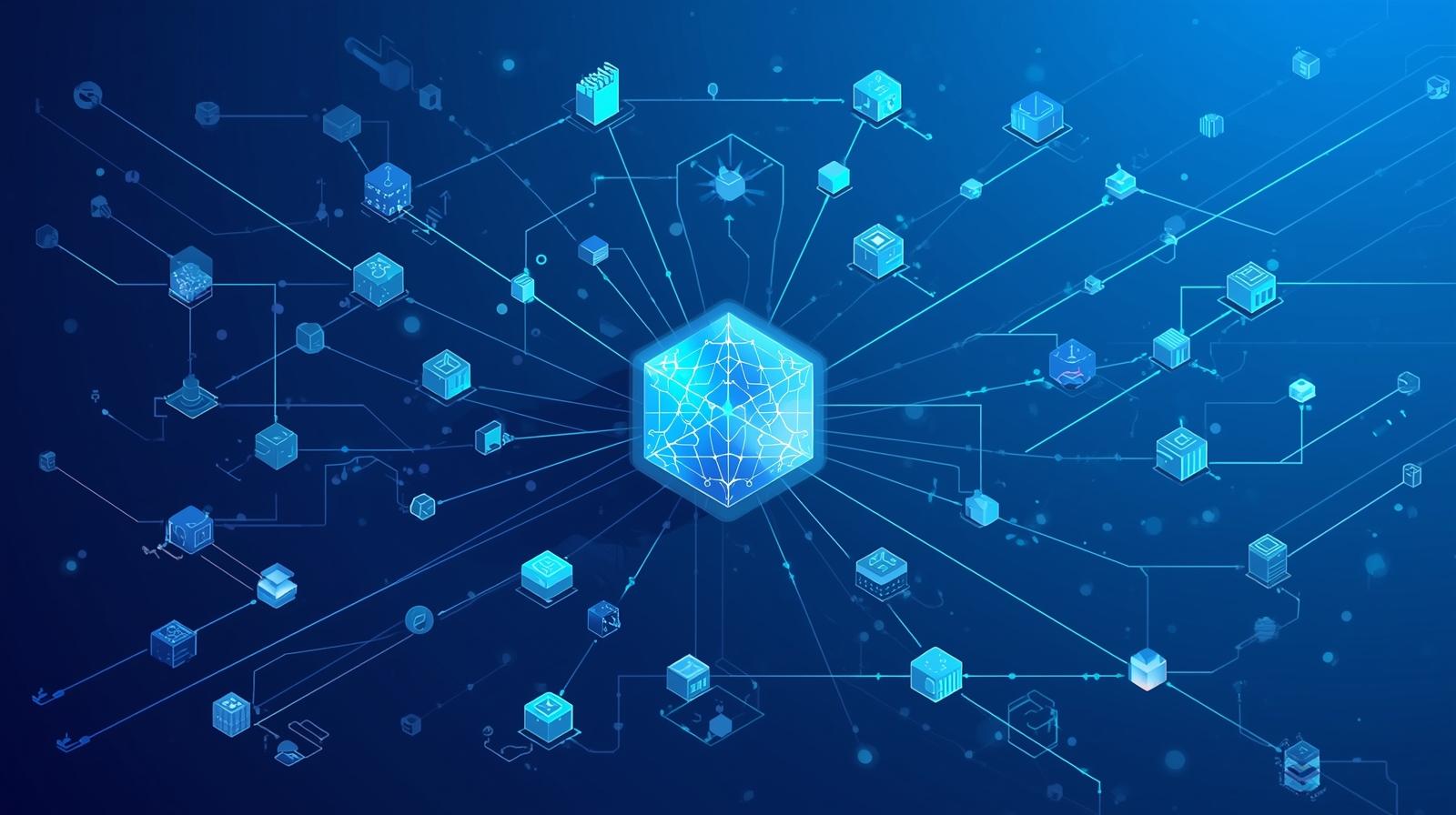
For the past three years, the dominant metaphor for AI in the workplace has been the assistant. You ask, it answers. You prompt, it responds. The relationship is fundamentally reactive. That metaphor is now changing. Perplexity Computer, launched on February 25, 2026, is built around a completely different idea: AI as a worker that takes initiative, decomposes complex tasks into parts, assigns those parts to specialized sub-agents, and delivers a finished result without requiring a human to direct every step.
This is what the industry calls "agentic AI," and while the concept has been discussed for years in research circles, Perplexity Computer is among the first consumer-accessible products to make it genuinely practical at scale. It coordinates Claude Opus 4.6 for reasoning and orchestration, Google Gemini for deep research, xAI's Grok for fast lightweight tasks, OpenAI's models for long-context recall, and specialized models for video and image generation, all within a single cloud-based environment that users can access from a smartphone, a Slack message, or a web browser.
For nonprofits, the implications are significant. The staffing challenges that have defined the sector since 2020 are not going away. Demand for services is rising while budgets remain constrained and burnout among mission-driven staff is an ongoing crisis. Agentic AI, at its best, offers a way to scale what a small team can accomplish without simply grinding harder. But it also introduces new risks around data governance, vendor dependency, and the kind of oversight failures that can damage community trust. This article examines both sides honestly.
We will walk through what Perplexity Computer actually does, explain the architecture of multi-agent AI systems in plain language, map out the most valuable use cases for nonprofits, address the real barriers to adoption that most organizations face, and give you a practical framework for deciding whether and how to engage with these tools. Whether your organization is ready to experiment now or watching from a distance, understanding this shift is worth your time.
What Perplexity Computer Actually Does
Perplexity AI built its reputation as an AI-powered search engine that synthesizes information from across the web rather than returning a list of blue links. Perplexity Computer represents a significant strategic pivot: from answering questions to completing jobs. The company describes it as a "general-purpose digital worker" and a "cloud-based operating system" for AI work, and those descriptions are not marketing hyperbole. They reflect a genuine architectural difference from what has come before.
When a user submits a task to Perplexity Computer, the system does not route it to a single AI model. Instead, Claude Opus 4.6 serves as the central orchestration engine, interpreting the user's goal, breaking it into subtasks, and determining which specialized model should handle each piece. A research subtask goes to Gemini. A coding subtask goes to Claude. A fast retrieval task goes to Grok. Image generation goes to a dedicated visual model. These sub-agents can run in parallel or in sequence, depending on whether one task depends on the output of another. The orchestrator then assembles the results into a coherent output and delivers it to the user.
What makes this distinct from simply having multiple browser tabs open with different AI tools is that the orchestration is automatic and the agents share context. The user does not manage the handoffs. They do not need to copy output from one tool and paste it into another. They set a goal, and the system figures out how to achieve it. Workflows can run for hours or even days in the background while the user works on something else. The platform includes over 400 app integrations, which means agents can take actions in external systems, updating a CRM, sending an email, filing a document, not just generating text.
How Perplexity Computer Coordinates Its Agents
The 19-model architecture and what each component does
Rather than relying on a single model to handle everything, Perplexity Computer treats AI models as interchangeable specialized tools. The orchestrator assigns each subtask to whichever model handles it best:
- Claude Opus 4.6 (Anthropic): Central orchestrator and reasoning engine. Interprets the user's goal, decomposes it into subtasks, manages handoffs between sub-agents, and assembles the final output. Also handles complex coding tasks.
- Google Gemini: Deep research tasks requiring synthesis across large volumes of information, long-context document analysis, and queries that benefit from Google's web index.
- xAI Grok: Fast, lightweight tasks where speed matters more than depth. Handles quick retrieval, short-form summaries, and latency-sensitive subtasks.
- OpenAI models: Long-context recall for tasks requiring memory across extensive documents or conversation history. Handles expanded web search queries.
- Google Veo and image models: Visual content generation for video, graphics, and image creation tasks embedded within larger workflows.
- 400+ app integrations: Tool-use agents that take actions in external systems, including CRM updates, email delivery, file management, calendar scheduling, and form submissions.
Perplexity Computer runs entirely in a cloud-based sandbox, which the company argues is a security advantage over competitors like OpenAI's Operator or Anthropic's computer use feature, both of which access a user's local machine. A misconfigured agent in Perplexity Computer cannot access your local files or network resources. Any security failure is contained within Perplexity's isolated environment. This is a meaningful distinction for organizations handling sensitive data, though it does not eliminate all data privacy concerns: any data you share with the platform still flows through Perplexity's servers.
The pricing as of launch is $200 per month at the Perplexity Max tier, with rollout planned to the $20 per month Pro tier. Enterprise Max subscriptions also include access. For most nonprofits, $200 per month per user is not casual spending, which means the practical question is always whether the productivity gains justify the cost, and for which roles within the organization.
Note: Prices may be outdated or inaccurate.
Understanding the Architecture: Agents Running Agents
The phrase "AI agents running other AI agents" sounds like science fiction, but the underlying concept is actually borrowed from how human organizations work. Think of a project manager who receives a complex assignment, breaks it into pieces, delegates each piece to the team member best suited for it, coordinates the timeline, resolves conflicts when pieces don't fit together cleanly, and delivers the finished result to the client. The project manager does not do all the work, but they do ensure all the work gets done correctly.
An orchestrator agent works the same way. It receives the user's high-level goal, interprets what achieving that goal requires, decomposes it into subtasks, dispatches those subtasks to specialized sub-agents, monitors their progress, handles errors or unexpected outputs, and assembles the final result. The sub-agents are specialized for specific types of work: research, writing, code execution, web browsing, database queries, external API calls. Each sub-agent has a focused "working memory" that contains only what it needs to complete its assigned task, which is both more efficient and more reliable than asking one model to hold an entire complex project in mind simultaneously.
One of the most important practical advantages of this architecture is parallelism. A human doing grant research, proposal writing, and budget preparation must do these tasks sequentially because there is only one of them. A multi-agent system can do all three simultaneously, with one agent scanning funder databases, another drafting narrative sections based on the organization's prior proposals, and a third building a budget template, all running at the same time. For time-sensitive workflows, this parallel execution can compress a multi-day process into hours.
Orchestrator vs. Sub-Agent Roles
The orchestrator manages the big picture. Sub-agents execute specific tasks:
- Orchestrator: Interprets goals, plans approach, delegates tasks, merges outputs, resolves conflicts
- Research sub-agents: Web search, database queries, document analysis
- Writing sub-agents: Draft generation, editing, formatting, translation
- Action sub-agents: CRM updates, email sending, form submission, calendar management
- Verification sub-agents: Fact-checking, quality review, compliance checks
Why Parallelism Matters
Sequential vs. parallel execution changes what's possible for small teams:
- Human workers doing tasks A, B, and C sequentially: 3x time units
- Three parallel sub-agents doing tasks A, B, and C simultaneously: 1x time unit
- Real impact: a 3-day grant research and drafting process becomes a 4-hour background task
- Staff capacity shifts from execution to review, judgment, and relationship-building
It is worth understanding how Perplexity Computer fits into the broader agentic AI landscape. It is not the only product doing this. Microsoft Copilot Studio lets organizations build custom agents within the Microsoft 365 ecosystem, which is relevant for nonprofits already holding Microsoft licenses. Salesforce Agentforce automates prospect research, donor engagement, and marketing workflows for organizations on Salesforce. CrewAI is an open-source framework that developers can use to build custom multi-agent pipelines for specific organizational needs. Bonterra Que, launched in October 2025, is purpose-built for the nonprofit sector and offers agentic capabilities specifically for grant management and fundraising workflows.
Perplexity Computer's differentiation is accessibility and breadth. It does not require a developer to configure it, it is not locked to a single software ecosystem, and its 19-model architecture means the right tool for each subtask is selected automatically rather than by the user. For nonprofit staff without technical backgrounds, that accessibility matters significantly. The tradeoff is cost and the fact that you are trusting Perplexity to make good routing decisions, rather than controlling those decisions yourself.
Where Agentic AI Delivers Real Value for Nonprofits
The case for agentic AI in the nonprofit sector starts with a structural reality: most organizations are chronically under-resourced relative to the complexity of what they are trying to accomplish. A development director juggling 40 active funder relationships, a program manager tracking outcomes across dozens of clients, a communications lead trying to maintain consistent presence across multiple channels while running actual programs, these are not failures of individual effort. They reflect a system where demand perpetually outpaces capacity. Agentic AI does not fix that system, but it can meaningfully change the ratio of what a given team can manage.
The highest-value applications are those where the work is high-volume, information-intensive, and follows a repeatable pattern even if the specific content varies. Grant research and writing is the clearest example. A development team can train an agentic system on the organization's past proposals, theory of change, program data, and reporting history. The agents can then scan funding databases, identify matches based on mission alignment and eligibility criteria, research the specific priorities of shortlisted funders, and produce first drafts of proposals tailored to each funder's interests and requirements. A development director's role shifts from doing the research and writing to reviewing, refining, and building the funder relationships that no agent can replace.
Grant Research and Writing
The highest-ROI agentic application for most nonprofit development teams
A multi-agent grant workflow can run simultaneously across multiple components that a human would address sequentially. One agent scans foundation databases (Candid, Foundation Directory Online, funder websites) and identifies grants matching your mission, geography, budget size, and eligibility. A second agent researches the specific priorities and recent giving patterns of shortlisted funders, surfacing alignment points and potential mismatches. A third agent drafts narrative sections using your organization's prior proposals as source material, maintaining your voice while tailoring content to each funder's language and priorities. A fourth agent builds budget narratives and compliance checklists. The development director reviews, refines, and approves, rather than starting from a blank page.
- Platforms purpose-built for this: Bonterra Que (October 2025), Grantable, and similar tools that train on your organization's prior proposals
- General-purpose agentic tools like Perplexity Computer can also handle this workflow with appropriate context provided upfront
- Human oversight remains essential: agents cannot assess relationship dynamics, gauge program readiness, or make strategic decisions about which grants to prioritize
Donor Segmentation and Re-engagement
Granularity of personalization that was previously impractical for small teams
Effective donor stewardship requires personalization at a scale that is genuinely difficult for a small development team to achieve manually. Agentic systems can segment donor databases at a level of granularity that most teams have never attempted. Consider an instruction like: "Identify donors who gave $500 or more in 2024, lapsed in the last 90 days, attended at least one event in the past two years, and are located within 50 miles of our main location. Build a personalized re-engagement sequence for each of them that references their history with us." An agent can execute that analysis and generate those communications, something that might represent weeks of manual work, in a matter of hours.
- Salesforce Agentforce automates wealth indicator tracking and philanthropic event monitoring for major gift prospect identification
- Donorbox AI and similar platforms apply agentic logic to donation patterns to surface upgrade and lapse-prevention opportunities
- Requires a clean, well-maintained donor database as a prerequisite, data quality problems compound in agentic systems
Impact Measurement and Reporting
Turning scattered program data into coherent evidence for funders and boards
Nonprofit program teams often collect more data than they have capacity to analyze. Intake forms, case notes, service records, survey responses, attendance logs, and outcome assessments accumulate across systems without being synthesized into actionable insights. Agentic systems can scan these sources continuously and surface patterns: which interventions are producing the outcomes that funders care about, which client segments are being underserved, where service delivery is falling behind target goals. This builds the evidence base needed for grant reports, board presentations, and strategic planning in a fraction of the time required for manual analysis.
- Agents can generate draft grant reports by pulling data from program management systems and matching it against grant requirements
- Early warning systems: agents can flag when a program is trending below target metrics before the end of a grant period
- Board reporting: agents can synthesize quarterly data into board-ready summaries, reducing a two-day prep process to a review-and-refine workflow
Administrative Automation and Volunteer Management
Freeing staff from high-volume, low-judgment tasks
The administrative burden that consumes nonprofit staff time is not usually composed of complex, high-stakes decisions. It is scheduling, follow-up emails, data entry, compliance documentation, meeting summaries, and coordination logistics. Agentic systems can handle most of this with minimal oversight. Volunteer management is a strong specific example: matching volunteers to opportunities based on skills and availability, sending scheduling reminders and shift confirmations, identifying coverage gaps before they become problems, and flagging volunteers who have gone quiet for re-engagement outreach. All of these tasks follow predictable patterns that agents can manage reliably.
- Meeting summaries and action item tracking: agents can join calls, produce summaries, and create follow-up tasks automatically
- Compliance documentation: agents can monitor grant requirements, flag approaching deadlines, and draft required reports using program data
- Intake processing: agents can handle initial client intake forms, verify eligibility criteria, and route cases to appropriate program staff
The Risks Nonprofit Leaders Must Take Seriously
The productivity case for agentic AI is genuinely compelling. The risk case is also real, and responsible nonprofit leaders need to understand both before deploying these systems. The core challenge with agentic AI is that the same autonomy that makes it powerful, the ability to act without human direction at each step, also means that errors, misconfigured parameters, or bad data can propagate before anyone notices. A human assistant who is about to send a poorly personalized email to 500 donors can be stopped with a quick "wait, let me review that first." An agent that has already sent those emails cannot be.
Research from McKinsey found that most organizations deploying agentic AI have encountered risky behaviors from their agents, including improper data exposure, unauthorized access to systems, and actions that exceeded what the agent was intended to do. For nonprofits working with vulnerable populations, including clients experiencing housing instability, domestic violence, mental health crises, or immigration challenges, the stakes of a data exposure incident are not just reputational. They can directly harm the people the organization exists to serve.
Critical Risk Areas for Nonprofit Leaders
- Data privacy and client confidentiality: Agentic systems process data at scale, often pulling from multiple sources. Any sensitive client data included in an agent's context, whether intentionally or because it existed in a connected system, can flow through the vendor's servers. Nonprofits handling protected health information (HIPAA), children's data (COPPA), or immigration records have particularly acute exposure here.
- Autonomy without oversight: Agents make decisions without human review at each step. For consequential outputs, including grant submissions, donor communications, and public-facing content, human-in-the-loop checkpoints are essential. The system should pause and require approval before taking irreversible actions.
- Bias amplification: Agents trained on or working with biased data can perpetuate and amplify inequities at scale. For organizations working on equity-focused missions, an agent that subtly deprioritizes certain demographic groups in service delivery recommendations is a serious problem, and one that may not be immediately visible.
- Vendor dependency and pricing risk: Relying heavily on a specific platform creates exposure to pricing changes, pivots in the vendor's business model, or service discontinuation. The current $200 per month price point for Perplexity Computer is an early-market rate that may not remain stable as the product matures.
- Data quality compounding: Agentic systems are only as good as the data they can access. An agent working from a poorly maintained donor database, incomplete program records, or outdated contact information will produce outputs that are plausible but wrong. Errors in agent outputs tend to be harder to catch precisely because they look professionally formatted.
The governance response to these risks is not to avoid agentic AI entirely. It is to deploy it thoughtfully, starting with bounded, low-stakes workflows where errors are easy to catch and correct, and progressively expanding to higher-stakes applications as the organization builds confidence and oversight capacity. An internal AI champion who understands both the technology and the organization's specific data governance requirements is invaluable in this process.
Organizations should establish clear policies about which data systems agents can access, require human review before agents take irreversible external actions, and build audit trails that allow reviewing what an agent did and why. These are not onerous requirements, they are the same governance principles that apply to any powerful organizational tool. The key difference with agentic AI is that the speed and scale of potential errors is higher, which raises the importance of getting the governance structure right before something goes wrong rather than in response to it.
Honest Assessment: Where Most Nonprofits Actually Stand
The technology press covering Perplexity Computer and its competitors tends to write for early adopters with technical backgrounds and enterprise budgets. The nonprofit reality is more complicated. Based on TechSoup's 2025 AI Benchmark Report, which surveyed over 1,300 nonprofit professionals, the sector's AI adoption is uneven in ways that are important to understand before setting strategy.
The majority of nonprofits are exploring AI tools, but meaningful adoption, defined as integrated use in regular workflows, is concentrated among larger organizations. Nonprofits with budgets over $1 million are nearly twice as likely to be actively adopting AI tools compared to smaller organizations. More than half of nonprofit leaders report that their staff lack the expertise needed to use or evaluate AI effectively. And more than 84% of organizations that are actively investing in AI say they need additional funding to sustain their AI work. This is not a sector confidently marching into the agentic future. It is a sector experimenting carefully under significant resource constraints.
The gap is widening. Bridgespan has documented a "growing AI divide between social sector organizations" in which well-resourced nonprofits are pulling ahead. Early adopters are compressing grant research timelines, improving donor retention rates, and freeing senior staff from administrative work. Organizations that are not engaging with these tools are not holding steady. They are falling behind relative to peers who are. This does not mean every organization should rush to implement Perplexity Computer next month. It means the window for thoughtful, deliberate adoption is open now, and the cost of waiting is not zero.
What Is Accessible Right Now by Organization Size
A realistic view of entry points for different resource levels
Small Nonprofits (under $500K budget)
- General AI assistants (Claude, ChatGPT, Gemini) at $20-30/month per user for specific task assistance
- Grant writing assistants like Grantable that train on your specific proposals
- Microsoft 365 Copilot agents at no additional cost for existing Microsoft 365 subscribers
- TechSoup discounts on AI platforms that reduce per-seat costs significantly
Mid-Sized Nonprofits ($500K-$5M budget)
- Bonterra Que for agentic grant management and fundraising workflows
- Salesforce Agentforce for donor research and engagement automation (for existing Salesforce users)
- Perplexity Computer Pro tier (planned) for staff in high-output roles like development or communications
- Pilot programs with AI workflow automation vendors that offer nonprofit pricing
Large Nonprofits ($5M+ budget)
- Perplexity Computer Max tier for key staff across development, communications, and program teams
- Custom multi-agent systems built with frameworks like CrewAI or Microsoft AutoGen for organization-specific workflows
- Enterprise AI platforms with dedicated support and nonprofit-specific customization
A Practical Framework for Nonprofit Leaders
The consensus advice from practitioners who have implemented agentic AI in resource-constrained organizations is consistent: start small, start bounded, and build from demonstrated results. The temptation with a technology as capable as Perplexity Computer is to think about comprehensive transformation, automating everything at once. That approach tends to produce expensive, confusing failures. The approach that works is selecting one specific workflow that is high-volume, time-consuming, and follows a repeatable pattern, building a well-governed agent for that workflow, and demonstrating value before expanding.
Before deploying any agentic system, organizations need to do the unglamorous preparation work that most technology implementations skip. This means auditing which data systems the agents will access and ensuring that sensitive client data is appropriately segmented. It means establishing written policies about what categories of agent actions require human approval before execution. It means identifying who within the organization will be responsible for reviewing agent outputs, monitoring for errors, and escalating problems. And it means thinking carefully about funder communication: if your grant proposals are being drafted by an AI agent, does your funder need to know? For most funders, transparency about AI-assisted work is increasingly expected.
The internal capacity questions are equally important. An organization that has not yet worked through AI adoption resistance among its staff should not deploy autonomous agents before doing that work. Staff who do not understand what an agent is doing will not be effective at reviewing its outputs or catching its errors. The technical investment in agentic AI will only generate returns if the human capacity to work alongside agents is in place. This means training, it means honest conversations about what the technology can and cannot do, and it means framing agents as tools that make staff more effective rather than as replacements.
A Step-by-Step Entry Framework for Nonprofits
Phased approach to building agentic AI capacity without overextending
- Step 1: Identify one bounded, high-value workflow. Look for tasks that are high-volume, repeatable, and currently consuming significant staff time. Grant prospect research, donor re-engagement analysis, and program report generation are good starting candidates.
- Step 2: Audit your data before connecting any agent to it. Know exactly what data the agent will be able to access. Ensure that sensitive client records are not in systems the agent can reach unless your data governance framework explicitly addresses how to handle that.
- Step 3: Design human-in-the-loop checkpoints for high-stakes outputs. Define which agent outputs require human approval before becoming final. Grant submissions, donor communications, and public-facing content should always go through a human reviewer.
- Step 4: Run a 60-day pilot with clear success metrics. Measure time saved, error rates in agent outputs, and staff confidence with the tool. Establish what "good" looks like before you start so you can objectively evaluate the results.
- Step 5: Document what worked, what failed, and what you learned. Institutional knowledge about how your agents perform is valuable and should be preserved as you expand. The team members who used the tools during the pilot are your most important resource for the next phase.
- Step 6: Expand based on demonstrated results, not vendor promises. Use the actual outcomes from your pilot to make the case internally for expanded investment. Board members and skeptical staff are more persuadable by concrete results from your organization than by industry case studies.
For nonprofits that have already built a foundation of AI literacy, as described in the path from the nonprofit leader's guide to AI, agentic tools represent the next natural evolution. The transition from AI assistant to AI agent is not a total discontinuity. Organizations that have learned to write effective prompts, evaluate AI outputs critically, and maintain staff confidence in AI-assisted work are well positioned to extend those skills into agentic contexts. The new element is not the AI, it is the autonomy, and managing that autonomy well is the core new competency the technology requires.
The Bigger Picture: What This Shift Signals
Perplexity Computer is not a singular product in isolation. It is a signal about where the AI industry is heading at a pace that no longer allows for a casual pace of adoption. The software that manages organizational workflows, coordinates communications, and processes information is increasingly going to have agentic capabilities built into it, whether organizations actively choose to enable them or not. Microsoft is embedding agents throughout Office 365. Salesforce is making Agentforce a core part of its CRM platform. Google is building agentic features into Workspace. The question is not whether nonprofits will encounter agentic AI in their tools, but whether they will encounter it with a governance framework in place or not.
This also means the skills that matter most are changing. The most valuable staff capability in an agentic AI environment is not technical ability to configure the agents. It is judgment: the ability to evaluate whether an agent's output is accurate, appropriate, and aligned with the organization's mission and values. It is the ability to catch what the agent gets wrong before it causes harm. And it is the relational intelligence that agents genuinely cannot replicate: the funder relationship cultivated over years, the community trust earned through consistent presence and follow-through, the colleague who needs to be heard rather than processed.
This is, ultimately, a more hopeful framing than the one that treats AI as a threat to nonprofit employment. Agentic AI does not eliminate the need for the people who do this work. It changes what those people spend their time on. A development director whose days were consumed by grant research and first drafts can now spend those hours on funder relationships that actually move grants forward. A program manager whose week was dominated by compliance documentation can now focus on program quality and client outcomes. The technology compresses the administrative overhead of the work. The mission-critical human element remains.
For organizations thinking about how to integrate AI into their strategic planning, agentic AI deserves a dedicated conversation at the leadership and board level. Not because every organization needs to deploy Perplexity Computer this quarter, but because understanding the direction of travel in the technology landscape is a fundamental responsibility of strategic leadership. The organizations that engage with these tools thoughtfully, starting small, building governance, expanding from results, will be better positioned to serve their missions in 2027 and 2028 than those that waited until the technology felt entirely settled.
Conclusion
Perplexity Computer, launched on February 25, 2026, is a concrete embodiment of the shift from AI as assistant to AI as worker. By coordinating 19 specialized models through an orchestration architecture that manages subtasks in parallel, it offers a genuine preview of how software will increasingly operate: not waiting for human direction at each step, but pursuing goals autonomously within defined parameters. For nonprofit leaders trying to understand where AI is heading and what it means for their organizations, this product is worth understanding even if it is not the right tool for your organization today.
The highest-value applications for nonprofits, grant research and writing, donor re-engagement, impact measurement, and administrative automation, are real and proven. The risks, particularly around data privacy, oversight failures, and vendor dependency, are equally real and require proactive governance rather than reactive response. The path forward for most organizations is not comprehensive transformation but disciplined experimentation: one bounded workflow, rigorous oversight, measured results, and expansion from demonstrated value.
The sector is in the middle of a transition that will reshape what nonprofit work looks like at the operational level. The organizations that navigate it most successfully will be those that engage with intellectual honesty, deploying these tools where they genuinely help, maintaining human judgment where it genuinely matters, and building the internal capacity to tell the difference.
Ready to Explore Agentic AI for Your Organization?
One Hundred Nights helps nonprofit leaders navigate the shift from AI assistants to autonomous AI systems. We can help you identify the right entry points, build governance frameworks, and design pilot programs that deliver real results without unnecessary risk.