
When Beneficiaries Ask "Was I Talking to a Person?": Scripting an Honest Answer
Sooner or later, someone you serve will pause mid-conversation and ask the question directly: am I talking to a real person, or a machine? How your organization answers in that moment says more about your values than any policy page ever will. This guide helps you prepare an honest, humane, and consistent response, so the question never catches your team off guard and never costs you a relationship you have worked hard to build.
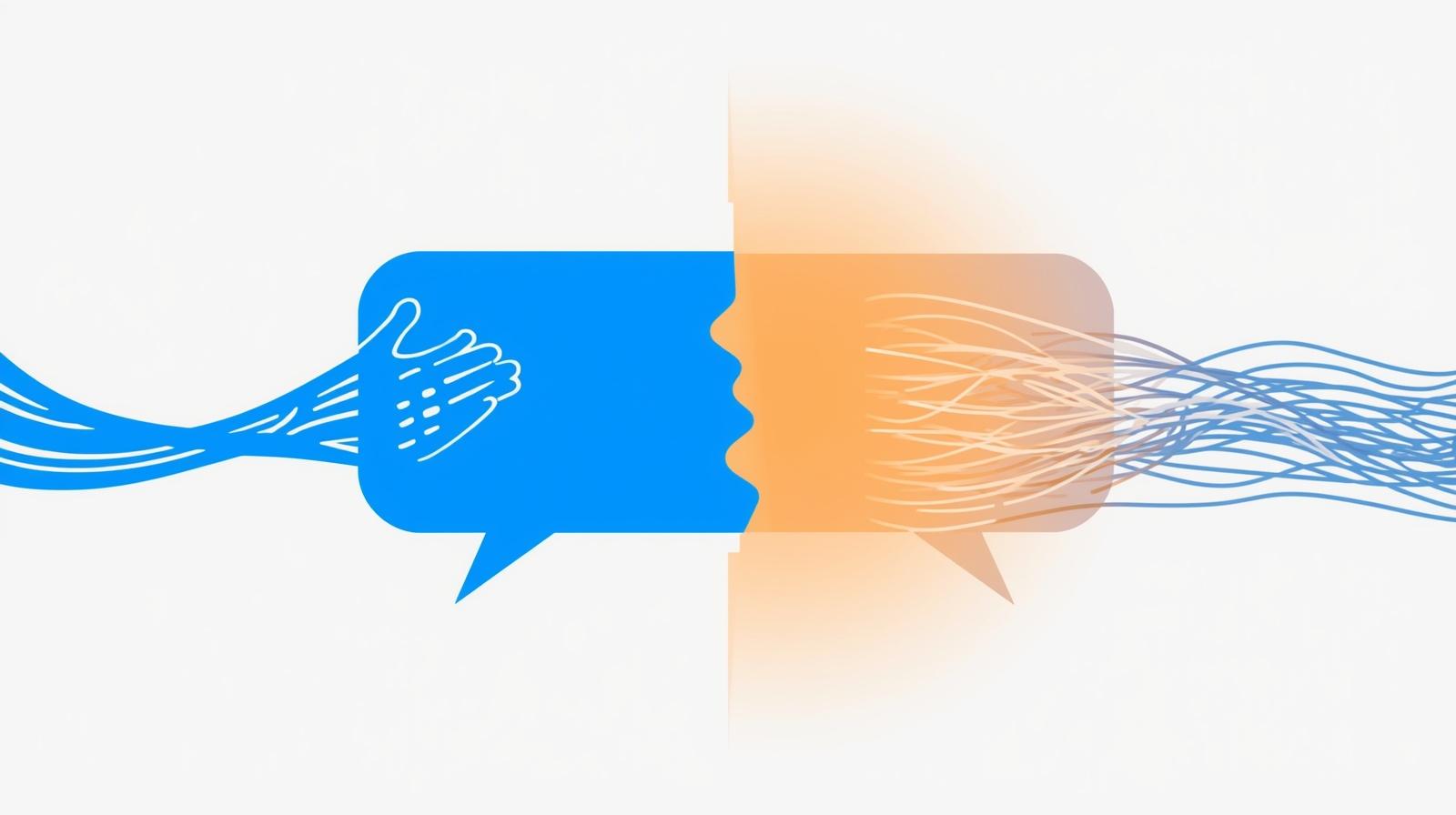
As more nonprofits route intake forms, appointment reminders, FAQ chats, and first-line support through AI, the people on the other end are noticing. The writing is a little too smooth, the reply a little too instant, the availability a little too constant. Curiosity turns into a direct question, sometimes typed into a chat window and sometimes asked of a staff member afterward: was that a person, or was it AI? The honest answer is not difficult to give, but it is surprisingly easy to fumble if no one has thought about it in advance.
The stakes are higher for nonprofits than for most businesses. The people you serve often come to you at a vulnerable moment, seeking help with housing, health, legal trouble, food, or crisis. Trust is the currency of that relationship, and a beneficiary who later feels deceived about who or what they were talking to does not just lose confidence in one interaction. They may stop reaching out altogether, tell others in their community, and carry the impression that your organization was willing to mislead them. An honest answer, prepared and delivered well, protects against all of that.
This is also increasingly a legal question, not only an ethical one. A wave of 2026 state laws now requires clear disclosure when someone is interacting with an AI system in certain contexts, and the strongest of them carry real penalties. The good news is that the legal floor and the ethical ceiling point in the same direction: tell people the truth, clearly, at the right moment, and give them an easy path to a human. This guide turns that principle into practical scripts and policies your team can use today.
It pairs naturally with our broader guidance on where nonprofits should label AI use and where they shouldn't and on building public trust in your AI practices. Here we zoom in on a single, recurring moment: the question itself, and how to answer it honestly.
Why This One Question Carries So Much Weight
When a beneficiary asks whether they were talking to a person, they are rarely just curious about the technology. The question usually carries a deeper concern underneath it. Understanding what that concern actually is helps you answer the real question, not just the surface one.
"Did anyone actually hear me?"
For someone in distress, the worry is that their situation was processed rather than understood. They want to know that a human being is aware of their need and accountable for it. A good answer reassures them that even if an AI tool helped with the first step, a person stands behind the work and can be reached.
"Where did my information go?"
People sharing sensitive details, immigration status, a health condition, a domestic situation, want to know whether their words were fed into a system, stored somewhere, or seen by a company. Honesty here is also a privacy disclosure, and it should connect to a clear, plain explanation of how their data is handled.
"Can I trust what I was told?"
If an AI tool gave them guidance on benefits, eligibility, or next steps, they may reasonably wonder whether the information was accurate and whether a person checked it. A strong answer distinguishes between what the tool handled and where human review applies, so they know how much weight to give what they heard.
Notice that none of these underlying concerns are satisfied by a defensive or evasive answer. They are satisfied by transparency about what the tool does, reassurance that a human is reachable and accountable, and a clear route to get one. That is the shape every good script in this guide takes.
The Legal Floor: What 2026 Disclosure Rules Now Require
Disclosure used to be purely a matter of ethics and reputation. In 2026 it is increasingly a matter of law, and the trend is moving in one direction. A growing number of U.S. states now require operators of certain AI systems to disclose clearly that a user is not communicating with a human. California's companion-chatbot statute, which took effect at the start of 2026, requires conspicuous disclosure for systems designed for ongoing human-like interaction and even allows individuals to sue over violations. New York's companion-model law, effective late 2025, pairs disclosure requirements with obligations to detect and respond to signs of self-harm. Other states, including Colorado, have moved to require that consumers be told when they are dealing with an AI system, with narrow exceptions for cases where it would be obvious to any reasonable person.
The details differ by state and by the kind of system involved, and many of these laws were written with consumer chatbots in mind rather than nonprofits specifically. But the underlying expectation now reaches any organization deploying conversational AI with the public. If your chatbot, voice agent, or automated messaging could leave a reasonable person believing they spoke with a human, the safe and increasingly required course is to disclose that it is AI. For nonprofits operating internationally, the EU's rules add another layer, which we cover in our guide to how nonprofits must label AI-generated content under Article 50.
Higher-Stakes Contexts Demand Extra Care
Where the legal and ethical bar rises sharply
- Mental health, crisis, and emotional support, where some states now mandate specific safeguards and human escalation paths.
- Interactions involving minors, where heightened protections and clearer disclosures often apply.
- Legal, medical, immigration, or financial guidance, where inaccurate AI output can cause real harm.
- Any setting where the person is in a vulnerable position and may be less able to question what they are told.
The practical takeaway is to treat clear disclosure as your default and to be especially deliberate in these sensitive contexts. We go deeper into the crisis-and-mental-health dimension in the state-by-state patchwork of AI mental health laws and in our case for why a crisis hotline should never rely on a generic chatbot. If your work touches those areas, read them alongside this guide.
The Best Answer Is the One You Give Before They Ask
The single most effective way to handle the question is to make it unnecessary. When you disclose proactively and clearly at the start of an interaction, no one has to wonder, no one feels misled, and the question, if it comes, is easy to answer because you already addressed it. Proactive disclosure costs almost nothing and removes the entire category of risk that comes from someone discovering the truth on their own.
Good proactive disclosure is brief, plain, and placed where people will actually see it. It names the tool as AI, sets accurate expectations about what it can do, and points to the human path. The goal is not a wall of legal text but a short, friendly heads-up that respects the person's intelligence.
Opening a Chat or Messaging Tool
"Hi, I'm an automated assistant from [Organization]. I can help with common questions and get you to the right place quickly. I'm not a person, so if you'd like to speak with a member of our team at any point, just type 'staff' or call us at [number]."
A Voice or Phone Assistant
"You've reached [Organization]. You're speaking with an automated assistant that can help direct your call. If you'd prefer to talk with a person, say 'representative' at any time and I'll connect you."
An AI-Drafted Email or Reminder
"This message was prepared with the help of automated tools and reviewed by our team. If you have questions or need to reach a person, reply to this email or call [number] and someone will get back to you."
Notice the common ingredients: a plain statement that it is automated, a realistic description of what it does, and an unmistakable, easy route to a human. Adapt the wording to your voice and your audience, including translating it into the languages your community speaks, but keep those three ingredients in every version.
Scripting the Answer When They Ask Directly
Even with good proactive disclosure, the question will still come, sometimes from someone who missed the notice and sometimes from someone who wants to hear it confirmed by a human. Your team should never have to improvise in that moment. A prepared, honest script lets staff respond with calm confidence rather than a defensive scramble. The structure below works whether the answer is "yes, a person" or "an AI tool helped."
Answer the literal question first, plainly
Lead with a direct, truthful yes or no. "You're right, that first reply came from our automated assistant," or "Yes, you're speaking with me, a real person on our team." Never dodge, deflect, or pretend a bot was human. The honesty of the first sentence sets the tone for everything after.
Explain what the tool does and doesn't do
Briefly clarify the tool's role: "It helps us answer common questions quickly and around the clock, but anything important is handled by our staff." This reframes the AI as a helper that extends your team rather than a replacement that hides them.
Reassure them about the human path
Make clear that a person is available and accountable: "A member of our team is reviewing your request, and you can reach a real person any time by [clear method]." This answers the fear underneath the question, that no human is paying attention.
Invite the next step on their terms
Close by handing them control: "Would you like me to connect you with someone now, or is it helpful to continue here?" Letting the person choose restores the agency that the surprise may have momentarily taken away.
A Full Sample Answer
How the four steps sound woven together
"Good question, and thanks for asking. The first responses you saw came from our automated assistant, which we use to answer common questions quickly, even after hours. I'm a real member of the team, and I've got your request in front of me now. You can always reach a person directly at [number] or by asking for 'staff' in the chat. Would you like me to take it from here, or is there anything the assistant can help speed up first?"
The same skeleton scales down to a single sentence for low-stakes interactions and expands for sensitive ones. What stays constant is the order: truth first, role second, human path third, and the person's choice last.
What Not to Do
Most disclosure failures are not the result of bad intentions. They come from a tool designed to seem human, a staff member caught without a script, or a well-meaning attempt to avoid an awkward moment. Naming the common missteps in advance helps your team avoid them.
Avoid These Patterns
- Giving the bot a human name and persona that actively implies it is a person, with no signal that it is automated.
- Answering "does it matter?" or otherwise treating the question as unreasonable. It matters to them, which is reason enough.
- Burying the disclosure in dense terms of service no one reads instead of stating it plainly in the moment.
- Promising a human is "right there" when escalation actually takes hours or days. Be honest about timing.
- Letting the AI itself claim to be human if a user asks it directly. Configure it to disclose its nature honestly.
The throughline is simple: never engineer or tolerate a moment where someone believes a machine was a person. The cost of that discovery almost always exceeds whatever small convenience the deception bought. This same honesty principle runs through our guidance on AI transparency in fundraising, where misrepresenting AI use carries similar relationship risk.
Turning Scripts Into Consistent Practice
A good script in a document does nothing if your team has never seen it. Honest disclosure becomes reliable only when it is built into how your organization works, so that every staff member and volunteer answers the question the same trustworthy way. A few practical moves make that happen.
Write It Down and Share It
Put your proactive disclosures and your reactive scripts into a short, accessible reference. Include translated versions for the languages your community speaks. Make it part of onboarding for anyone who interacts with the public.
Practice the Moment
Role-play the question in team meetings so the answer feels natural rather than rehearsed under pressure. The first time a staff member hears "was that a bot?" should not be live with a beneficiary in front of them.
Make the Human Path Real
A script that promises a person only works if a person is genuinely reachable. Define the escalation route, staff it, and set honest expectations about response time so your reassurance is true.
Configure the Tool to Be Honest
Set up your chatbot or voice agent to identify itself as AI when asked and to hand off cleanly to a human on request. The technology should reinforce your honesty policy, not undermine it.
Treat this as a living part of your operations rather than a one-time task. As your tools change and new laws take effect, revisit the scripts, retrain the team, and keep the human path well staffed. Disclosure done consistently becomes a quiet signal that your organization can be trusted with hard things, which is exactly the reputation a nonprofit wants. For the bigger picture of weaving this into a documented approach, see our nonprofit leader's guide to getting started with AI.
Conclusion
The question "was I talking to a person?" is not a threat to be managed. It is an opportunity to demonstrate exactly the honesty and respect that drew people to your mission in the first place. When you disclose proactively, answer directly when asked, explain the tool's real role, and keep a genuine human path open, you turn a potentially awkward moment into a small proof that your organization tells the truth even when no one is forcing it to.
The legal landscape of 2026 is steadily codifying what good nonprofits already believed: people deserve to know when they are dealing with a machine, especially when they are vulnerable. Meeting that standard does not require sophisticated technology or expensive compliance work. It requires a short, honest script, a team that has practiced it, and a real person waiting at the other end of the human path. Those are well within reach of any organization.
Build the answer before the question arrives. Write it down, translate it, practice it, and make sure the human path it promises actually exists. Do that, and the moment a beneficiary asks whether they were talking to a person becomes one more reason for them to trust you, rather than a reason to walk away.
Want Help Building Honest AI Disclosure Into Your Work?
We help nonprofits deploy AI in ways that strengthen trust rather than risk it, from disclosure scripts to escalation paths to policy. If you want a hand getting it right, we are happy to talk it through.